JOIN WHATSAPP
STORIES

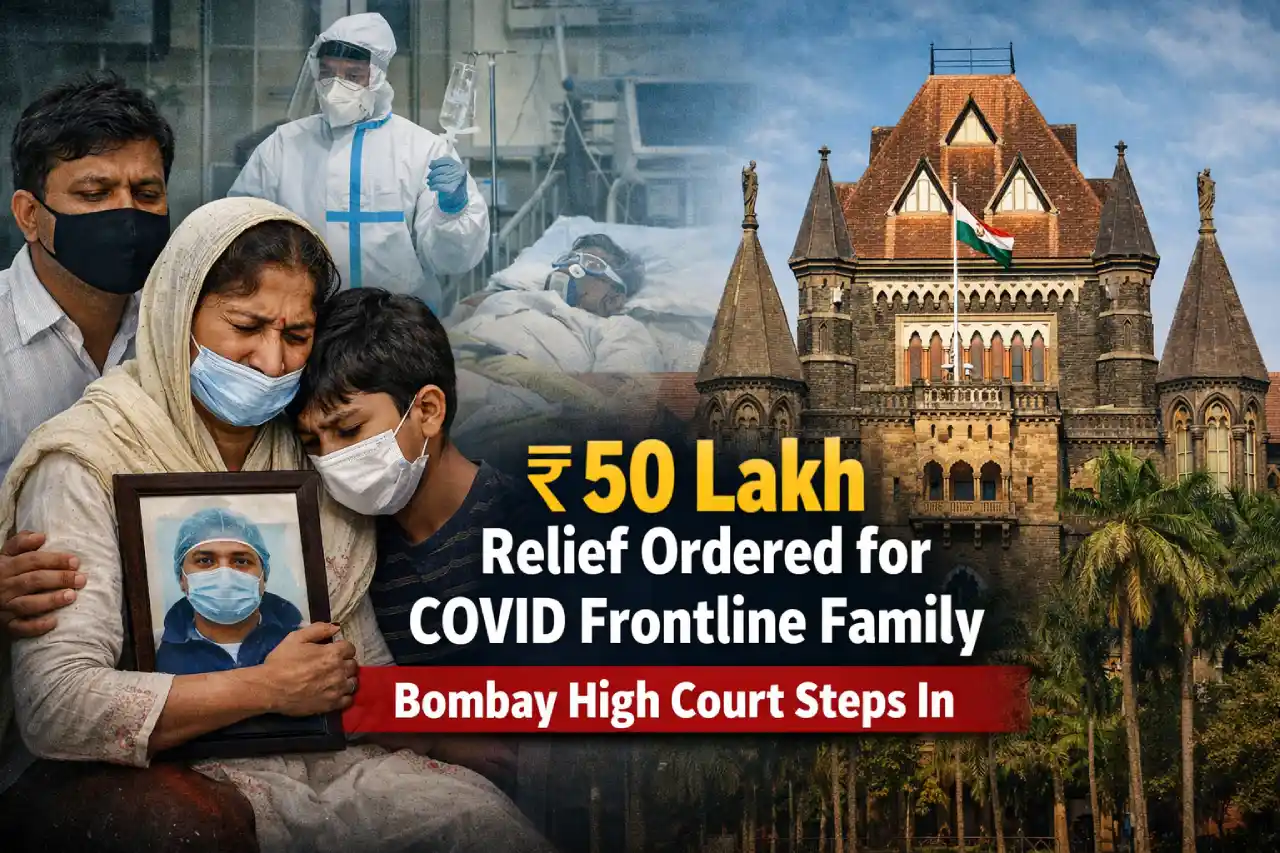
₹50 Lakh Relief Ordered for COVID Frontline Family, Bombay High Court Steps In

₹50 Lakh Relief Ordered for COVID Frontline Family, Bombay High Court Steps In

The Bombay High Court has directed the Maharashtra government to release a ₹50 lakh ex-gratia benefit to the family of a staff member who died while performing COVID-19 duty. The order reinforces the state’s obligation to honour assurances made to frontline workers during the pandemic. The court made it clear that welfare promises cannot remain on paper when families have lost their sole earners while serving the public in an unprecedented health crisis.

I am writing about this decision because it brings long-overdue clarity and relief to families who have been waiting for recognition and financial support. During COVID-19, many frontline staff worked under extreme risk with the assurance of government-backed benefits. When such commitments are delayed or denied, judicial intervention becomes crucial. This order sends a strong message on accountability and the value of frontline service.

What the Bombay High Court Ordered

The direction was issued by the Bombay High Court while hearing a petition filed by the bereaved family. The court instructed the state to pay the ₹50 lakh benefit as per the policy announced during the pandemic for COVID duty personnel who lost their lives.

The court noted that once a policy decision is taken and publicised, the government is bound to implement it in a fair and timely manner.

Background of the Case

The deceased staff member had been deployed on COVID-19 duty at the height of the pandemic. Following the death, the family approached authorities seeking the promised ex-gratia assistance. When the benefit was not released despite repeated representations, the family moved the High Court seeking justice.

The court examined relevant government resolutions and found that the case clearly fell within the eligibility criteria.

State Government’s Responsibility

The benefit is to be paid by the Maharashtra Government under its COVID relief policy for frontline workers. The High Court observed that denying or delaying such payments defeats the purpose of welfare schemes meant to protect families from financial distress after the loss of a breadwinner.

The court also emphasised that frontline workers took on risk trusting the state’s assurances.

Why This Judgment Matters

This order has wider implications beyond one family. It sets a precedent for other pending cases where families of COVID duty staff are still struggling to receive promised compensation. It also underlines the role of courts in ensuring that executive commitments are honoured, especially in matters involving life, service, and dignity.

For many families, this judgment restores faith in the system.

What Affected Families Should Know

Families of COVID duty staff who believe they are eligible for similar benefits should:

  • Check the relevant government resolutions issued during the pandemic
  • Collect service and deployment records
  • Submit formal representations to authorities
  • Seek legal remedy if benefits are unreasonably delayed

Legal clarity from courts can significantly speed up resolution in genuine cases.
Leave a Comment

End of Article

Maharashtra Faces Alarming Child Malnutrition Crisis, High Court Seeks Answers

Maharashtra Faces Alarming Child Malnutrition Crisis, High Court Seeks Answers

More than 1.37 lakh children in Maharashtra are still suffering from malnutrition, a matter that has now drawn serious attention from the judiciary. The issue came before the Bombay High Court after a newspaper report highlighted shocking figures related to child and maternal deaths in the state. According to the data placed before the court, 32,226 children below the age of five and 2,861 mothers have died in Maharashtra over the last two-and-a-half years, with malnutrition cited as a major contributing factor.

I am writing about this issue because these numbers are not just statistics, they reflect a deep and continuing public health crisis. Despite multiple welfare schemes and nutrition programmes, thousands of families are still struggling to provide basic nourishment to children and mothers. When such data reaches the High Court, it becomes clear that this is not a routine administrative lapse but a systemic problem that needs urgent attention from policymakers and authorities.

What the Bombay High Court Was Told

The matter came up before the Bombay High Court after taking suo motu cognisance of a media report on malnutrition-related deaths. The court was informed that a significant number of children identified as severely or moderately malnourished are still awaiting effective intervention.

The figures presented shocked the court, especially considering that Maharashtra is one of the country’s economically stronger states with extensive public health infrastructure.

Scale of Child and Maternal Deaths

As per the information highlighted:

  • 32,226 children under five years of age died in the last two-and-a-half years
  • 2,861 maternal deaths were recorded during the same period
  • Malnutrition was cited as a major contributing factor in many cases
  • Over 1.37 lakh children are currently identified as malnourished

These numbers point towards gaps in early detection, follow-up treatment, and nutrition delivery systems.

Why Malnutrition Remains a Persistent Problem

Health experts say malnutrition is not caused by lack of food alone. It is often linked to:

  • Poverty and food insecurity
  • Poor maternal health and anaemia
  • Inadequate access to healthcare facilities
  • Lack of awareness about nutrition
  • Irregular monitoring at the grassroots level

In tribal and rural areas, these problems are even more severe due to connectivity and staffing issues.

Government Schemes and Ground Reality

Maharashtra runs several nutrition and health schemes through anganwadis and public health centres. However, the court was told that implementation remains uneven. In many cases, children identified as malnourished are not followed up properly, and referral systems do not function as intended.

The court has sought explanations from the state authorities on what corrective measures are being taken and how existing programmes are being monitored.

Why This Issue Matters to Everyone

Child malnutrition has long-term consequences that go beyond immediate health risks. It affects physical growth, brain development, learning ability, and future productivity. Maternal malnutrition, on the other hand, increases risks during childbirth and directly impacts newborn health.

When such a large number of deaths are linked to nutrition gaps, it raises serious questions about accountability and policy execution.

What the High Court Expects Next

The High Court has indicated that it will closely monitor the state’s response and action plan. Authorities may be asked to submit detailed reports on:

  • Identification and treatment of malnourished children
  • Availability of nutrition supplements
  • Staffing and monitoring at anganwadi centres
  • Steps taken to prevent further deaths

The court’s involvement is expected to push for stricter oversight and faster corrective action.

Leave a Comment

End of Article

Loading more posts...