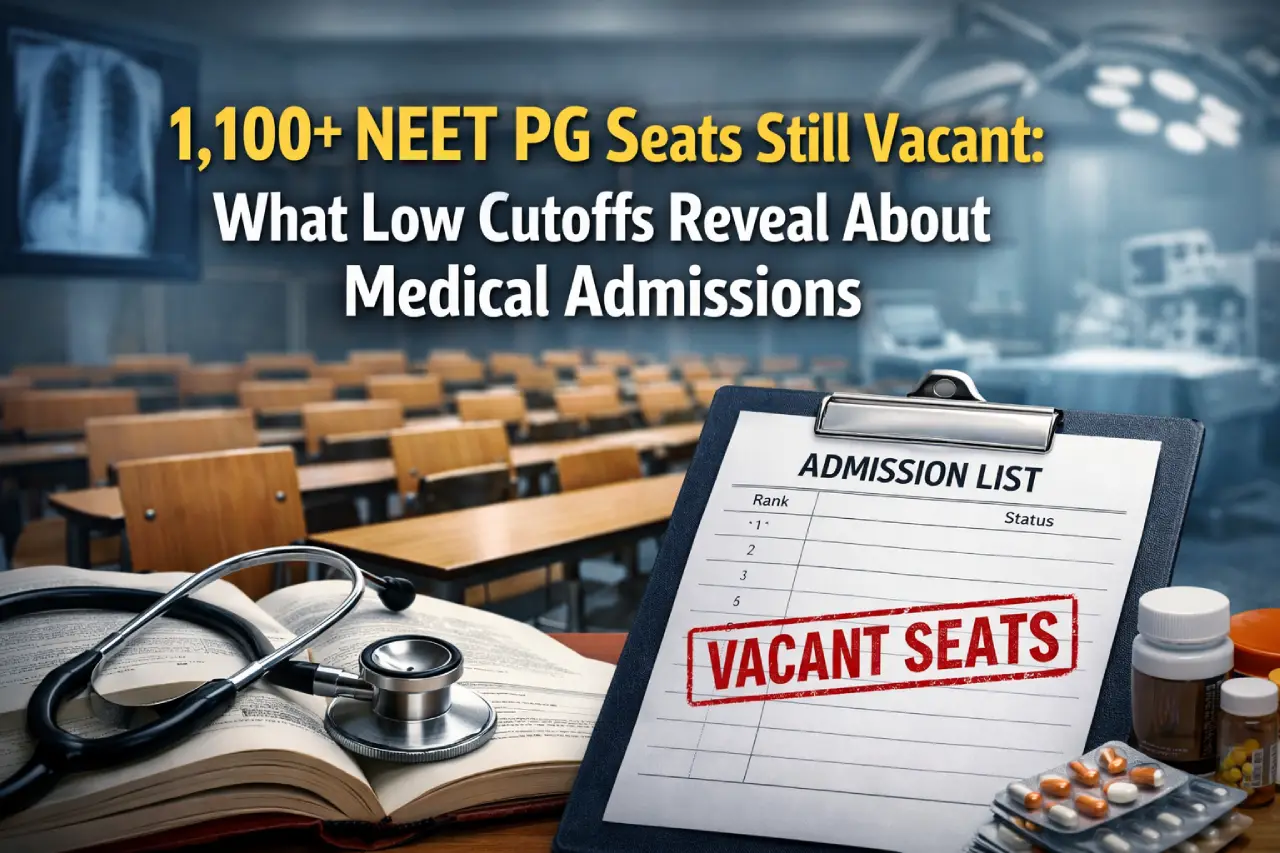
In a surprising development, over 1,140 postgraduate medical seats have remained vacant even after the completion of the NEET PG 2025 counselling process. This is despite the government significantly lowering the qualifying cutoffs to expand the pool of eligible candidates. The data, shared in the Rajya Sabha on March 17, 2026, has raised serious questions about the current medical admission system in India and whether deeper structural issues are being overlooked.
I am writing about this because it highlights a problem that goes beyond just exam scores. From what I have seen, many students assume that lowering cutoffs will automatically fill all seats, but this situation proves otherwise. It is important to understand why these seats are still vacant, as it directly impacts healthcare availability, medical education planning, and the future of aspiring doctors in India.
What Happened in NEET PG 2025 Counselling
The government took an unusual step to address vacant seats.
- Qualifying percentile reduced to 7th percentile for unreserved category
- Lowered to 5th percentile for PwD candidates
- Eligibility expanded significantly
- Reserved category candidates made broadly eligible
Despite these changes, 1,140 seats remained unfilled after the final counselling round.
Key Numbers at a Glance
Here is a quick overview of the situation:
| Category | Details |
|---|---|
| Total Vacant Seats | 1,140 |
| Unreserved Cutoff | 7th Percentile |
| PwD Cutoff | 5th Percentile |
| Reserved Category | Almost all eligible |
These numbers show how extensive the efforts were to fill the seats.
Why Seats Remained Vacant
Even with relaxed cutoffs, several factors contributed to the vacancies.
- Lack of interest in certain specialisations
- High fees in private medical colleges
- Limited career prospects in some branches
- Geographical location of colleges
- Infrastructure concerns in some institutions
From what I understand, students are now making more practical and career-focused decisions.
Issue of Unpopular Specialisations
Not all medical branches attract equal interest.
- Non-clinical and less popular branches often remain vacant
- Students prefer high-demand fields like radiology, medicine and surgery
- Some courses offer limited job opportunities
This imbalance plays a big role in unfilled seats.
Financial Barriers for Students
Cost is another major factor affecting admissions.
- High tuition fees in private colleges
- Additional living and training expenses
- Limited financial support options
In my opinion, affordability is one of the biggest reasons why students opt out.
Structural Issues in the System
Experts believe the problem goes deeper than just cutoffs.
- Mismatch between seat availability and demand
- Lack of proper career guidance
- Uneven distribution of medical colleges
- Limited focus on improving less popular specialisations
This indicates that systemic reforms may be needed.
Government’s Efforts and Limitations
The government did try to address the issue.
- Reduced qualifying criteria significantly
- Expanded eligibility for counselling
- Conducted multiple counselling rounds
However, these steps alone were not enough to fill all seats.
Impact on Healthcare System
Vacant PG seats can have long-term consequences.
- Shortage of specialists in certain fields
- Unequal distribution of healthcare services
- Underutilisation of medical infrastructure
- Missed opportunities to train doctors
This affects both the education sector and public health.