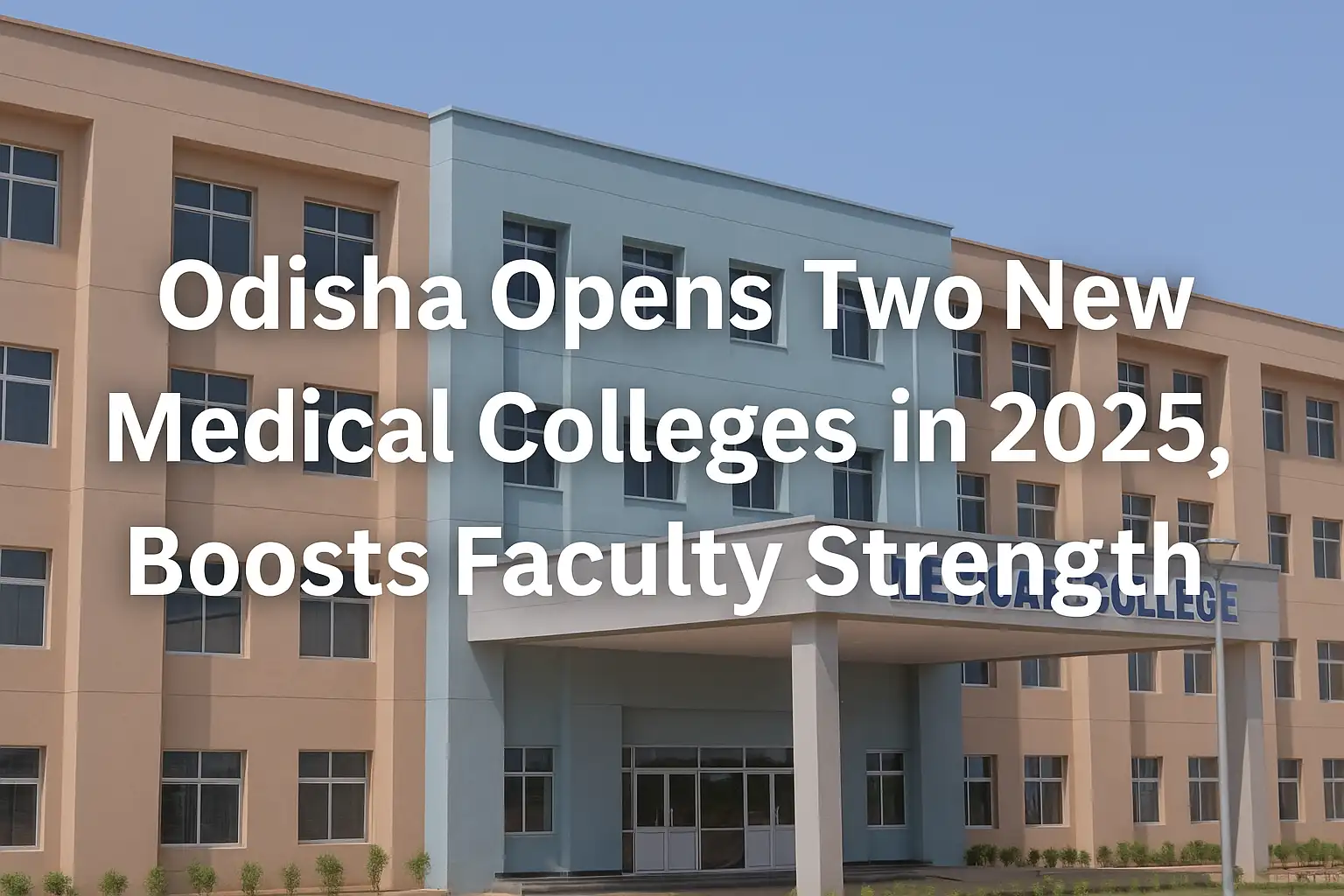
Odisha has taken another major step in strengthening its healthcare and medical education system by opening two new government medical colleges in 2025. The Government Medical College and Hospital at Phulbani in Kandhamal district and the Pabitra Mohan Pradhan Medical College and Hospital at Talcher in Angul district have started operations this year. With this, the state now has 14 government-run medical colleges, marking significant progress in expanding access to quality medical education and healthcare services across districts.
I wanted to cover this development because it highlights how states like Odisha are bridging gaps in healthcare infrastructure while also creating new opportunities for aspiring doctors. For years, rural and tribal districts faced challenges due to lack of advanced healthcare facilities and limited medical education seats. By setting up these new institutions and appointing 135 faculty members, Odisha is not only expanding capacity but also ensuring that qualified professionals are available to teach and serve. This move is crucial for a state that has been working to reduce doctor-patient ratio gaps and improve healthcare outcomes in underdeveloped regions. It reflects how education and healthcare reforms can directly impact lives at the grassroots level.
New Medical Colleges at Phulbani and Talcher
- Government Medical College & Hospital, Phulbani (Kandhamal district): Established to serve a tribal-majority district, the college aims to improve access to specialised healthcare.
- Pabitra Mohan Pradhan Medical College & Hospital, Talcher (Angul district): Located in a mining and industrial hub, it will help meet the healthcare needs of workers and local residents.
Faculty Appointments to Strengthen Teaching
A total of 135 faculty members have been appointed across the new and existing colleges. This includes professors, associate professors, and assistant professors in key departments. Their presence will ensure better academic quality and also strengthen patient care in associated hospitals.
Odisha’s Growing Medical Education Network
With 14 government-run medical colleges now operational, Odisha has significantly expanded its intake capacity for MBBS and postgraduate students. This will:
- Increase the number of doctors graduating each year
- Provide healthcare access in remote and rural regions
- Improve the state’s doctor-patient ratio over time
- Encourage research and innovation in medical sciences
Why This Step Matters
For students, more colleges mean increased chances of securing medical seats within the state, reducing migration to other parts of India. For local communities, these colleges bring multi-specialty hospitals, trained doctors, and better healthcare access closer to home.
The establishment of new medical colleges at Phulbani and Talcher, supported by 135 faculty appointments, shows Odisha’s commitment to long-term healthcare and education reforms. By investing in medical education, the state is not only producing future doctors but also ensuring that even underserved districts benefit from quality healthcare. This initiative is a model that other states can look towards, where education and public health priorities are aligned for sustainable development.