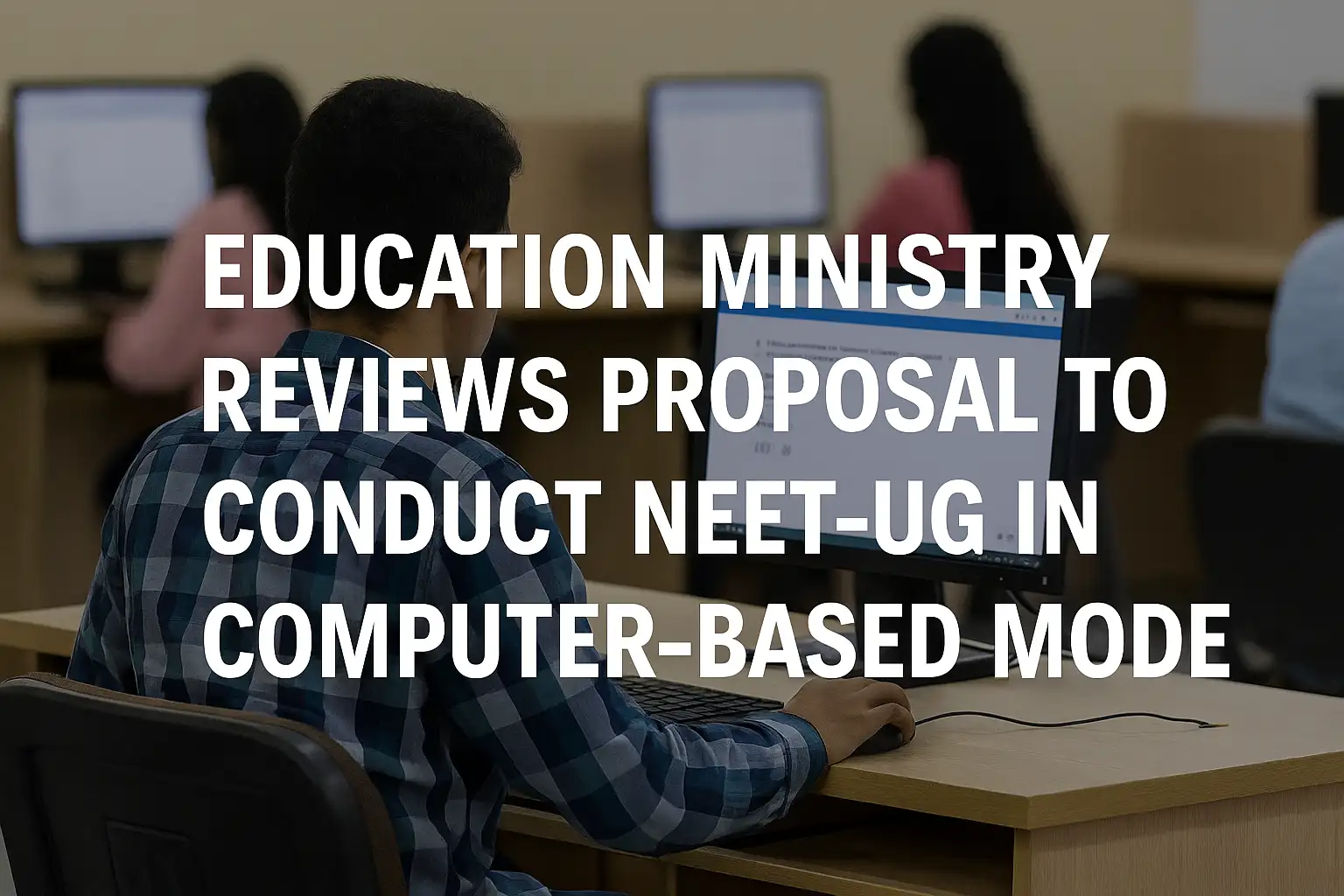
The Ministry of Education has begun reviewing a proposal to shift the National Eligibility-cum-Entrance Test for Undergraduates (NEET-UG) from its current pen-and-paper format to a fully computer-based test. Officials are examining whether the online model, already followed for exams like JEE Main, could improve efficiency, reduce errors, and ensure quicker results for over 20 lakh candidates who appear every year. However, concerns remain about digital access, infrastructure readiness, and the ability of rural and remote centres to manage such a transition smoothly.
I am writing about this because NEET-UG is one of the most crucial exams in India, deciding the future of lakhs of aspiring doctors. A change in the exam mode impacts not just students but also schools, coaching centres, and families who prepare for years. It is important to discuss this carefully because while an online format promises transparency and speed, it may also create fresh challenges for students unfamiliar with computer-based testing, particularly those from smaller towns and villages. By understanding the pros and cons, we can see what it would take for such a move to be fair and successful.
Why the Change is Being Considered
- Pen-and-paper mode takes longer for evaluation and result declaration
- Online exams reduce the risk of paper leaks and manual errors
- Digital testing ensures standardisation across centres
- Other national-level exams like JEE Main have already shifted to online mode successfully
Challenges in Moving to Computer-Based Testing
- Digital divide: Many students, especially from rural areas, lack familiarity with computer-based exams
- Infrastructure issues: Centres in smaller towns may not have adequate systems or reliable internet
- Training need: Students would require practice sessions to adapt to the new format
- Cost factor: Conducting exams online may increase logistical costs in the short term
Expert Views
Education experts believe that while online exams are the future, the transition should be gradual. Mock tests, awareness programmes, and pilot runs in selected states could help students gain confidence. Some also suggest hybrid models, where candidates are given the option to choose between offline and online exams during the initial years of implementation.