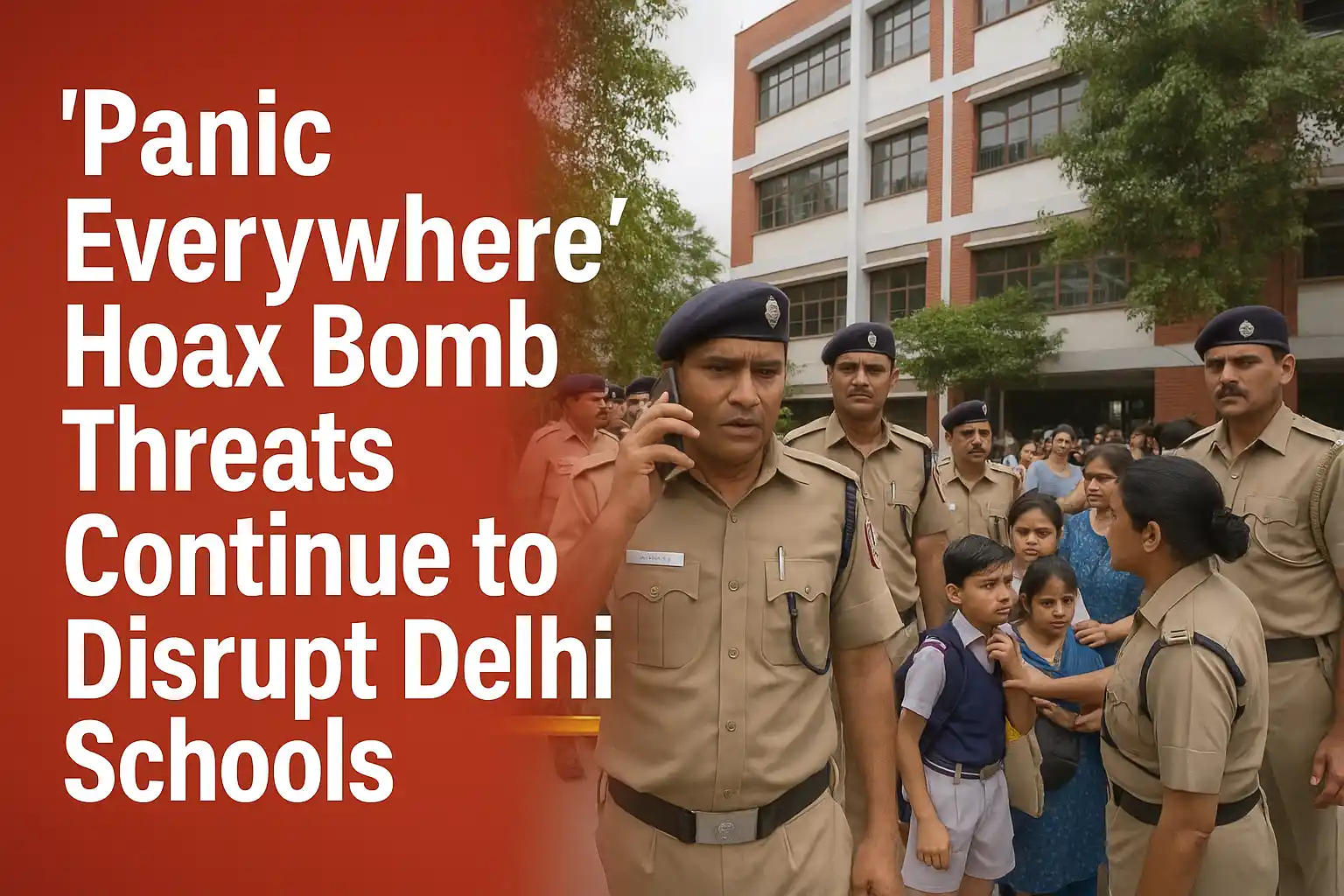
A series of hoax bomb threats targeting schools in Delhi has triggered panic among parents, teachers, and students. Over the past few weeks, multiple schools have received threatening emails and calls, forcing administrations to evacuate campuses and call in police and bomb squads. So far, no explosives have been found, confirming the threats to be false alarms. Yet, the repeated incidents have disrupted classes, created widespread anxiety, and placed enormous strain on both school authorities and law enforcement agencies.
I am writing about this because the safety of children in schools is an issue that touches every family. Even if the threats are fake, the emotional toll on students, parents, and teachers is very real. A learning environment thrives on trust and security — without it, education suffers. Discussing this issue is important because it highlights not only the misuse of technology to spread fear but also the urgent need for stronger monitoring systems, better preparedness in schools, and faster investigation of such crimes. Hoax threats may seem like pranks to some, but their consequences on young minds and school communities are far-reaching.
How the Hoax Threats Are Impacting Schools
- Sudden evacuations leading to disruption of regular classes and exams
- Psychological stress among children who feel unsafe in their classrooms
- Parents rushing to pick up their children, creating chaos outside school gates
- Teachers and staff burdened with additional responsibility of handling emergencies
- Police and bomb squads diverted repeatedly, draining resources for actual emergencies
Possible Motives Behind the Hoax Calls
Officials suggest that these threats may come from pranksters, mischief-makers, or even cyber attackers aiming to spread fear. Some experts also warn that repeated hoaxes could be a way to test response systems, making it vital for authorities to take every incident seriously.
How Schools and Authorities Are Responding
- Police have intensified cyber tracking of emails and calls used to send threats
- Schools are conducting safety drills and preparing emergency response plans
- Parents are being kept informed through official channels to prevent misinformation
- Counselling sessions are being arranged in some schools to help students deal with fear
Why This Issue Needs Urgent Attention
Beyond disruption, hoax threats risk normalising fear in children’s everyday lives. If students begin to associate schools with panic and danger, their ability to learn and feel safe will be permanently affected. Tackling this requires a balance — ensuring preparedness for emergencies while also preventing unnecessary alarm.