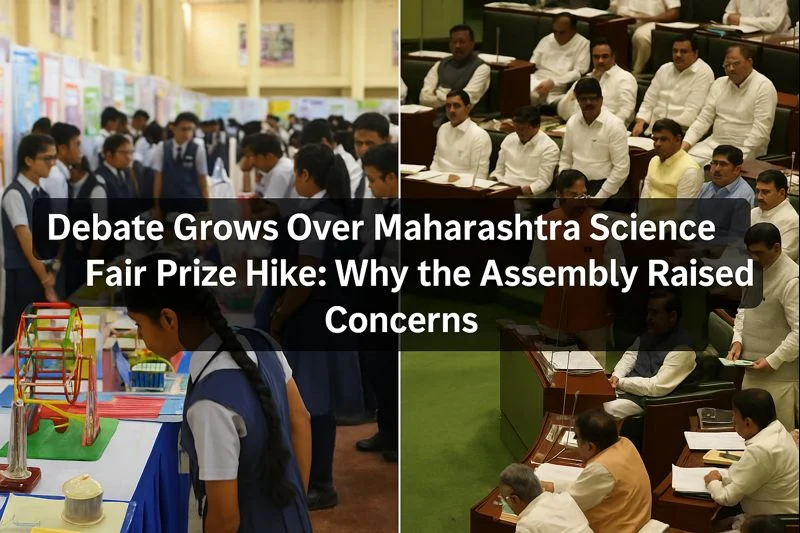
A debate broke out in the Maharashtra Assembly after School Education Minister Dada Bhuse revealed that the Finance and Planning Department, headed by Deputy Chief Minister Ajit Pawar, had raised objections to the sharp increase in prize money for school science fairs. The proposal aimed to raise the top prize from Rs 5,000 to Rs 51,000, but officials expressed concerns that such a steep hike could encourage parents to outsource student projects instead of allowing children to create them independently.
Science fairs are meant to encourage curiosity, creativity and hands-on learning among students. But when prize money becomes unusually high, the focus can shift from learning to winning at any cost. Over the years, teachers and organisers have often noticed that external help and professionally made models sometimes overshadow genuine student work. This debate in the Assembly is important because it brings these concerns into the public space and pushes the government to reconsider how to support students without unintentionally promoting unhealthy competition. Understanding the arguments on both sides helps us reflect on how science education can stay fair and meaningful.
What Led to the Controversy
The School Education Department proposed a substantial increase in prize money for state-level science fairs. The goal was to motivate more students to participate and develop stronger projects. However, when the proposal reached the Finance and Planning Department, it faced objections.
Key concerns raised were:
- The jump from Rs 5,000 to Rs 51,000 was too large
- Higher prize amounts might attract unfair external involvement
- Parents could outsource project work to professionals
- The original purpose of promoting student-led innovation might get diluted
Minister Dada Bhuse shared these details during the Assembly debate, explaining why the proposal is currently under review.
Why Prize Money Matters in Student Competitions
Science fairs across Maharashtra have traditionally encouraged students to explore concepts in physics, chemistry, biology, robotics and environmental science. Prize money often helps:
- Recognise outstanding student effort
- Support further project development
- Encourage participation from rural and urban schools alike
However, officials also believe that incentives must align with educational goals, not overshadow them.
The Argument Against a Large Prize Hike
The Finance and Planning Department’s objections reflect practical concerns that many educators share. With high-value prizes:
- Parents may hire experts to create polished models
- Students who genuinely work on their projects may feel discouraged
- Competitions may become a comparison of resources rather than creativity
- The learning experience might reduce to a race for rewards
These concerns were brought up in the Assembly to ensure the prize structure does not compromise fairness.
Arguments Supporting the Increase
On the other side, supporters believe:
- Higher prize money can inspire students to take science seriously
- It may encourage participation from economically weaker backgrounds
- Winning such prizes can motivate students to pursue careers in STEM fields
- Schools with fewer facilities may use prize money to upgrade labs
The debate is essentially about finding the right balance between motivation and authenticity.