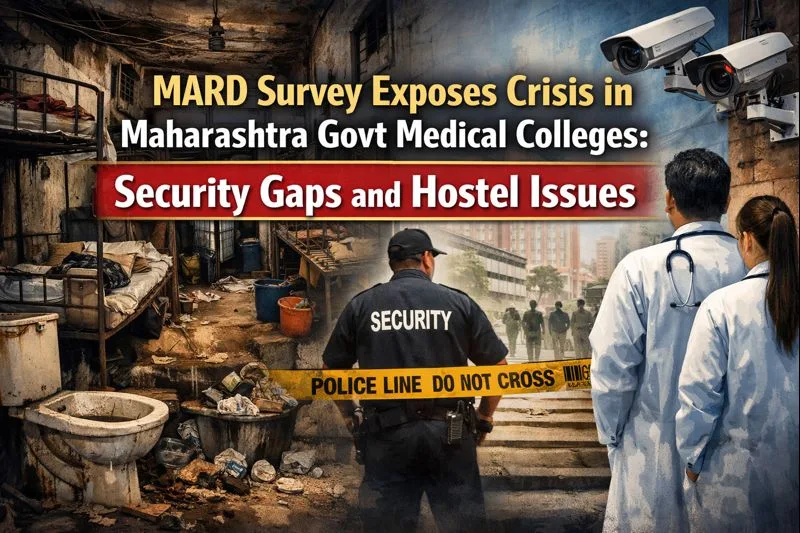
A recent statewide survey by the Maharashtra Association of Resident Doctors (MARD) has brought to light serious concerns about security and living conditions in government medical colleges across the state. The survey covered 18 government medical colleges in Maharashtra and highlighted the daily challenges faced by more than 5,800 postgraduate resident doctors, many of whom work long hours in high-pressure environments while living in hostels that are far from fit for purpose.
I am writing about this issue because resident doctors form the backbone of public healthcare, especially in government hospitals where patient loads are high and resources are stretched. When doctors are expected to deliver quality care without basic safety and decent living conditions, it directly affects not only their wellbeing but also patient care. This survey is important as it puts concrete data behind what many resident doctors have been saying for years. It also raises uncomfortable questions about how institutions responsible for training future specialists are neglecting the most basic needs of their own doctors.
What the MARD Survey Found
The MARD survey paints a worrying picture of life inside several government medical colleges. According to the findings, many campuses suffer from poor security arrangements and severely neglected hostel infrastructure.
Some of the key issues flagged include:
- Inadequate security personnel, especially during night shifts
- Lack of CCTV cameras in hostels and hospital premises
- Poor lighting in campus and hostel areas
- Broken doors, windows and locks in hostels
- Overcrowded rooms with insufficient basic amenities
- Poor sanitation and water supply
- Frequent power outages without backup
These conditions affect doctors who are already dealing with demanding workloads and emergency duties.
Security Concerns for Resident Doctors
One of the most alarming aspects of the survey is the shortage of security staff. Many hospitals reportedly operate with minimal or no trained security personnel during night hours, leaving resident doctors vulnerable.
Doctors reported concerns such as:
- Fear of violence from patients’ relatives
- No immediate response during emergencies
- Unsafe pathways between hostels and hospitals
- Inadequate protection for female doctors
In recent years, incidents of violence against healthcare workers have increased, making proper security a basic necessity rather than a luxury.
Unliveable Hostel Conditions
The survey also highlighted that hostel conditions in several colleges are not suitable for human habitation. Resident doctors, who often get very little rest between shifts, are forced to live in poorly maintained buildings.
Common problems include:
- Damp walls and leaking ceilings
- Broken toilets and bathrooms
- Lack of cleanliness and pest control
- Insufficient rooms leading to forced sharing
- Old electrical wiring posing fire risks
Many doctors stated that these conditions add to physical and mental exhaustion.
Impact on Mental and Physical Health
Poor living conditions combined with long working hours take a heavy toll on resident doctors. Lack of rest, constant stress and fear for personal safety can lead to:
- Burnout and chronic fatigue
- Anxiety and sleep disorders
- Reduced focus during clinical duties
- Lower morale among healthcare workers
When doctors are pushed to this level, patient care inevitably suffers.
Response from MARD
MARD has urged the state government and medical college authorities to take immediate corrective steps. The association has demanded:
- Immediate recruitment of trained security staff
- Installation of CCTV cameras across campuses
- Upgradation and repair of hostel infrastructure
- Regular maintenance audits
- Time-bound action plans with accountability
MARD has also indicated that continued inaction could lead to stronger protests by resident doctors.
Why This Issue Needs Immediate Attention
Government medical colleges are meant to be centres of excellence, producing skilled specialists who serve the public health system. Ignoring the basic needs of resident doctors sends a damaging message.
Addressing these issues is essential because:
- Safe doctors mean safer hospitals
- Better living conditions improve performance
- Retention of medical talent becomes easier
- Healthcare systems become more resilient
Investment in infrastructure and security is an investment in public health.