JOIN WHATSAPP
STORIES

Kotak Education Foundation Honours 1,400+ Mumbai Students at RIZE 2025 Scholarship Event

Kotak Education Foundation Honours 1,400+ Mumbai Students at RIZE 2025 Scholarship Event

Kotak Education Foundation (KEF) celebrated the achievements of more than 1,400 students at RIZE 2025 in Mumbai, honouring scholars supported under its Kotak Junior Scholarship and Kotak Graduate Scholarship Programmes. The event brought together students from economically disadvantaged backgrounds who have shown strong academic promise despite financial constraints, marking an important milestone in their educational journey.

I am writing about this because access to quality education remains a challenge for many talented students in cities like Mumbai, where the cost of living and education continues to rise. Scholarship programmes such as these play a crucial role in ensuring that financial hardship does not force students to drop out or settle for limited options. Events like RIZE 2025 not only recognise academic merit but also motivate students to aim higher by assuring them that consistent support is available if they stay focused on their goals.

About the RIZE 2025 Event

RIZE 2025 served as a platform to acknowledge the hard work and determination of students supported by Kotak Education Foundation. The event was attended by scholars, parents, educators and foundation representatives, creating an encouraging environment for students who often come from first-generation learner families.

The felicitation recognised students across:

  • Junior college level under the Kotak Junior Scholarship
  • Undergraduate and professional courses under the Kotak Graduate Scholarship

Each scholar was honoured for academic performance and perseverance.

Who Benefits From These Scholarships

The Kotak Junior and Graduate Scholarship Programmes are designed for meritorious students from economically weaker sections of Mumbai. These students often face financial barriers that make higher education uncertain.

The scholarships support students by:

  • Covering a portion of tuition fees
  • Providing financial stability during studies
  • Reducing the need for part-time work
  • Allowing students to focus fully on academics

Many recipients are pursuing careers in engineering, commerce, science, arts and professional courses.

Beyond Financial Support

Kotak Education Foundation’s approach goes beyond just financial assistance. Along with scholarships, students also receive mentoring, career guidance and life-skills support to help them succeed in the long run.

This holistic model helps students:

  • Build confidence
  • Improve employability skills
  • Navigate academic challenges
  • Prepare for future careers

Such support is especially valuable for students who lack guidance at home.

Students’ Journey And Impact

Several scholars at the event shared stories of how the scholarship helped them continue their education without interruption. For many families, the support has reduced financial stress and opened doors that once seemed out of reach.

By supporting over 1,400 students, KEF is creating a ripple effect where education becomes a tool for long-term social and economic mobility.

Commitment To Education Equity

Kotak Education Foundation has been working consistently to bridge the gap between talent and opportunity. Through structured scholarship programmes, the foundation aims to ensure that deserving students are not left behind due to economic limitations.

RIZE 2025 reaffirmed this commitment by celebrating students not just as beneficiaries, but as future professionals and leaders.
Leave a Comment

End of Article

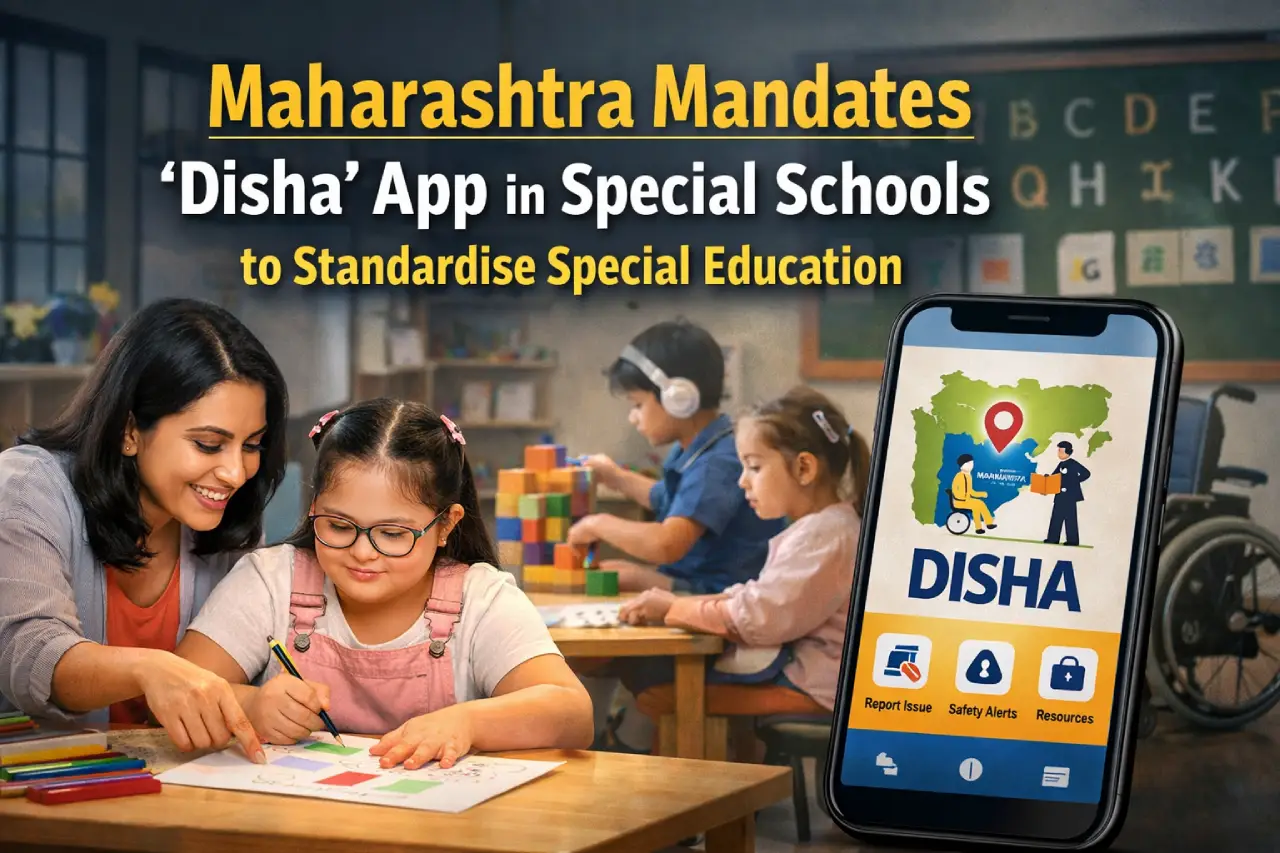
Maharashtra Mandates ‘Disha’ App in Special Schools to Standardise Special Education

Maharashtra Mandates ‘Disha’ App in Special Schools to Standardise Special Education

In a significant move to strengthen education for students with intellectual disabilities, the state Department of Disability Welfare has announced that the ‘Disha’ app will now be compulsory in all special schools. The decision mandates the uniform adoption of the Disha special curriculum, digital learning portal, and assessment system across the state.

By making the platform mandatory, the department aims to ensure consistent teaching methods, standardised evaluations, and equal learning opportunities for students in special schools, irrespective of their location or the institution’s management. The move is expected to improve quality, accountability, and continuity in special education services statewide.

I am writing about this development because special education often suffers from uneven implementation and lack of standard benchmarks. When different schools follow different methods, students are the ones who lose out. Making a common digital curriculum and evaluation system mandatory is a significant policy shift. It directly affects students, teachers, parents, and school administrators, and signals the government’s intent to bring structure, accountability, and continuity into special education.

What Is the ‘Disha’ App and Curriculum

The Disha app is a specially designed digital platform developed for students with intellectual disabilities. It includes a structured curriculum, teaching tools, and an evaluation framework aligned with the learning needs of special children.

The platform helps teachers track student progress in a systematic way and ensures that learning goals are clearly defined and measurable.

Why the State Made Disha Mandatory

According to the disability welfare department, the lack of a uniform curriculum across special schools has led to gaps in learning outcomes. Some schools follow advanced methods, while others struggle with outdated practices.

Announcing the decision, Tukaram Mundhe, secretary of the disability welfare department, said the Disha system would help bring “uniformity and continuity into special education while supporting the overall development of students”.

How This Will Help Students

With the Disha system in place, students across the state will now follow a common learning structure suited to their abilities. This ensures smoother academic progression, especially for students who move between schools or districts.

Standardised evaluation will also help identify learning gaps early and provide targeted support.

Impact on Teachers and Special Schools

Teachers will now receive a clear framework for lesson planning, assessment, and reporting. This reduces confusion and improves teaching quality. Schools will also be accountable for following the prescribed curriculum and updating student progress on the portal.

While some schools may need time to adapt, the long-term goal is better coordination and quality control.

Concerns and Challenges on the Ground

Some educators have raised concerns about training, digital access, and infrastructure, especially in smaller or rural special schools. Successful implementation will depend on proper teacher training, technical support, and continuous monitoring by authorities.

Without these, the system risks becoming a formality rather than a meaningful reform.

Why Uniformity Matters in Special Education

Special education requires consistency more than flexibility. Students with intellectual disabilities benefit from structured routines, clear goals, and continuity in teaching methods. A common curriculum helps ensure that every child, irrespective of school, receives comparable support and opportunities.

This move aligns policy with actual learning needs.

Leave a Comment

End of Article

Loading more posts...