JOIN WHATSAPP
STORIES

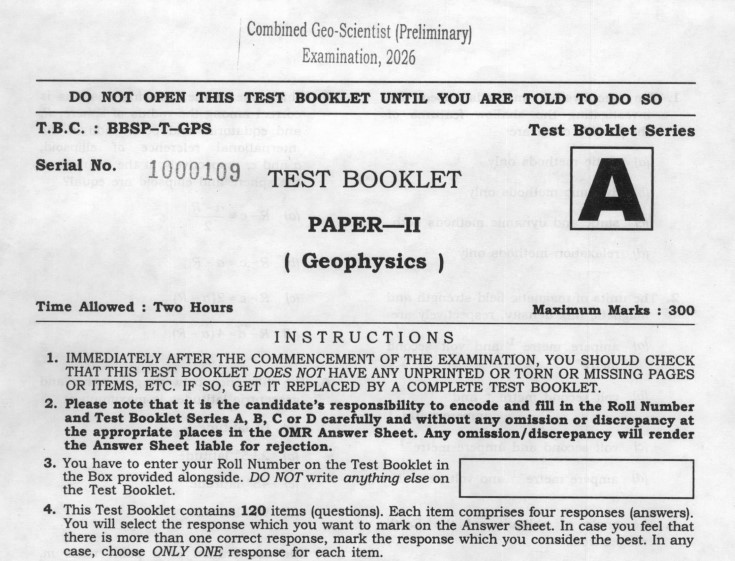
UPSC Combined Geo-Scientist and Geologist Examination 2018 Cut-Off Marks PDF Released, Check Category-Wise Scores

UPSC Combined Geo-Scientist and Geologist Examination 2018 Cut-Off Marks PDF Released, Check Category-Wise Scores

The Union Public Service Commission has released the official cut-off marks for the Combined Geo-Scientist and Geologist Examination 2018. Candidates who appeared for the exam, as well as those preparing for future UPSC Geo-Scientist exams, can now check and download the category-wise cut-off marks in PDF format from the official website. These cut-offs clearly show the minimum scores required to qualify at different stages of the selection process.

I am writing about this because cut-off marks are one of the most practical tools for serious aspirants. They help you understand where you stand and what level of performance UPSC expects. Many candidates prepare hard but still feel unsure about their chances because they do not benchmark their scores properly. Looking at the 2018 cut-off gives a realistic picture of competition, especially for disciplines like Geology, Geophysics, Chemistry and Hydrogeology. For first-time aspirants, this data is extremely useful to set targets. For repeat candidates, it helps in correcting mistakes and improving strategy rather than guessing blindly.

About the Combined Geo-Scientist and Geologist Examination

The Combined Geo-Scientist and Geologist Examination is conducted by UPSC to recruit officers for various Group A posts in government departments. These include roles like Geologist, Geophysicist, Chemist and Junior Hydrogeologist in organisations such as the Geological Survey of India and Central Ground Water Board.

The selection process generally includes:

  • Written examination
  • Personality test or interview
  • Final merit list based on combined performance

Cut-off marks are released separately for written exams and final selection.

Why 2018 Cut-off Marks Are Important

Even though the exam was held in 2018, the cut-off data is still very relevant today. UPSC follows a similar evaluation approach every year, and trends do not change drastically overnight.

By checking the 2018 cut-offs, aspirants can:

  • Understand subject-wise competition
  • Compare General, OBC, SC and ST cut-offs
  • Judge how much margin is safe above the cut-off
  • Plan answer-writing and revision strategy better

What the Cut-off PDF Includes

The official cut-off PDF usually mentions:

  • Category-wise cut-off marks
  • Discipline-wise scores
  • Separate cut-offs for written exam and final stage
  • Clear indication of qualifying standards

This makes it easier for candidates to analyse results without confusion.

How to Download Combined Geo-Scientist 2018 Cut-off PDF

Aspirants can easily download the official cut-off marks PDF by following these steps:

Always rely on the UPSC website to avoid incorrect or unofficial data.
Leave a Comment

End of Article

Why General Education Requirements Matter: Benefits, Skills and Career Impact Explained

Why General Education Requirements Matter: Benefits, Skills and Career Impact Explained

General education requirements are often seen as unnecessary or unrelated to a student’s main field of study, but in reality, they play a very important role in shaping well-rounded individuals. These courses, which include subjects like language, history, science and social studies, are designed to give students a broader understanding of the world beyond their chosen specialisation. Instead of being a burden, they can actually strengthen both academic and personal growth.

I am writing this because many students question why they need to study subjects outside their main interest. From my experience, it is only later that we realise how useful these subjects are in real life. General education is not just about passing exams, it is about developing thinking skills, communication ability and awareness, which are essential in any career.

What Are General Education Requirements

General education requirements are basic courses that all students must complete.

  • Include subjects from different fields like humanities, science and mathematics
  • Designed to provide a balanced education
  • Usually part of undergraduate programmes

These courses ensure that students are not limited to a single area of knowledge.

Why Students Often Dislike Them

Many students feel these subjects are unnecessary.

  • They seem unrelated to career goals
  • Add extra workload
  • Require studying topics outside interest areas

I have felt this too at times, but the value becomes clear over time.

Benefits of General Education

General education offers several important advantages.

  • Develops critical thinking and problem-solving skills
  • Improves communication and writing ability
  • Builds awareness of society, culture and global issues
  • Encourages curiosity and lifelong learning

These skills are useful in every profession.

Helps in Career Flexibility

One major advantage is adaptability.

  • Students can explore multiple fields
  • Opens doors to different career paths
  • Useful in changing job markets

From my perspective, this flexibility is very important today.

Builds a Strong Foundation

General education strengthens basic knowledge.

  • Improves understanding of core concepts
  • Helps in advanced studies
  • Supports interdisciplinary learning

It creates a solid academic base.

Real-Life Applications

These subjects are not just theoretical.

  • Communication skills help in interviews and workplace
  • Social awareness improves decision-making
  • Basic science and maths are used in daily life

You may not realise it immediately, but these skills are always in use.

Comparison: Specialisation vs General Education

AspectGeneral EducationSpecialisation
FocusBroad knowledgeSpecific field
SkillsCommunication, thinkingTechnical expertise
FlexibilityHighLimited
Career ImpactLong-term growthImmediate job skills

Both are important and complement each other.

How to Make the Most of It

Students can benefit more by changing their approach.

  • Try to connect subjects with real-life situations
  • Focus on understanding rather than memorising
  • Participate in discussions and activities
  • Use these subjects to improve overall skills

Changing Perspective on Education

Education is not just about one subject.

  • Modern careers require multiple skills
  • Employers value communication and adaptability
  • A broad mindset leads to better opportunities

From my experience, the more you learn, the more confident you become.

Leave a Comment

End of Article

Loading more posts...

Important Video