JOIN WHATSAPP
STORIES

AICTE Scholarships 2025: How Diploma and Engineering Students Can Apply for Financial Support

AICTE Scholarships 2025: How Diploma and Engineering Students Can Apply for Financial Support

The All India Council for Technical Education (AICTE) has opened applications for its popular scholarship schemes for the academic year 2025. Eligible diploma and technical degree students can now apply for the Swanath, Saksham and Pragati scholarship schemes through the official portal. These schemes are aimed at supporting students from specific backgrounds who need financial assistance to continue their technical education without interruption.

I am writing about this update because every year a large number of deserving students miss out on scholarships simply due to lack of awareness or confusion around eligibility and application timelines. Technical education can be expensive, especially for families already under financial pressure. AICTE’s scholarship schemes are not just about money; they help students stay focused on studies instead of worrying about fees, books or daily expenses. Knowing about these schemes early gives students enough time to check eligibility, arrange documents and apply correctly, avoiding last-minute stress.

Overview of AICTE Scholarship Schemes 2025

AICTE is offering three major scholarship schemes for diploma and degree students enrolled in AICTE-approved institutions.

The schemes include:

  • Swanath Scholarship Scheme
  • Saksham Scholarship Scheme
  • Pragati Scholarship Scheme

Each scheme is designed for a specific group of students and has its own eligibility conditions and benefits.

Swanath Scholarship Scheme

The Swanath scheme is meant for students facing difficult personal circumstances.

This scholarship is available for:

  • Orphan students
  • Children of armed forces or central paramilitary forces personnel killed in action
  • Students from families affected by COVID-19

Selected students receive financial assistance to support tuition fees and other academic expenses during their course.

Saksham Scholarship Scheme

The Saksham scholarship is focused on students with disabilities pursuing technical education.

Key highlights include:

  • Applicable for diploma and degree students
  • Candidates must have benchmark disabilities as per norms
  • Financial assistance is provided annually to help cover education-related costs

This scheme encourages inclusive education and equal opportunities in technical fields.

Pragati Scholarship Scheme

The Pragati scholarship is aimed at supporting girl students in technical education.

Important points:

  • Available for girl students pursuing diploma or degree courses
  • Offered to students from families with limited income
  • Designed to promote participation of women in engineering and technical studies

This scheme plays a key role in reducing dropout rates among female students.

Who Can Apply and Where

To apply for AICTE scholarships 2025, students must:

  • Be enrolled in an AICTE-approved institution
  • Meet the income and category criteria of the respective scheme
  • Apply through the official scholarship portal within the deadline

Students are advised to carefully read the guidelines and keep documents like income certificate, admission proof and bank details ready before applying.

Leave a Comment

End of Article

AI to Transform Indian Education: Dharmendra Pradhan Highlights Inclusive Learning Vision

AI to Transform Indian Education: Dharmendra Pradhan Highlights Inclusive Learning Vision

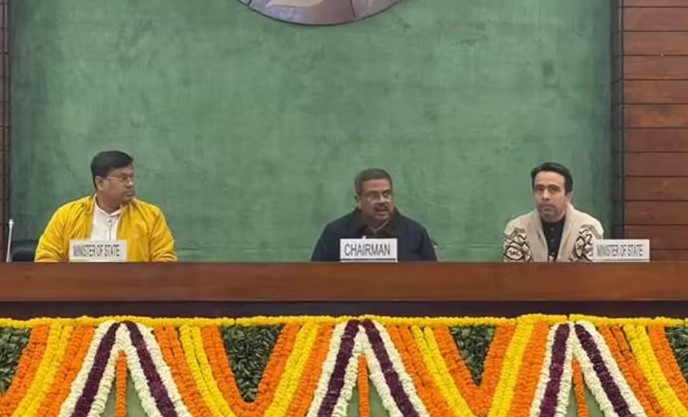
Dharmendra Pradhan, Union Minister for Education, has emphasised that Artificial Intelligence can play a transformative role in tackling key challenges within the education sector. He made these remarks while chairing the third meeting of the Consultative Committee on the Use of Artificial Intelligence in Teaching and Learning in New Delhi.

The minister highlighted that AI-driven tools have the capacity to improve access to quality education, promote inclusion, and ensure greater equity across learning systems. He underlined that when applied responsibly and thoughtfully, technology can serve as a powerful enabler that bridges educational gaps instead of deepening existing divides.

I am writing about this statement because the role of AI in education is no longer a future concept, it is already shaping classrooms and learning methods. When a senior policymaker speaks about using AI responsibly in education, it signals a shift in how learning systems may evolve in the coming years. For students, teachers, and parents, understanding this direction helps them prepare for changes that could redefine access to education across India.

What the Education Minister Said About AI in Learning

During the meeting, the minister emphasised that AI should be seen as a tool to support teachers and learners, not replace human involvement. He pointed out that AI-driven solutions can help personalise learning, support students with different needs, and reach learners in remote or underserved areas.

The focus, he said, should remain on using technology in a way that strengthens the education ecosystem as a whole.

How AI Can Improve Access to Education

One of the key advantages of AI is its ability to overcome geographical and social barriers. AI-powered platforms can deliver quality learning materials to students who may not have access to good schools or trained teachers.

This can be especially useful in rural areas, where digital tools can bring structured learning and support directly to students.

Making Education More Inclusive Through Technology

AI can help identify learning gaps early and provide customised support to students who struggle with certain subjects. For children with disabilities or special learning needs, assistive technologies powered by AI can make education more inclusive.

This approach ensures that no student is left behind due to a lack of resources or personalised attention.

Role of Teachers in an AI-Enabled System

The minister also underlined that teachers remain central to the education process. AI should act as a support system that helps teachers focus more on mentoring, creativity, and critical thinking rather than routine tasks.

By reducing administrative burden, AI can give teachers more time to engage meaningfully with students.

Why Policy-Level Discussions on AI Matter

High-level discussions on AI in education are important because they help shape ethical and practical frameworks for using technology. Without careful planning, digital tools can increase inequality instead of reducing it.

By addressing these concerns early, policymakers can ensure AI adoption remains student-centric and inclusive.

What This Means for the Future of Indian Education

The government’s focus on AI signals a move towards blended and technology-supported learning models. Over time, this could lead to more flexible, adaptive, and learner-focused education systems.

For students and educators, this means new opportunities along with the need to build digital skills and awareness.

Leave a Comment

End of Article

Loading more posts...