JOIN WHATSAPP
STORIES

Maharashtra Leaders Visit Hedgewar Memorial in Nagpur, Coalition Absence Draws Attention

Maharashtra Leaders Visit Hedgewar Memorial in Nagpur, Coalition Absence Draws Attention

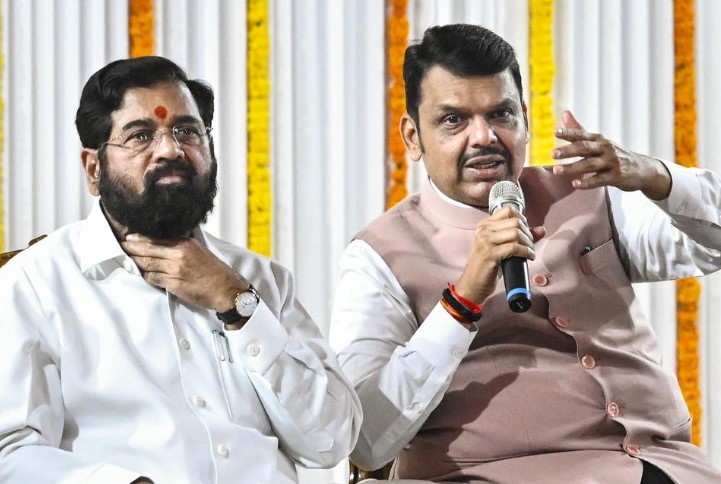
Maharashtra Chief Minister Devendra Fadnavis, along with Deputy Chief Minister Eknath Shinde and several legislators from the ruling BJP and Shiv Sena, offered floral tributes at the memorial of Dr Keshav Baliram Hedgewar, the founder of the Rashtriya Swayamsevak Sangh (RSS), in Nagpur on Sunday, December 14, 2025. The leaders visited Smruti Mandir, an important landmark associated with the RSS, to pay homage to Dr Hedgewar, remembering his enduring influence on India’s social and political landscape.

While leaders from the BJP and Shiv Sena were present, legislators from the Nationalist Congress Party (NCP), including Deputy Chief Minister Ajit Pawar, stayed away despite being part of the ruling Mahayuti alliance. For readers following Maharashtra politics, this absence is important to note. It raises questions about internal coordination within the coalition and how ideological differences continue to play out even after electoral alliances are formed. Understanding these moments helps make sense of the larger political signals being sent to party workers and the public.

Leaders Pay Homage at RSS Founder’s Memorial

The visit to Hedgewar’s memorial saw senior leaders offering tributes and spending time at the Smruti Mandir, which holds deep significance for the RSS. Dr Hedgewar founded the organisation in 1925, and the memorial in Nagpur is considered a place of reverence by RSS members and supporters across the country.

Chief Minister Devendra Fadnavis and Deputy CM Eknath Shinde were joined by ministers and MLAs from the BJP and Shiv Sena. The leaders described Hedgewar’s life as one dedicated to national service and social organisation.

Absence of NCP Leaders Draws Attention

What stood out during the visit was the absence of NCP legislators, including Deputy Chief Minister Ajit Pawar. The NCP is a key partner in the Mahayuti government, along with the BJP and Shiv Sena, making their non-participation noticeable.

While no official reason was given for skipping the visit, political observers see it as a reflection of the ideological diversity within the coalition. The NCP has traditionally maintained a distance from RSS-related events, even when sharing power with parties that openly align with the organisation.

Political Signals Within the Mahayuti Alliance

Events like these often carry political messaging beyond the immediate occasion. For the BJP and Shiv Sena, the visit reinforces their ideological roots and connection with the RSS. For the NCP, staying away may be a way to maintain its distinct identity within the alliance.

Such moments highlight how coalition governments manage differences while continuing to function together.

Leave a Comment

End of Article

AI to Transform Indian Education: Dharmendra Pradhan Highlights Inclusive Learning Vision

AI to Transform Indian Education: Dharmendra Pradhan Highlights Inclusive Learning Vision

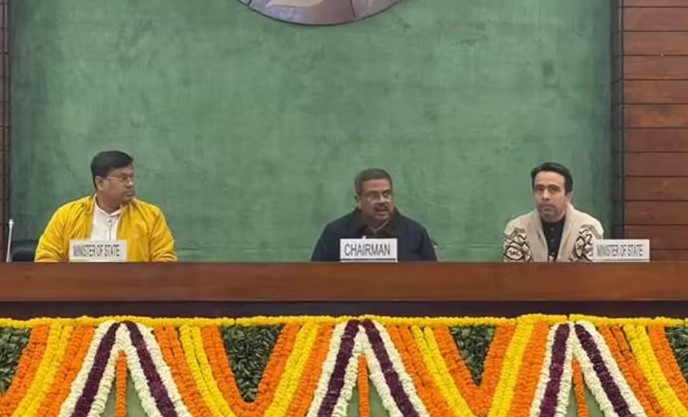
Dharmendra Pradhan, Union Minister for Education, has emphasised that Artificial Intelligence can play a transformative role in tackling key challenges within the education sector. He made these remarks while chairing the third meeting of the Consultative Committee on the Use of Artificial Intelligence in Teaching and Learning in New Delhi.

The minister highlighted that AI-driven tools have the capacity to improve access to quality education, promote inclusion, and ensure greater equity across learning systems. He underlined that when applied responsibly and thoughtfully, technology can serve as a powerful enabler that bridges educational gaps instead of deepening existing divides.

I am writing about this statement because the role of AI in education is no longer a future concept, it is already shaping classrooms and learning methods. When a senior policymaker speaks about using AI responsibly in education, it signals a shift in how learning systems may evolve in the coming years. For students, teachers, and parents, understanding this direction helps them prepare for changes that could redefine access to education across India.

What the Education Minister Said About AI in Learning

During the meeting, the minister emphasised that AI should be seen as a tool to support teachers and learners, not replace human involvement. He pointed out that AI-driven solutions can help personalise learning, support students with different needs, and reach learners in remote or underserved areas.

The focus, he said, should remain on using technology in a way that strengthens the education ecosystem as a whole.

How AI Can Improve Access to Education

One of the key advantages of AI is its ability to overcome geographical and social barriers. AI-powered platforms can deliver quality learning materials to students who may not have access to good schools or trained teachers.

This can be especially useful in rural areas, where digital tools can bring structured learning and support directly to students.

Making Education More Inclusive Through Technology

AI can help identify learning gaps early and provide customised support to students who struggle with certain subjects. For children with disabilities or special learning needs, assistive technologies powered by AI can make education more inclusive.

This approach ensures that no student is left behind due to a lack of resources or personalised attention.

Role of Teachers in an AI-Enabled System

The minister also underlined that teachers remain central to the education process. AI should act as a support system that helps teachers focus more on mentoring, creativity, and critical thinking rather than routine tasks.

By reducing administrative burden, AI can give teachers more time to engage meaningfully with students.

Why Policy-Level Discussions on AI Matter

High-level discussions on AI in education are important because they help shape ethical and practical frameworks for using technology. Without careful planning, digital tools can increase inequality instead of reducing it.

By addressing these concerns early, policymakers can ensure AI adoption remains student-centric and inclusive.

What This Means for the Future of Indian Education

The government’s focus on AI signals a move towards blended and technology-supported learning models. Over time, this could lead to more flexible, adaptive, and learner-focused education systems.

For students and educators, this means new opportunities along with the need to build digital skills and awareness.

Leave a Comment

End of Article

Loading more posts...