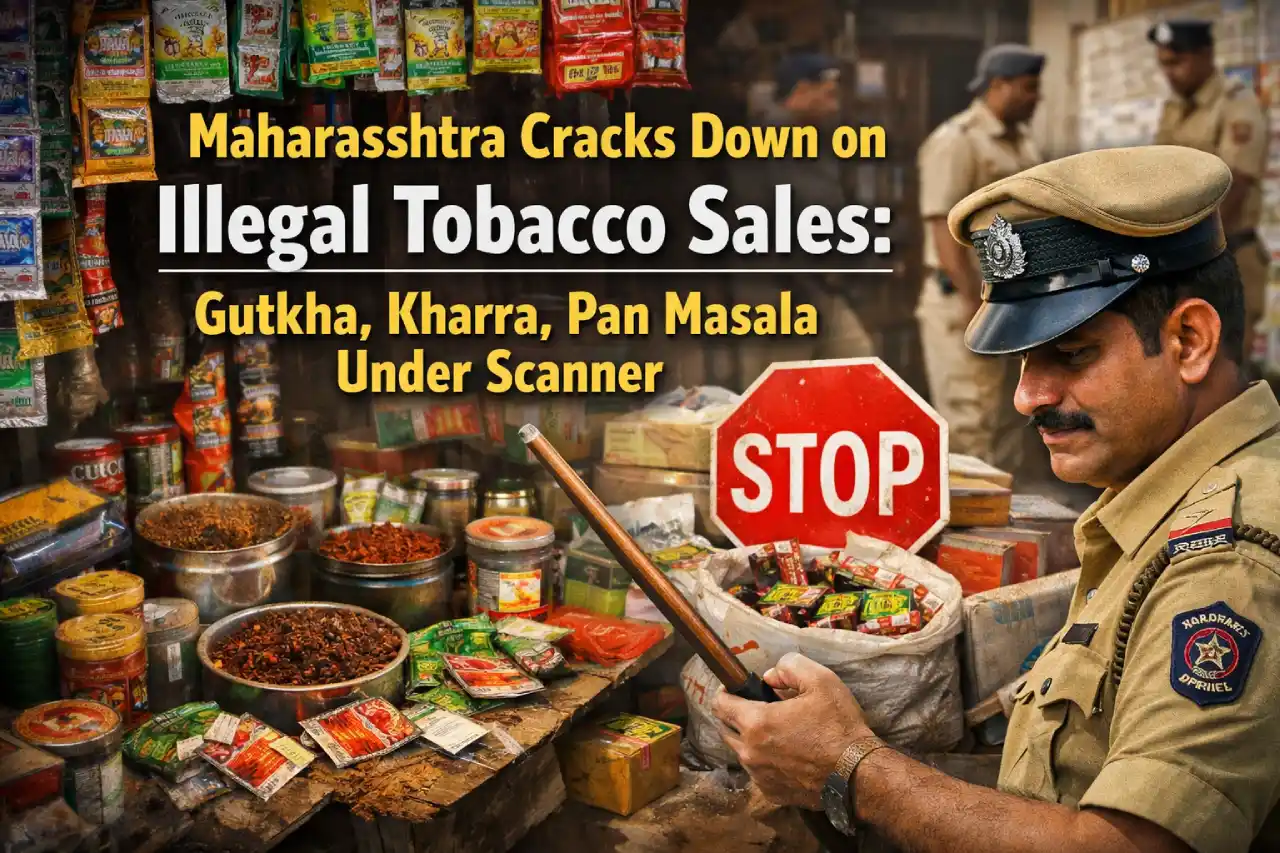
Maharashtra has stepped up its fight against the illegal tobacco trade, with gutkha, kharra, and pan masala once again under strict scrutiny. State authorities have intensified action against manufacturers, distributors, and sellers involved in the unlawful production and sale of these banned or regulated products. This renewed crackdown comes amid growing concerns over public health, especially the easy availability of such products despite long-standing bans. The government’s move signals a clear message that violations related to illegal tobacco will not be taken lightly.
I am writing about this issue because illegal tobacco trade directly affects public health, revenue collection, and law enforcement credibility. Despite repeated bans, gutkha and similar products continue to find their way into local markets, often targeting young users. Understanding what action the Maharashtra government is taking, and why it matters, helps citizens stay informed and aware. It also highlights the need for stricter enforcement and community participation in tackling a problem that refuses to disappear.
Why Gutkha, Kharra and Pan Masala Are in Focus
Gutkha and kharra contain tobacco and nicotine, making them harmful and addictive. In Maharashtra, the sale, manufacture, and storage of gutkha have been banned for years under food safety and public health laws. Pan masala, while legal in certain forms, often becomes illegal when mixed with tobacco or sold alongside banned substances.
Authorities have found that many traders exploit loopholes by selling pan masala and tobacco separately, encouraging consumers to mix them, which defeats the purpose of the ban.
What Action Has Maharashtra Taken
The state government has directed multiple departments, including food safety officials, police, and local administrations, to intensify inspections and raids. Special drives are being conducted to identify illegal manufacturing units, warehouses, and transport networks involved in smuggling banned tobacco products.
Actions taken include:
- Seizure of illegal gutkha, kharra, and pan masala stocks
- Raids on storage units and transport vehicles
- Registration of criminal cases against offenders
- Cancellation of licences of repeat violators
Health and Revenue Concerns Behind the Crackdown
The illegal tobacco trade poses serious health risks, particularly increasing cases of oral cancer and addiction among youth. At the same time, the state suffers revenue losses due to tax evasion linked to unregulated trade.
By tightening enforcement, the government aims to protect public health while also curbing black-market activities that thrive on weak monitoring.
Challenges in Controlling the Illegal Trade
Despite strict laws, enforcement remains challenging due to interstate smuggling, limited manpower, and innovative methods used by traders to avoid detection. Products are often transported in small quantities or disguised as legal goods.
Officials believe sustained monitoring and coordination between departments are essential to make the crackdown effective in the long term.
What This Means for the Public
For citizens, this action serves as a reminder that buying or consuming banned tobacco products is not just harmful but also illegal. Public cooperation, reporting of illegal sales, and awareness at the community level can play a crucial role in supporting government efforts.
Reducing demand is just as important as stopping supply.