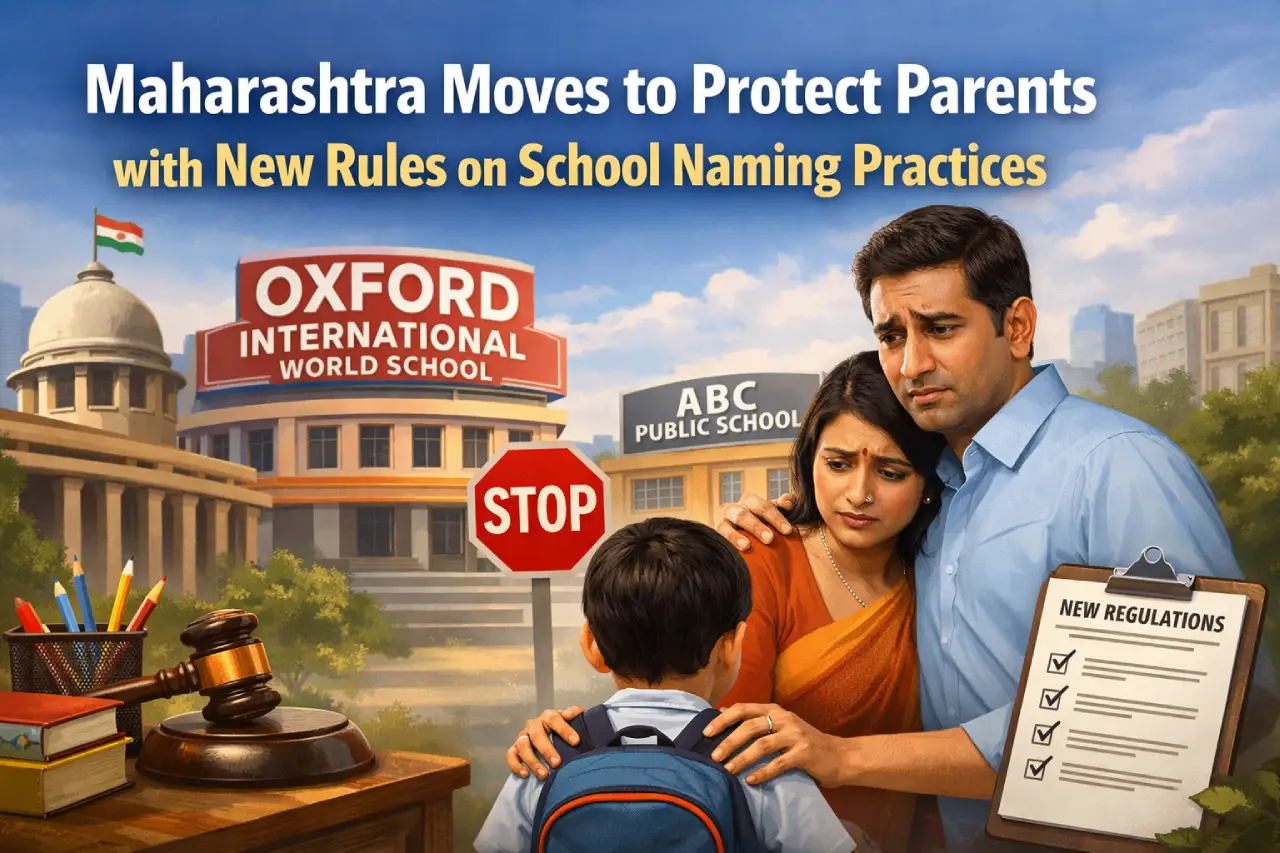
The Maharashtra government has decided to review and regulate misleading school names after growing concerns that certain institutions are confusing parents with names that suggest false affiliations or exaggerated standards. The move comes in response to complaints that some private schools use words like “international”, “public”, or names similar to reputed institutions without having the required approvals or facilities. The state wants to ensure that parents are not misled at the time of admissions and that school names clearly reflect their actual status and recognition.
I am writing about this issue because school admissions are a sensitive and high-stakes decision for families. Many parents rely heavily on a school’s name while choosing where to enrol their children, especially first-time school-goers. When names are misleading, it creates false expectations about infrastructure, curriculum, and quality of education. This decision by the state government highlights the need for transparency in the education system and aims to protect parents from confusion and financial stress.
Why the Government Is Reviewing School Names
Over the years, education officials have observed that several schools adopt names that give an impression of being international boards or elite institutions without proper affiliation. In some cases, schools use names similar to well-known institutions, which can easily mislead parents.
The government believes that such practices affect trust and fairness in the education sector.
What Counts as a Misleading School Name
A school name may be considered misleading if it:
- Suggests affiliation with a foreign or international board without approval
- Uses terms like “international” or “global” without meeting prescribed norms
- Closely resembles the name of an established or government-run institution
- Creates confusion about the school’s academic status or facilities
Proposed Steps by the State Government
The education department is expected to:
- Review existing school names across districts
- Issue clear guidelines on acceptable naming practices
- Ask schools with misleading names to make corrections
- Take action against institutions that fail to comply
Officials have indicated that the focus is not on punishment alone but on long-term clarity and regulation.
How This Will Help Parents and Students
Clear and regulated school names will help parents make informed decisions based on facts rather than branding. It will also create a more level playing field for schools that follow rules and maintain transparency.
Students, in the long run, benefit from an education system where trust and accountability are prioritised.
What Schools Need to Do Now
Schools may be asked to review their names and ensure they match their official recognition and affiliation. Institutions using misleading terms could be given time to rename themselves as per new guidelines.
This step is expected to bring consistency and honesty to the school admission process.