NCERT Class 11 Geography Chapter 10, वायुमंडल में जल, focuses on the role of water present in the atmosphere and how it directly influences weather and climate. This chapter explains concepts like humidity, clouds, rainfall, and precipitation in a simple but scientific manner. It helps students understand why rainfall patterns differ from place to place and how atmospheric moisture affects daily weather conditions.
I am writing about this chapter because students often read about rain, clouds, and humidity in isolation, without realising how closely these ideas are connected. Chapter 10 brings all these concepts together and explains them logically. For Class 11 students, this chapter is important not just for exams, but also for understanding real-life situations like monsoons, droughts, floods, and even heatwaves. Once this chapter is clear, topics such as climate classification and Indian monsoon become much easier later in the syllabus. From an exam point of view, questions from this chapter are usually direct but concept-based, so clarity matters more than mugging up answers.
What This Chapter Is About
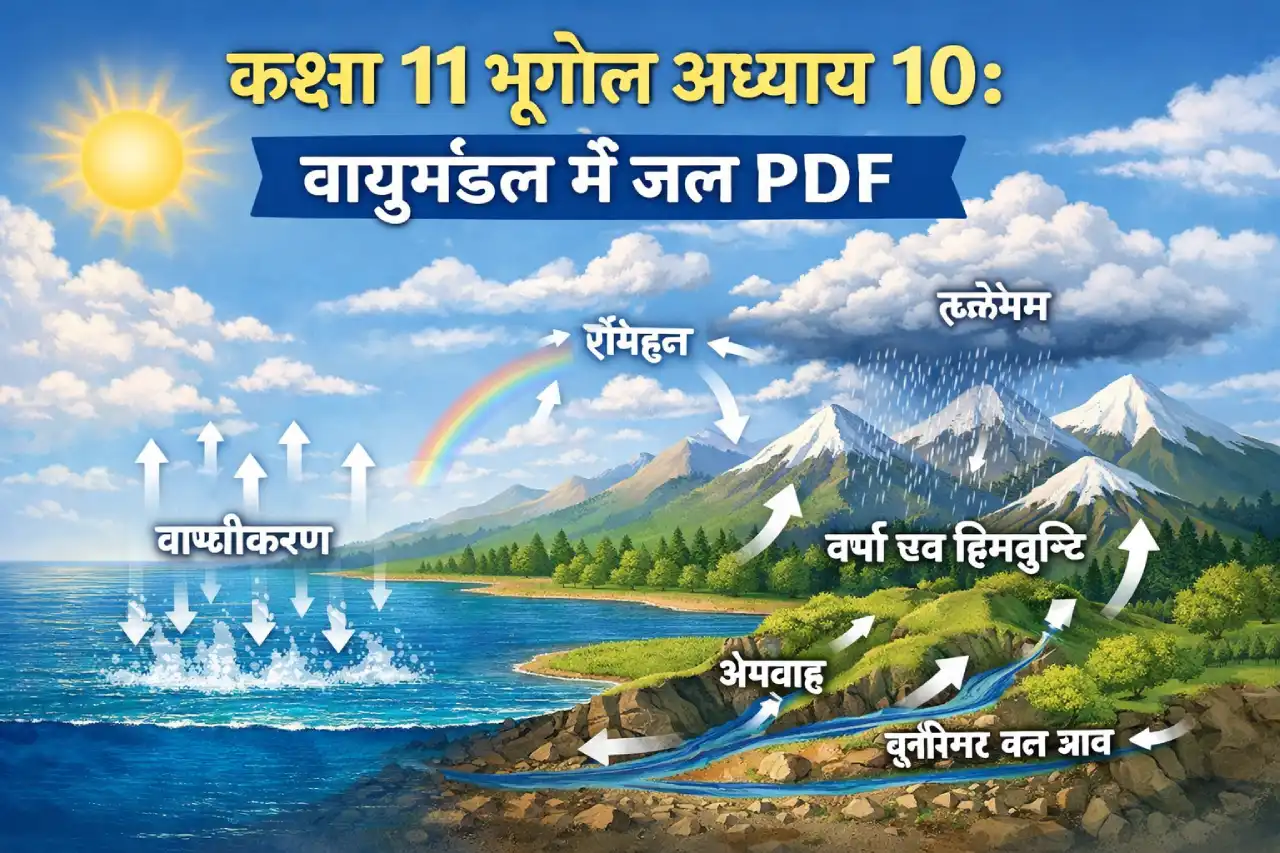
Chapter 10 explains how water vapour enters the atmosphere, how it changes form, and how it finally returns to the Earth as precipitation. It connects atmospheric moisture with weather processes in a very practical way.
Water Vapour and Humidity
The chapter begins by explaining water vapour, which is an invisible but very important component of the atmosphere. Students learn about:
- Absolute humidity
- Specific humidity
- Relative humidity
Understanding these terms helps in answering questions related to weather reports and seasonal changes.
Condensation and Cloud Formation
Another key part of the chapter deals with condensation. It explains how cooling of air leads to cloud formation. Different types of clouds are discussed, such as:
- Cirrus
- Cumulus
- Stratus
- Nimbus
Students are often asked to identify cloud types and link them with weather conditions, making this section very important.
Precipitation and Rainfall
This section explains how precipitation occurs and the different forms it can take. The chapter clearly discusses:
- Rainfall
- Snowfall
- Sleet
- Hail
It also explains rainfall types like convectional, orographic, and cyclonic rainfall, which are frequently asked in exams.
Why Chapter 10 Matters in Exams and Real Life
This chapter plays a key role in understanding weather-related topics. Questions often come from:
- Types of humidity
- Cloud formation process
- Difference between rainfall types
In real life, this chapter helps students understand why coastal areas feel more humid, why hills receive more rainfall, and why deserts remain dry.
How to Download NCERT Class 11 Geography Chapter 10 PDF (Hindi)
Students can download the official Hindi PDF by following these steps:
- Visit the official NCERT website
- Go to the Textbooks / E-Books section
- Select Class 11
- Choose Geography
- Open Fundamentals of Physical Geography (Hindi)
- Click on Chapter 10: वायुमंडल में जल
- Download the PDF for free
Always use the official NCERT PDF to ensure correct content and accurate diagrams.