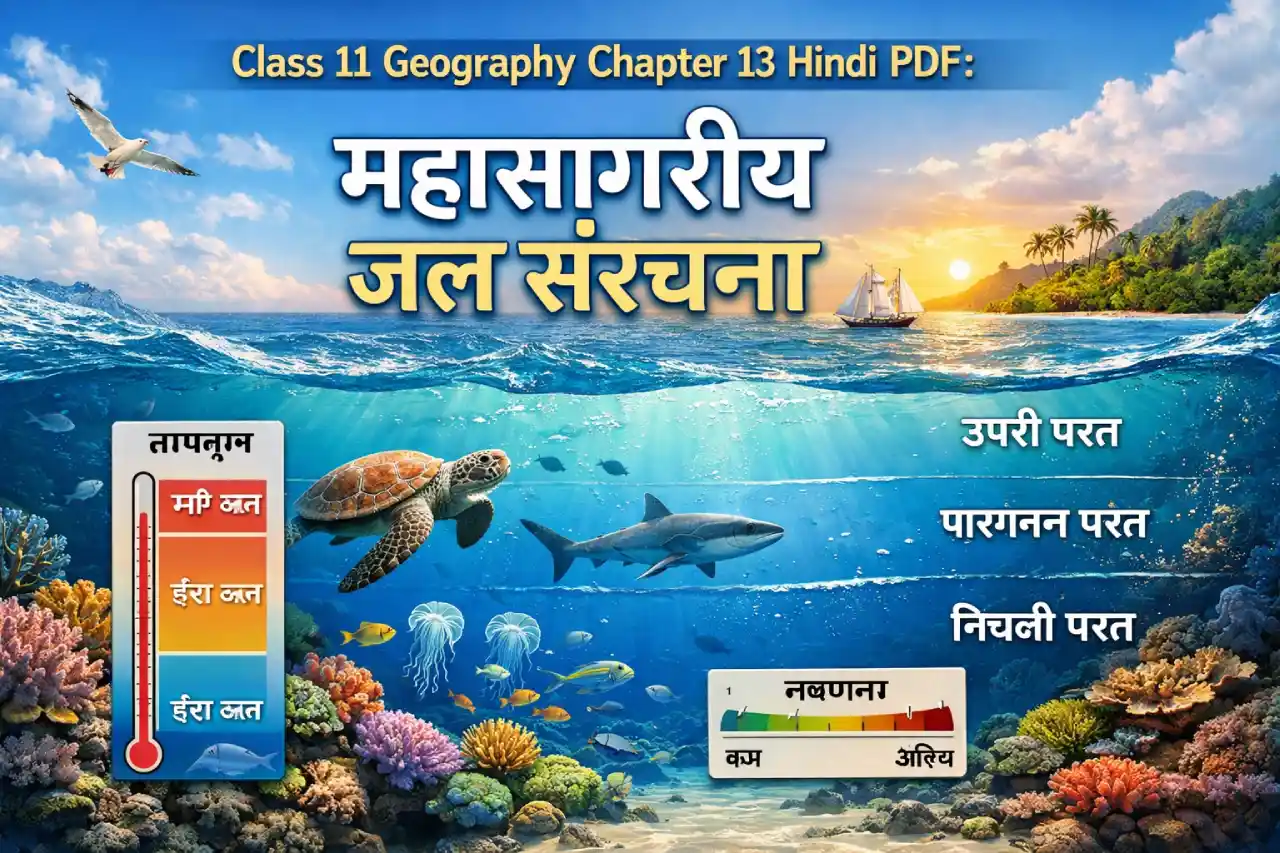
NCERT Class 11 Geography Chapter 13, महासागरीय जल संरचना, introduces students to the hidden world beneath the oceans. This chapter explains the structure of the ocean floor and the different landforms found under ocean water. From continental shelves to deep ocean trenches, students get a clear picture of how the ocean floor is shaped and why it is not flat or uniform. These concepts help students understand plate movements, earthquakes, and volcanic activity better.
I am writing about this chapter because ocean floor structure often feels abstract to students when they first read it. Since we cannot see the ocean bed directly, it becomes difficult to imagine features like abyssal plains or mid-oceanic ridges. NCERT explains these ideas in a simple and logical way, making it easier for students to visualise them through diagrams and examples. This chapter is important not only for Class 11 exams but also for competitive exams where physical geography basics are tested regularly. Once students understand this chapter, topics like plate tectonics and ocean currents become much clearer.
What This Chapter Covers
Chapter 13 focuses on the physical structure of the ocean floor and explains how different underwater features are formed over millions of years.
Major Divisions of the Ocean Floor
The ocean floor is broadly divided into four major parts. This classification helps students remember answers in exams.
Continental Shelf
- Shallow part of the ocean near continents
- Rich in minerals, fisheries, and petroleum
- Most human activities are concentrated here
Continental Slope
- Steeper zone beyond the continental shelf
- Marks the boundary between continental and oceanic crust
- Plays an important role in sediment movement
Deep Sea Plain (Abyssal Plain)
- Largest part of the ocean floor
- Almost flat and very deep
- Covered with fine sediments
Oceanic Deeps (Trenches)
- Deepest parts of the oceans
- Formed due to tectonic plate movement
- Examples are often asked in map-based questions
Submarine Relief Features
Apart from major divisions, the chapter also explains important underwater landforms such as:
- Mid-oceanic ridges
- Seamounts and guyots
- Submarine canyons
These features help students understand volcanic activity and plate boundaries under oceans.
Why Chapter 13 Is Important for Students
This chapter builds the base for understanding:
- Plate tectonics
- Earthquakes and volcanoes
- Distribution of marine resources
Questions from this chapter usually appear as short notes, diagram-based questions, and concept explanations.
How to Download NCERT Class 11 Geography Chapter 13 PDF (Hindi)
Students can download the official Hindi PDF by following these steps:
- Visit the official NCERT website
- Open the Textbooks / E-Books section
- Select Class 11
- Choose Geography
- Click on Fundamentals of Physical Geography (Hindi)
- Select Chapter 13: महासागरीय जल संरचना
- Download the PDF for free
Always rely on the official NCERT PDF to avoid syllabus mismatch.