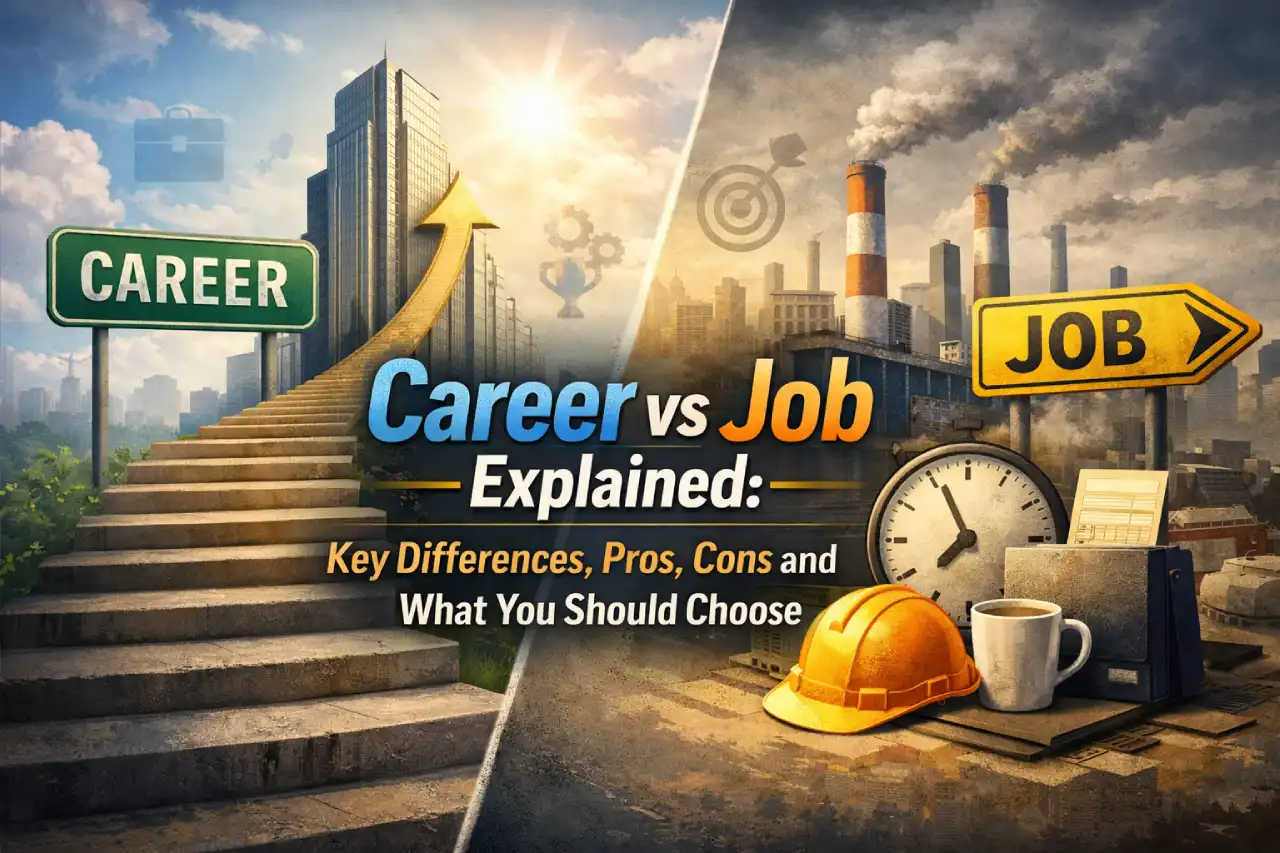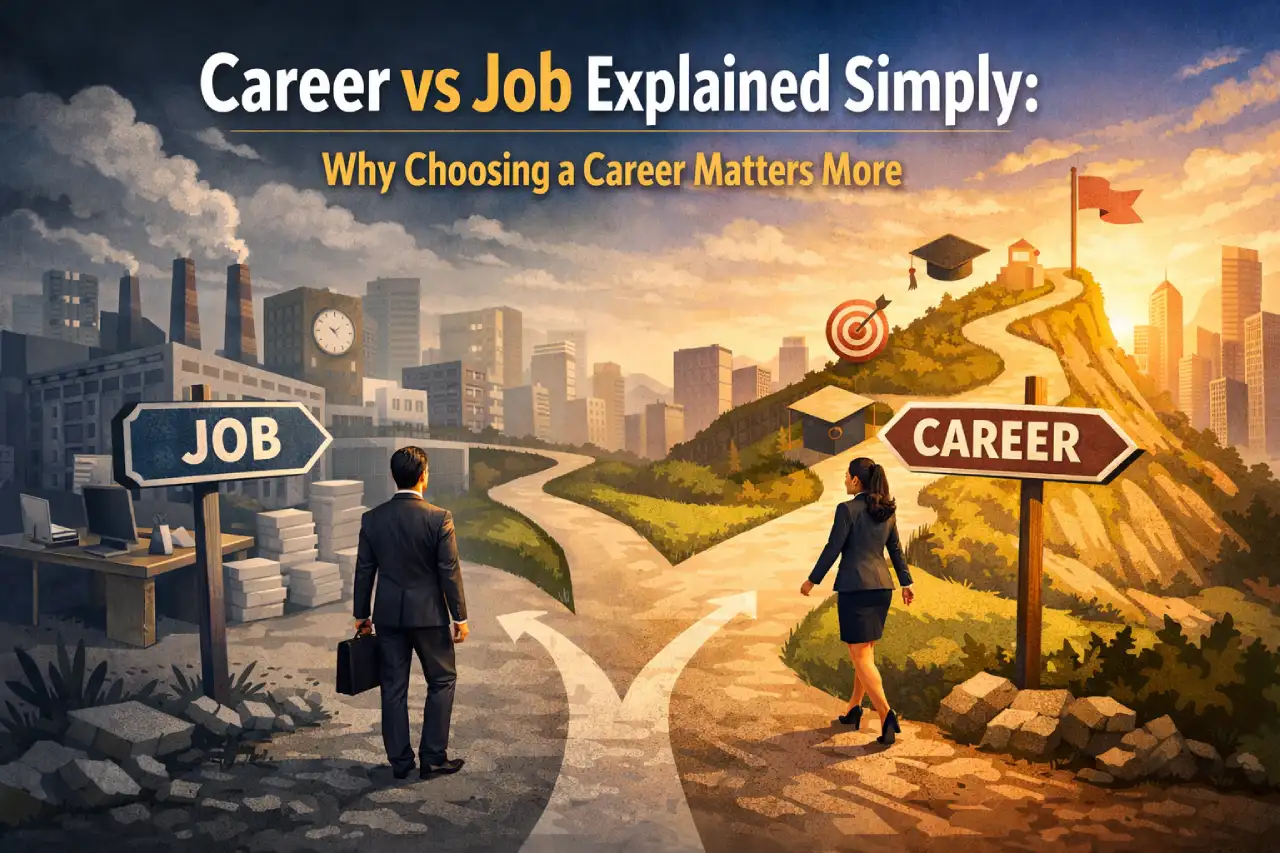
Many beginners entering the professional world often use the words “job” and “career” interchangeably, but they are not the same. A job is usually a role you do to earn money, while a career is a long-term journey built around growth, learning, and purpose. Understanding the difference early can help you make better decisions about education, skill-building, and work choices. This article explains, in simple terms, why focusing on a career can be more beneficial than just settling for a job.
I am writing about this topic because I have seen many students and freshers feel stuck or dissatisfied after taking up work without thinking long-term. When beginners understand the value of a career mindset early, they are less likely to feel lost later. This is important to know because the choices you make in your early years often shape your professional confidence, income growth, and overall satisfaction in the long run.
What Is the Difference Between a Job and a Career?
A job is something you do mainly to meet immediate financial needs. It may or may not align with your interests, skills, or long-term goals. A career, on the other hand, is a series of roles connected by purpose, learning, and progression over time.
In simple terms:
- A job focuses on salary
- A career focuses on growth
- A job is short-term
- A career is long-term
Understanding this difference is the first step towards making smarter professional choices.
Long-Term Growth Is the Biggest Benefit of a Career
One of the biggest advantages of choosing a career over a job is long-term growth. In a career path, each role builds on the previous one. You gain experience, improve skills, and open doors to better opportunities.
With a career:
- Your knowledge deepens over time
- Promotions and leadership roles become possible
- Your professional value increases
In contrast, many jobs offer limited learning and little scope to move ahead.
Career Brings Better Skill Development
A career pushes you to continuously learn and adapt. When you see your work as part of a career, you are more likely to invest time in improving skills, taking certifications, and learning from mistakes.
This leads to:
- Stronger expertise in your field
- Better problem-solving ability
- Higher confidence at work
Jobs often focus only on completing tasks, while careers focus on personal and professional development.
More Stability and Satisfaction in the Long Run
Careers usually offer more stability over time because your experience and skills make you valuable. Even if one role ends, your career does not stop. You can move to another organisation or role within the same field.
Many people also feel more satisfied in a career because:
- Their work has meaning
- They can see progress over the years
- Their efforts feel purposeful
A job may pay bills, but a career often gives a sense of direction.
Career Helps in Better Financial Growth
While a job provides immediate income, a career often leads to better financial growth in the long run. As your experience increases, your earning potential usually rises too.
Career-focused professionals often see:
- Higher salary growth over time
- Better benefits and job security
- More negotiation power
This does not happen overnight, but patience and consistency pay off.
When a Job Still Makes Sense
It is important to be practical. Sometimes, taking up a job is necessary due to financial needs or personal circumstances. A job can also be a starting point for a career if you use it to learn and gain exposure.
The key is mindset. Even if you start with a job, think about how it fits into your long-term career plan.
How Beginners Can Start Thinking About a Career
Beginners can start by:
- Identifying their interests and strengths
- Choosing learning opportunities wisely
- Asking where a role can lead in 5 or 10 years
- Avoiding decisions based only on short-term pay
Small, thoughtful steps early on make a big difference later.