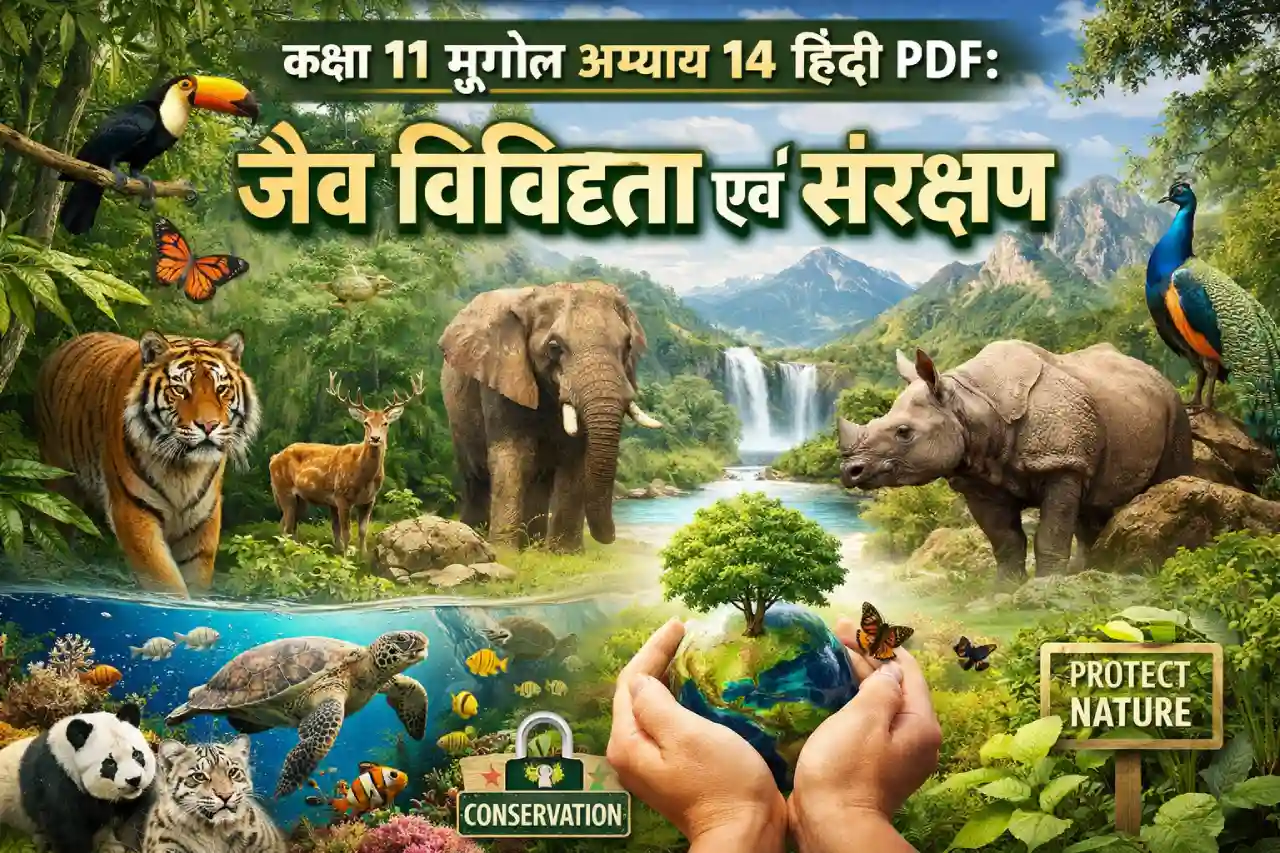
NCERT Class 11 Geography Chapter 14, जैव विविधता एवं संरक्षण, introduces students to the rich variety of life found on Earth and the need to protect it. This chapter explains what biodiversity means, the different levels of biodiversity, and why it is essential for maintaining ecological balance. It also discusses how human activities are affecting plants and animals and why conservation has become a global concern today.
I decided to write about this chapter because biodiversity is no longer just a textbook topic. We hear about climate change, deforestation, wildlife loss, and extinction almost every day. This chapter helps students connect Geography with real-life environmental issues. NCERT presents these ideas in a very practical manner, using examples from India and the world. For students preparing for school exams, competitive exams, or simply trying to understand environmental challenges, this chapter builds strong awareness and responsibility. Understanding biodiversity early helps students develop a balanced view of development and conservation.
What Is Biodiversity
Biodiversity refers to the variety of life forms found on Earth. This includes plants, animals, microorganisms, and the ecosystems they form together.
NCERT explains biodiversity at three levels:
- Genetic diversity
- Species diversity
- Ecosystem diversity
Each level plays an important role in maintaining environmental stability.
Importance of Biodiversity
Biodiversity supports human life in many direct and indirect ways. It provides:
- Food, medicines, and raw materials
- Ecological services like pollination and soil fertility
- Climate regulation and water balance
Loss of biodiversity can disturb ecosystems and directly affect human survival.
Biodiversity in India
India is one of the world’s mega-biodiversity countries. The chapter highlights:
- Rich forest ecosystems
- High number of endemic species
- Biodiversity hotspots like the Himalayas and Western Ghats
These areas are often asked about in exams, especially in short-answer questions.
Conservation of Biodiversity
NCERT clearly explains two major methods of conservation.
In-situ Conservation
- Protection of species in their natural habitat
- National parks, wildlife sanctuaries, and biosphere reserves
Ex-situ Conservation
- Protection outside natural habitat
- Zoos, botanical gardens, seed banks
Both methods are equally important and often appear in comparison-based questions.
Why This Chapter Is Important for Students
This chapter helps students:
- Understand environmental challenges
- Build awareness about sustainable development
- Prepare for Geography, Environment, and General Studies sections
Questions from this chapter are commonly asked in board exams and entrance tests.
How to Download NCERT Class 11 Geography Chapter 14 PDF (Hindi)
Students can download the official Hindi PDF by following these steps:
- Visit the official NCERT website
- Go to the Textbooks / E-Books section
- Select Class 11
- Choose Geography
- Open Fundamentals of Physical Geography (Hindi)
- Click on Chapter 14: जैव विविधता एवं संरक्षण
- Download the PDF for free
Always use the official NCERT PDF to ensure the content matches the latest syllabus.