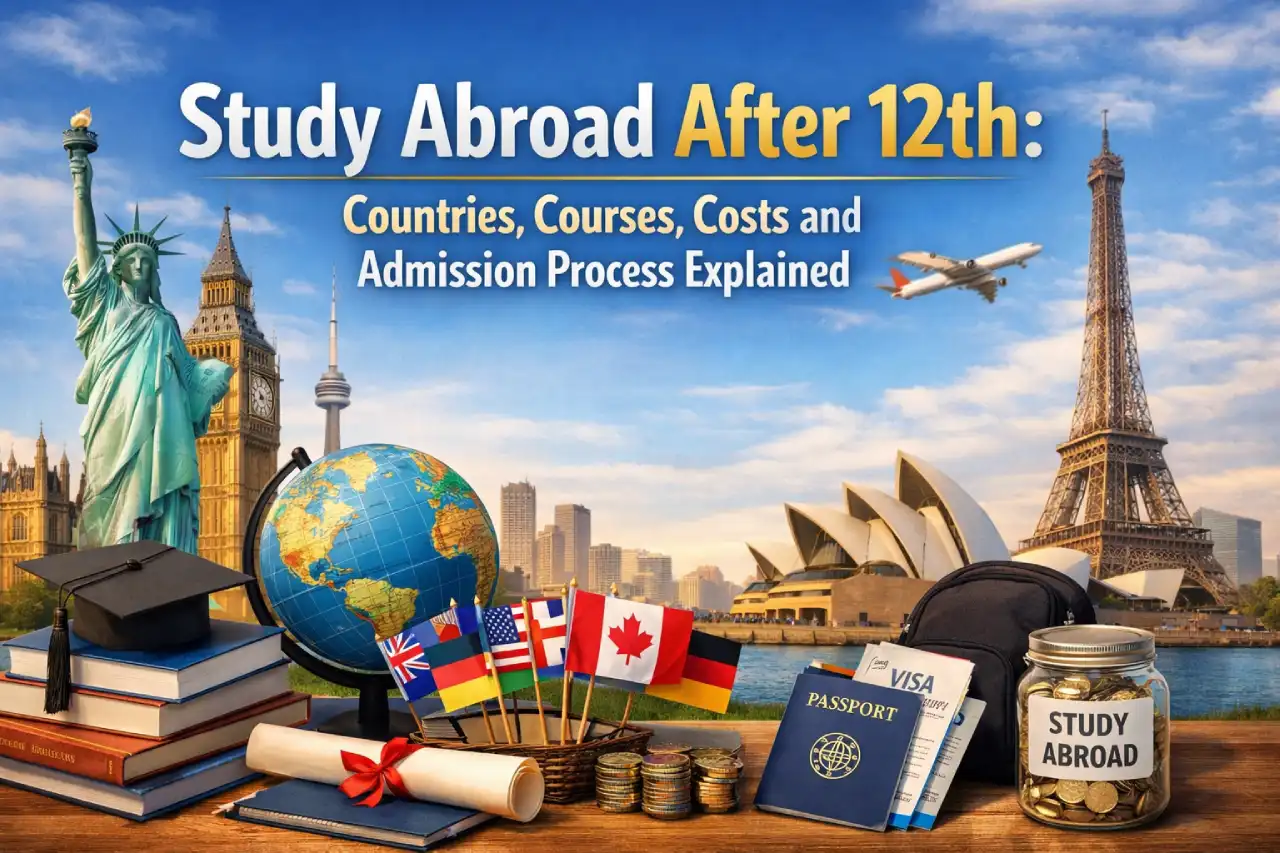
Studying abroad after Class 12 has become a popular choice for Indian students who want global exposure, better career opportunities, and access to world-class education. With more countries opening up undergraduate programmes to international students, the options today are far wider than they were a decade ago. From engineering and business to arts, design, and healthcare, students can now choose courses that align closely with their interests and long-term goals.
I am writing this guide because many students and parents feel overwhelmed when they start exploring study abroad options after 12th. There is excitement, but also confusion about countries, eligibility, costs, exams, and career outcomes. This article is meant to break things down clearly, without jargon, so you can understand what studying abroad really involves and decide if it is the right step for you.
Why Consider Studying Abroad After 12th
Going abroad for undergraduate studies offers more than just a degree. It exposes students to new cultures, teaching styles, and ways of thinking.
Some key reasons students choose this path include:
- Internationally recognised degrees
- Better research and practical learning facilities
- Exposure to global job markets
- Development of independence and confidence
- Flexible education systems with multiple career pathways
For many, it is as much a personal growth journey as an academic one.
Popular Countries to Study Abroad After 12th
Different countries offer different strengths, costs, and admission requirements. Choosing the right country depends on budget, course preference, and long-term plans.
Some of the most popular destinations are:
- United States for flexible majors and research-focused education
- United Kingdom for shorter degree durations and strong academic reputation
- Canada for affordable education and post-study work options
- Australia for student-friendly policies and diverse courses
- Germany for low or no tuition fees in public universities
- New Zealand for quality education and safe environment
Each country has its own visa rules, work rights, and cost structure.
Courses You Can Study Abroad After 12th
Students from all streams can find suitable options abroad.
Science Stream Students
Popular choices include:
- Engineering and Technology
- Computer Science and Data Science
- Medicine-related pre-medical or biomedical courses
- Biotechnology and Environmental Science
Commerce Stream Students
Common options are:
- Business Administration and Management
- Economics and Finance
- Accounting and International Business
- Marketing and Entrepreneurship
Arts and Humanities Students
Students can explore:
- Liberal Arts programmes
- Psychology and Sociology
- Media, Journalism, and Communication
- Design, Fashion, and Fine Arts
Many countries allow flexibility to change majors or combine subjects.
Eligibility Criteria for Studying Abroad After 12th
Eligibility varies by country and university, but some common requirements apply almost everywhere.
These usually include:
- Completion of Class 12 from a recognised board
- Minimum academic percentage as per course requirement
- Proof of English language proficiency
- Valid passport and student visa
Some universities may also ask for entrance tests, portfolios, or interviews.
English Language Tests You May Need
Most international universities require proof of English proficiency.
Commonly accepted tests include:
- IELTS
- TOEFL
- PTE Academic
The required score depends on the university and course.
Cost of Studying Abroad After 12th
Cost is one of the biggest concerns for families. Expenses depend on the country, university, and lifestyle.
You should plan for:
- Tuition fees
- Accommodation and food
- Health insurance
- Travel and visa costs
- Personal expenses
Some countries like Germany offer low-cost education, while others like the US can be expensive but offer scholarships.
Scholarships and Financial Support
Many students assume studying abroad is unaffordable, but scholarships can reduce the burden significantly.
Options include:
- University-specific scholarships
- Government-funded scholarships
- Merit-based and need-based aid
- Country-specific education grants
Early research and timely applications increase chances of financial support.
Application Process Step by Step
The application process usually follows a clear timeline.
It includes:
- Shortlisting countries and universities
- Preparing academic documents
- Taking language or entrance tests
- Writing statements of purpose
- Applying online to universities
- Accepting offer letters
- Applying for a student visa
Starting early, ideally in Class 11 or early Class 12, helps avoid last-minute stress.
Work Opportunities During and After Studies
Many countries allow international students to work part-time during studies and full-time during vacations.
Post-study work visas are available in countries like Canada, Australia, and the UK, which can help students gain international work experience after graduation.
Things Parents and Students Should Discuss Honestly
Before finalising the decision, families should have open discussions about:
- Budget and long-term financial planning
- Student readiness for living independently
- Career goals after graduation
- Backup plans if things do not go as expected
A well-thought-out plan works better than emotional decisions.