Artificial Intelligence is no longer a future concept. It is already shaping how businesses operate, how healthcare is delivered, and how technology is used in everyday life. For students looking ahead to 2026, AI offers some of the most exciting and stable career opportunities. From automation to data-driven decision-making, organisations across sectors are actively hiring young professionals with AI-related skills, making this field one of the fastest-growing career paths.
I am writing about this topic because many students feel confused when they hear broad terms like AI, machine learning, or data science but are unsure what actual job roles exist. Choosing the right AI career early can save years of trial and error. Understanding the options available in 2026 helps students plan their education, skills, and internships with a clear direction in mind.
Why Artificial Intelligence Is a Smart Career Choice
AI jobs are growing because companies want faster processes, better predictions, and smarter systems. From startups to government projects, AI is being used everywhere. For students, this means more job openings, better pay, and long-term career security.
Another big advantage is flexibility. AI professionals are needed in IT, healthcare, education, finance, manufacturing, and even agriculture. This allows students to combine AI skills with their personal interests.
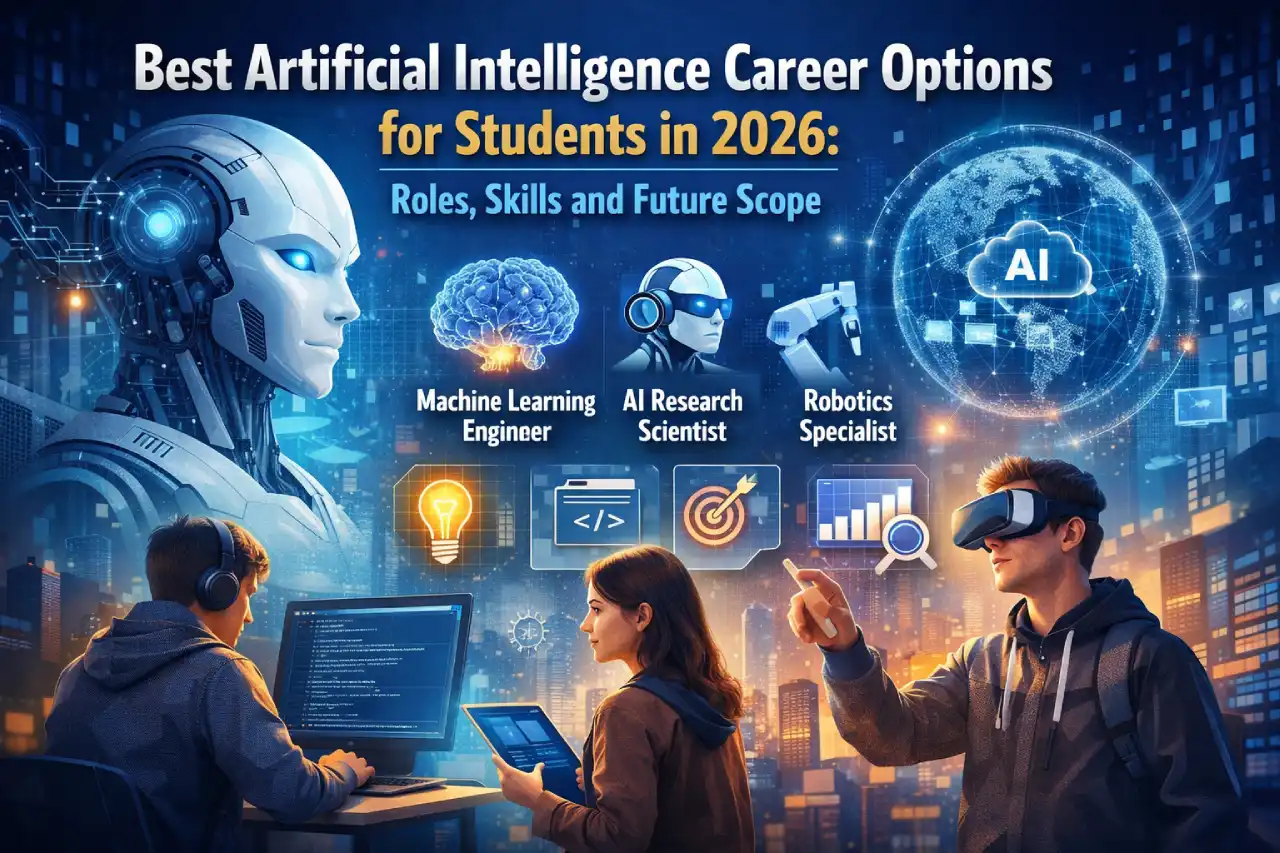
Machine Learning Engineer
Machine Learning Engineers build systems that learn from data and improve over time. This is one of the most in-demand AI roles.
Key responsibilities include:
- Designing machine learning models
- Training systems using large datasets
- Improving accuracy and performance of algorithms
Students interested in mathematics, coding, and problem-solving often do well in this role.
Data Scientist
Data Scientists analyse large amounts of data to find patterns and insights that help organisations make decisions. This role blends statistics, programming, and business understanding.
Common tasks include:
- Cleaning and analysing data
- Creating predictive models
- Presenting insights in a simple way
For students who enjoy numbers and logical thinking, data science remains a strong option in 2026.
AI Research Scientist
AI Research Scientists focus on developing new algorithms and improving existing AI technologies. This role is more research-oriented and often linked with higher studies.
This job suits students who:
- Enjoy deep theoretical learning
- Are interested in innovation and experimentation
- Plan to pursue master’s or doctoral studies
Research roles are common in universities, research labs, and advanced tech companies.
AI Software Developer
AI Software Developers integrate AI models into real-world applications like mobile apps, websites, and enterprise software.
Their work includes:
- Writing clean and efficient code
- Connecting AI models with user interfaces
- Testing and deploying AI-powered applications
This role is ideal for students who like building products and seeing immediate results of their work.
Robotics Engineer
Robotics Engineers use AI to design intelligent machines that can perform tasks independently. This field is growing in manufacturing, healthcare, and defence sectors.
Responsibilities often involve:
- Designing robotic systems
- Integrating sensors and AI models
- Testing machine performance
Students with interest in electronics, mechanics, and AI find this role rewarding.
AI Ethics and Policy Analyst
As AI grows, so do concerns around bias, privacy, and responsible use. AI Ethics and Policy Analysts focus on ensuring AI systems are fair and transparent.
This role involves:
- Studying ethical risks of AI systems
- Advising organisations on compliance and policy
- Balancing innovation with social responsibility
It is a good option for students interested in technology, law, and public policy.
Skills Students Should Start Building Now
To prepare for AI jobs in 2026, students should focus on building the right foundation early.
Important skills include:
- Programming languages like Python
- Basic understanding of mathematics and statistics
- Data handling and analysis
- Logical thinking and problem-solving
- Curiosity and continuous learning
Soft skills like communication also matter, especially when explaining complex ideas simply.
Courses and Learning Pathways
Students do not need to wait for a degree alone. Online courses, internships, and project-based learning play a big role in AI careers.
Useful steps include:
- Taking beginner AI and data science courses
- Working on small real-world projects
- Participating in hackathons and internships
- Following AI trends and industry news
Practical exposure often matters more than certificates alone.
Job Opportunities in India and Abroad
India is emerging as a strong AI talent hub, with opportunities in IT services, startups, and government initiatives. At the same time, AI skills are globally recognised, allowing students to work abroad or with international companies remotely.
This global demand makes AI one of the most future-proof career choices.