JOIN WHATSAPP
STORIES

IIIT Delhi Launches AI Fabrics Course with Marvell to Train Engineers in Next-Gen AI Systems

IIIT Delhi Launches AI Fabrics Course with Marvell to Train Engineers in Next-Gen AI Systems

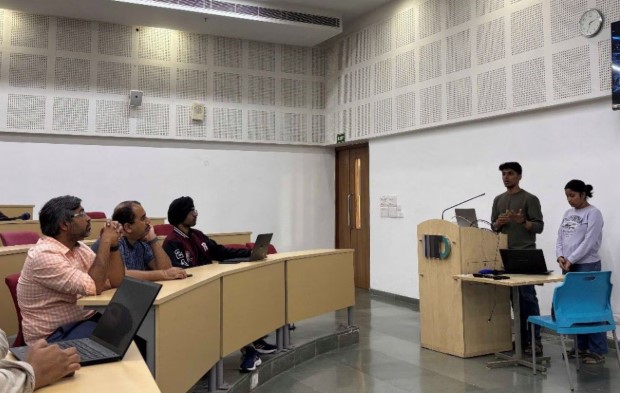
Indraprastha Institute of Information Technology Delhi has introduced a new advanced course focused on AI Fabrics and Systems, marking an important step in aligning higher education with the evolving needs of artificial intelligence infrastructure. Launched in collaboration with the Indian affiliate of Marvell Technology, the programme titled Networks for AI/ML Systems is designed to explore the systems layer of modern AI, where performance is shaped by networking fabrics, memory hierarchies, and large-scale distributed execution.

I am writing about this development because conversations around AI education often focus only on algorithms and models, while the systems that actually power large-scale AI are overlooked. For students and professionals aiming to work on real-world AI deployments, understanding how data moves, scales, and performs across hardware and networks is critical. This course signals a shift towards deeper, industry-relevant learning that can directly influence India’s role in next-generation AI infrastructure.

What the New AI Fabrics and Systems Course Is About

The newly launched programme, Networks for AI/ML Systems, is an academic–industry course that focuses on the backbone of modern AI systems. Instead of concentrating only on software models, the course dives into how AI workloads are executed at scale using advanced networking fabrics, memory systems, and distributed computing architectures.

According to the official statement, the course aims to bridge the gap between theoretical AI knowledge and real-world system-level performance challenges.

Role of IIIT Delhi and Marvell in the Programme

IIIT Delhi brings its strong academic foundation in computer science and engineering, while Marvell contributes deep industry expertise in networking and semiconductor technologies. This combination allows students to learn directly from real-world system design practices used in large AI deployments.

The collaboration reflects a growing trend where universities and technology companies jointly design courses that go beyond textbooks and reflect current industry needs.

Why Systems-Level AI Education Matters

As AI models become larger and more complex, performance bottlenecks often come from system limitations rather than algorithms. Experts point out that networking latency, memory access, and distributed execution now play a major role in AI efficiency.

From my perspective, this course addresses a real gap in AI education by shifting attention to the infrastructure that actually makes large-scale AI possible.

Focus Areas of the Programme

The course will cover key technical areas such as:

  • AI and ML networking fabrics
  • Memory hierarchies for high-performance computing
  • Distributed execution of AI workloads
  • System-level optimisation for AI performance

These topics are increasingly important for engineers working on data centres, cloud platforms, and large AI clusters.

Future Plans for the IIIT Delhi–Marvell Collaboration

Beyond the current course, IIIT Delhi and Marvell plan to deepen their collaboration through joint research initiatives, advanced coursework, and continued mentoring. The long-term goal is to strengthen India’s capabilities in AI systems and fabrics, not just AI applications.

This extended partnership also opens opportunities for students to engage with cutting-edge research and industry-led problem solving.

What This Means for Students and India’s AI Ecosystem

For students, this programme offers exposure to a niche but highly valuable area of AI engineering. For India, it represents a move towards building expertise in core AI infrastructure, which is essential for competing globally in advanced AI systems.


Leave a Comment

End of Article

Education for Viksit Maharashtra Meet on April 4–5: Key Discussions on NEP, Skills and Innovation

Education for Viksit Maharashtra Meet on April 4–5: Key Discussions on NEP, Skills and Innovation

A two-day national conference, “Education for Viksit Maharashtra,” will be held on April 4 and 5, bringing academicians, policymakers, and industry leaders onto a common platform. The discussions will centre on aligning the future of education with the vision of the National Education Policy (NEP) 2020. Scheduled at the Visvesvaraya National Institute of Technology (VNIT) auditorium, the event aims to examine how education can contribute to creating a progressive, knowledge-driven Maharashtra.

I am writing about this because discussions around education reforms are becoming increasingly important, especially as India moves towards the vision of Viksit Bharat 2047. From what I have observed, such conferences are not just formal events but platforms where real ideas and collaborations take shape. Understanding what is being discussed in these forums can give students, educators, and even parents a clearer picture of how the education system is evolving and what changes we can expect in the coming years.

Overview of the Conference

The conference is being organised under the banner of Maharashtra Gyan Sabha and aims to bring together key stakeholders in education.

  • Event Name: Education for Viksit Maharashtra
  • Dates: April 4 and April 5
  • Venue: VNIT Auditorium, Nagpur
  • Focus: Education reforms under NEP 2020

The event is expected to encourage meaningful discussions between academia and industry.

Organisers and Participating Institutions

This national meet is an initiative of Shiksha Sanskriti Utthan Nyas, New Delhi, and is being jointly organised by several reputed institutions.

Key organisers include:

  • Nagpur University
  • Gondwana University
  • Visvesvaraya National Institute of Technology (VNIT)
  • Indian Institute of Management (IIM) Nagpur

This collaboration highlights the importance of bringing different institutions together for a common goal.

Key Dignitaries and Leadership

The conference will be attended by several prominent leaders and officials.

  • Chief Minister Devendra Fadnavis will inaugurate the event
  • Union Minister Nitin Gadkari will attend the valedictory session
  • Revenue Minister Chandrashekhar Bawankule and Education Minister Chandrakant Patil will also be present
  • Minister of State Pankaj Bhoyar and other officials will join the discussions
  • The inaugural session will be presided over by Atul Kothari

Such participation shows the importance being given to education at the policy level.

Main Themes of Discussion

The conference will focus on several important themes related to education and development.

  • Aligning education with industry needs
  • Promoting skill-based and practical learning
  • Encouraging innovation and research
  • Integrating Indian knowledge systems into modern education
  • Ensuring holistic development of students

Experts will also share best practices and innovative models from different institutions.

Focus on NEP 2020 and Viksit Bharat Vision

One of the main goals of this conference is to align education with national priorities.

  • NEP 2020 focuses on flexibility, skill development, and multidisciplinary learning
  • The vision of Viksit Bharat 2047 aims for a developed and knowledge-driven nation
  • Education is seen as a key driver for economic and social progress

In my opinion, connecting education with real-world needs is essential for long-term growth.

Why This Conference Matters

Events like this play an important role in shaping the future of education.

  • They bring together different perspectives from academia and industry
  • Help identify gaps in the current education system
  • Encourage collaboration and policy improvements
  • Provide direction for future reforms

From what I see, such discussions can directly impact how students learn in the coming years.

Who Should Pay Attention to This

This conference is relevant for a wide range of people.

  • Students planning their careers
  • Teachers and educators
  • Policymakers and education authorities
  • Industry professionals

Even if you are not directly involved, understanding these developments can be useful.

Leave a Comment

End of Article

Loading more posts...

Important Video