JOIN WHATSAPP
STORIES

NCERT Class 10 Science Chapter 8 Heredity PDF – Free Download & Full Chapter Overview

NCERT Class 10 Science Chapter 8 Heredity PDF

Chapter 8 of Class 10 Science, titled Heredity, introduces the concepts of inheritance, genetic traits, and how features are passed from one generation to another. It covers the basics of Mendel’s experiments, dominant and recessive traits, and the difference between inherited and acquired traits. It also talks about sex determination and how variations occur during reproduction. This chapter lays the foundation for understanding evolution and modern genetics.

I’m writing about this topic because Heredity is not only an important part of the CBSE Class 10 syllabus but also a gateway to understanding deeper topics in biology like DNA, genetic diseases, and biotechnology. When I was preparing for my boards, I realised that students often get confused by terms like alleles, genotype, and phenotype. That’s where the NCERT PDF helped — everything is presented clearly, with simple examples and well-labelled diagrams. Having quick access to this chapter in PDF form helps with quick revision, especially during exam time or while solving sample papers and previous year questions. This chapter also improves general knowledge — many topics like eye colour, blood group inheritance, or why children look like their parents become easier to understand with it.

Key Topics Covered in Chapter 8: Heredity

Here’s a breakdown of what you’ll learn in this chapter:

Mendel’s Experiments

  • Gregor Mendel and his work with pea plants
  • Monohybrid and dihybrid crosses
  • Laws of inheritance
  • Dominant vs recessive traits
  • Punnett square explanation

Inherited and Acquired Traits

  • Difference between traits passed through genes and those developed during life
  • Examples to clearly differentiate between the two

Sex Determination

  • How sex is determined in humans
  • Role of XX and XY chromosomes
  • Diagram of male and female chromosome pairs

Variations and Their Importance

  • Types of variations
  • Role in evolution
  • How small changes during reproduction can lead to large evolutionary shifts over time

This chapter uses simple tables and figures to explain tricky topics. It’s important for both short and long answer questions in the board exams.

Download PDF

Click here to download NCERT Class 10 Science Chapter 8: Heredity PDF
Leave a Comment

End of Article

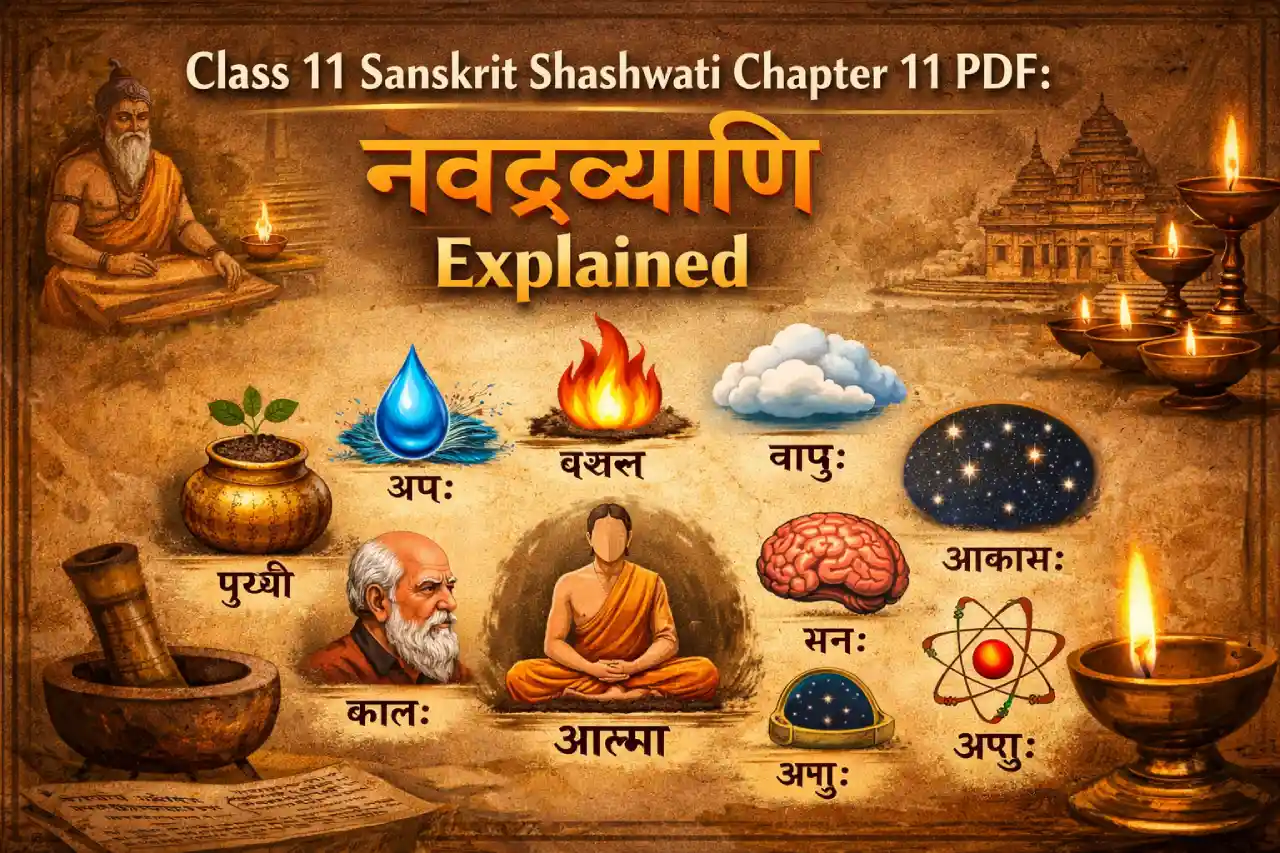
Class 11 Sanskrit Shashwati Chapter 11 PDF: नवद्रव्याणि Explained

Class 11 Sanskrit Shashwati Chapter 11 PDF: नवद्रव्याणि Explained

NCERT Class 11 Sanskrit Shashwati Chapter 11, titled “नवद्रव्याणि”, introduces students to an important concept from Indian philosophy—the nine fundamental substances that make up the universe. The chapter explains these elements in a simple and structured way, helping students understand how ancient thinkers tried to explain the nature of reality through observation and logic.

I am writing about this chapter because many students search for the official NCERT PDF along with a simple explanation before exams. In my experience, topics like “नवद्रव्याणि” may feel slightly abstract at first, but once you understand the list and their meanings, it becomes quite easy to remember and revise. This chapter is important not only for Sanskrit exams but also for gaining a basic idea of traditional Indian philosophy. It helps students connect language learning with deeper concepts. Studying from the official NCERT book and revising regularly can make this chapter scoring and easy to handle.

About the Chapter: नवद्रव्याणि

The term “नवद्रव्याणि” means “nine substances.” These are considered the basic elements that exist in the universe according to classical Indian thought.

The chapter explains each of these substances and their role in the functioning of the world.

The Nine Substances Explained

Here is a simple table to understand the nine dravyas:

Sanskrit TermMeaning (Simple English)
पृथ्वी (Prithvi)Earth
आपः (Apah)Water
तेजः (Tejas)Fire
वायु (Vayu)Air
आकाश (Akasha)Space
काल (Kala)Time
दिशा (Disha)Direction
आत्मा (Atma)Soul
मनः (Manas)Mind

These elements together explain the physical and non-physical aspects of existence.

Key Ideas in the Chapter

1. Understanding the Universe

The chapter explains how everything in the world is made up of basic substances.

2. Physical and Non-Physical Elements

Some substances like earth and water are physical, while others like time and soul are abstract.

3. Connection Between Mind and Body

The inclusion of “मनः” (mind) and “आत्मा” (soul) shows the importance of inner consciousness.

Why This Chapter Is Important for Students

  • Helps understand basic philosophical concepts
  • Improves Sanskrit reading and comprehension
  • Important for exam questions and explanations
  • Builds logical and conceptual thinking

Students who understand the list properly can easily score marks.

Study Tips for Chapter 11

  • Memorise the nine dravyas and their meanings
  • Understand the difference between physical and abstract elements
  • Practise writing short explanations
  • Revise regularly using a table format

This makes the chapter easier to revise before exams.

How to Download NCERT Class 11 Sanskrit Shashwati Chapter 11 PDF

Students can download the official chapter PDF from the National Council of Educational Research and Training website by following these steps:

Always use the official NCERT website to ensure you get the correct and updated version.

Leave a Comment

End of Article

Loading more posts...