JOIN WHATSAPP
STORIES

Class 11 Geography – Bhugol Main Prayogatmak Karya Chapter 6 PDF: सुदूर संवेदन का परिचय

Class 11 Geography – Bhugol Main Prayogatmak Karya Chapter 6 PDF: सुदूर संवेदन का परिचय

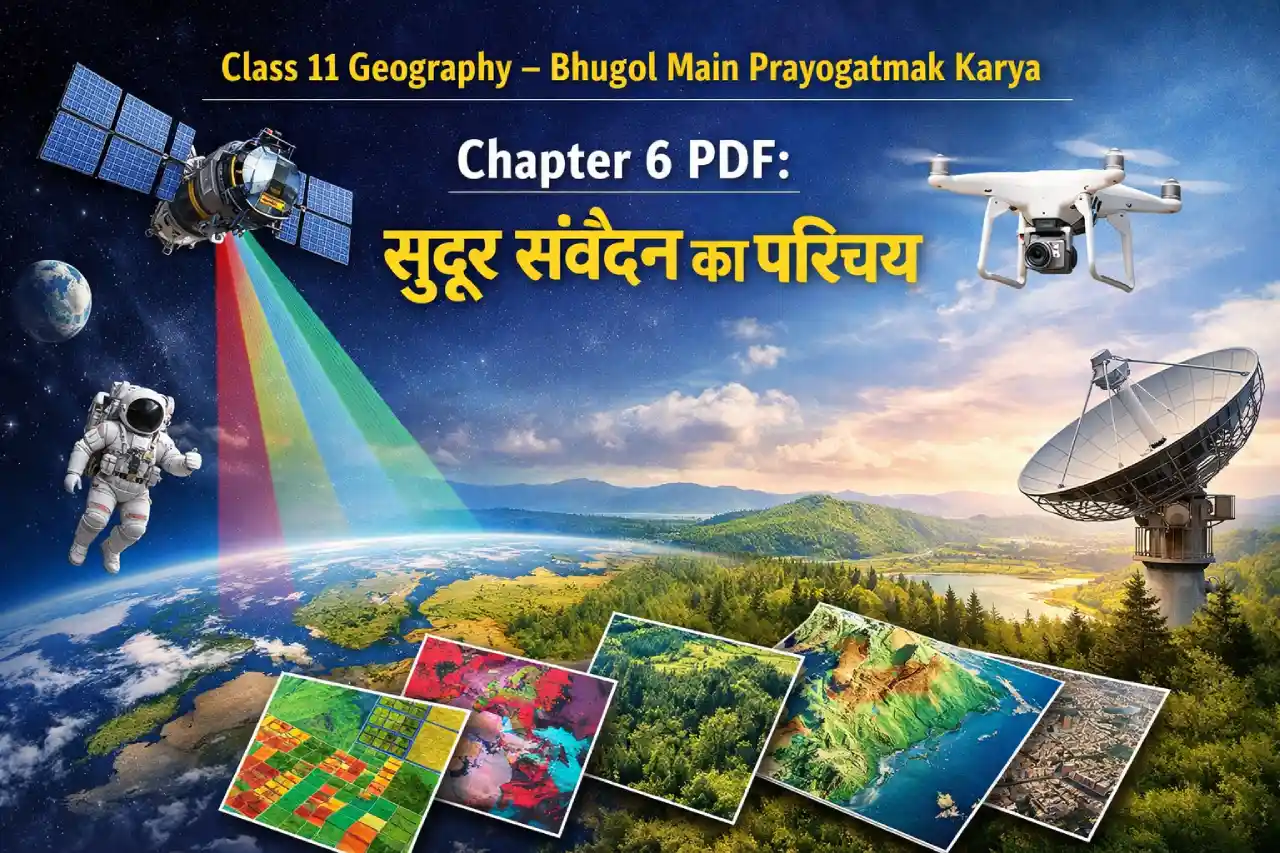
NCERT Class 11 Geography Practical Chapter 6, titled सुदूर संवेदन का परिचय (Introduction to Remote Sensing), introduces students to the basics of remote sensing and how information about the Earth is collected from a distance using satellites and sensors. This chapter helps learners understand how modern technology supports geographical studies in a practical way.

I am writing about this chapter because remote sensing is no longer just a topic in textbooks. It is widely used in weather forecasting, disaster management, agriculture planning, urban development, and environmental monitoring. Many students feel this chapter is technical, but once the basic ideas are clear, it becomes quite interesting. Having the NCERT PDF and a simple explanation can help students build a strong base and prepare better for school exams as well as future studies in geography and related fields.

What You Learn in Chapter 6

This chapter focuses on introducing the concept and working of remote sensing.

  • Meaning of remote sensing
  • Components of a remote sensing system
  • Types of sensors and platforms
  • Basic idea of satellite imagery
  • Uses of remote sensing in geography

What Is Remote Sensing

Remote sensing is the science of collecting information about the Earth’s surface without direct contact. Data is captured through satellites or aircraft using sensors that record reflected or emitted energy.

In simple words, instead of going to a place physically, we use images taken from space or air to study land, water, vegetation, and human activities.

Main Components of a Remote Sensing System

A basic remote sensing system includes:

  • Energy source (usually the Sun)
  • Earth surface that reflects or emits energy
  • Sensor that records the data
  • Satellite or aircraft carrying the sensor
  • Ground station for data processing

Understanding this flow makes the whole process easier to remember.

Types of Remote Sensing

Students should know the two main types:

  • Passive remote sensing – uses natural energy like sunlight
  • Active remote sensing – uses its own energy source, such as radar

Both types have different applications depending on the situation.

Applications of Remote Sensing

Remote sensing is used in many real-life areas.

  • Weather and climate studies
  • Flood and cyclone monitoring
  • Crop assessment and soil mapping
  • Forest cover and wildlife monitoring
  • Urban planning and infrastructure development

These examples often appear in exam answers.

Why This Chapter Is Important for Exams

Chapter 6 connects geography with modern technology.

  • Builds understanding of geospatial tools
  • Helps in answering application-based questions
  • Useful for board exams and competitive exams
  • Creates foundation for GIS and advanced studies

How to Download NCERT Class 11 Geography Practical Chapter 6 PDF

Students can download the official PDF from the NCERT website by following these steps:

Always rely on the official source for correct and updated material.
Leave a Comment

End of Article

Class 11 Sanskrit Shashwati Chapter 11 PDF: नवद्रव्याणि Explained

Class 11 Sanskrit Shashwati Chapter 11 PDF: नवद्रव्याणि Explained

NCERT Class 11 Sanskrit Shashwati Chapter 11, titled “नवद्रव्याणि”, introduces students to an important concept from Indian philosophy—the nine fundamental substances that make up the universe. The chapter explains these elements in a simple and structured way, helping students understand how ancient thinkers tried to explain the nature of reality through observation and logic.

I am writing about this chapter because many students search for the official NCERT PDF along with a simple explanation before exams. In my experience, topics like “नवद्रव्याणि” may feel slightly abstract at first, but once you understand the list and their meanings, it becomes quite easy to remember and revise. This chapter is important not only for Sanskrit exams but also for gaining a basic idea of traditional Indian philosophy. It helps students connect language learning with deeper concepts. Studying from the official NCERT book and revising regularly can make this chapter scoring and easy to handle.

About the Chapter: नवद्रव्याणि

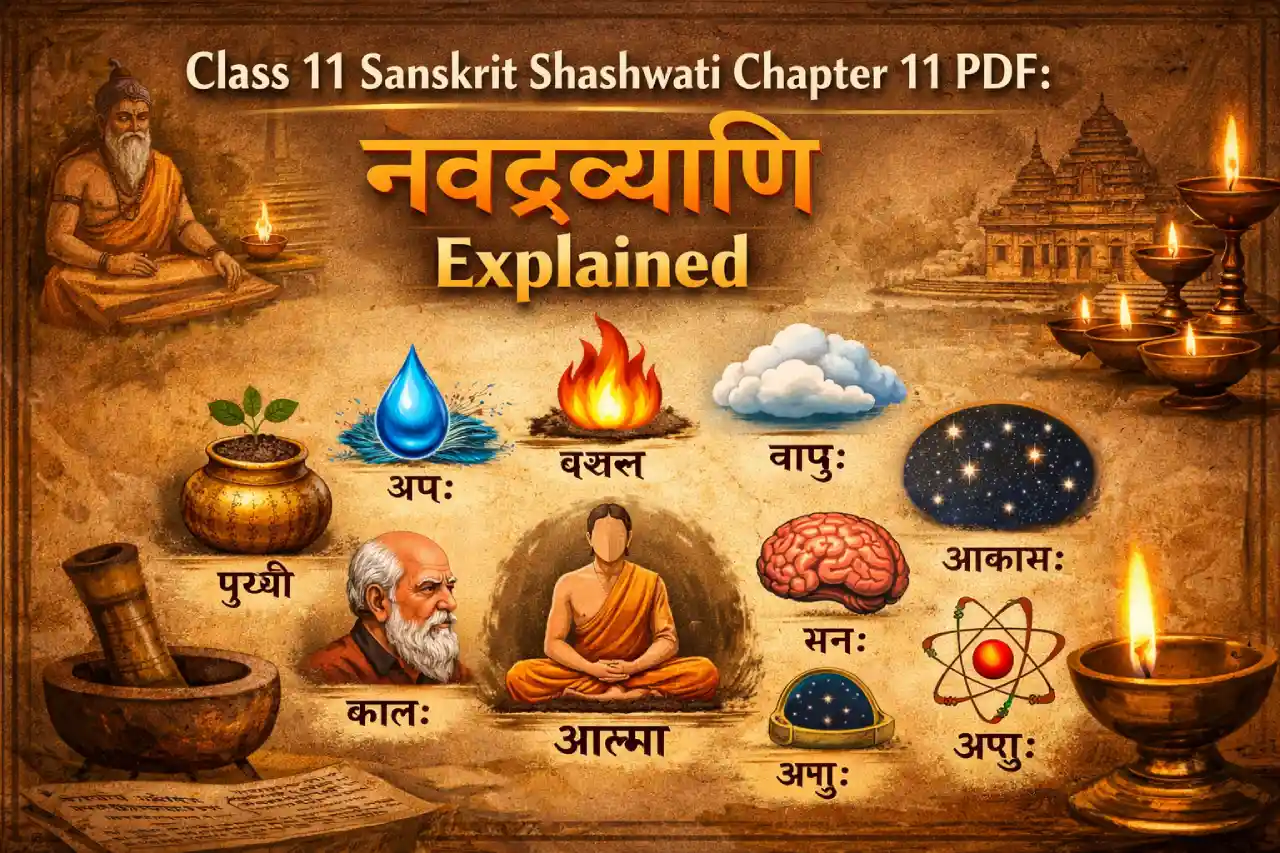
The term “नवद्रव्याणि” means “nine substances.” These are considered the basic elements that exist in the universe according to classical Indian thought.

The chapter explains each of these substances and their role in the functioning of the world.

The Nine Substances Explained

Here is a simple table to understand the nine dravyas:

Sanskrit TermMeaning (Simple English)
पृथ्वी (Prithvi)Earth
आपः (Apah)Water
तेजः (Tejas)Fire
वायु (Vayu)Air
आकाश (Akasha)Space
काल (Kala)Time
दिशा (Disha)Direction
आत्मा (Atma)Soul
मनः (Manas)Mind

These elements together explain the physical and non-physical aspects of existence.

Key Ideas in the Chapter

1. Understanding the Universe

The chapter explains how everything in the world is made up of basic substances.

2. Physical and Non-Physical Elements

Some substances like earth and water are physical, while others like time and soul are abstract.

3. Connection Between Mind and Body

The inclusion of “मनः” (mind) and “आत्मा” (soul) shows the importance of inner consciousness.

Why This Chapter Is Important for Students

  • Helps understand basic philosophical concepts
  • Improves Sanskrit reading and comprehension
  • Important for exam questions and explanations
  • Builds logical and conceptual thinking

Students who understand the list properly can easily score marks.

Study Tips for Chapter 11

  • Memorise the nine dravyas and their meanings
  • Understand the difference between physical and abstract elements
  • Practise writing short explanations
  • Revise regularly using a table format

This makes the chapter easier to revise before exams.

How to Download NCERT Class 11 Sanskrit Shashwati Chapter 11 PDF

Students can download the official chapter PDF from the National Council of Educational Research and Training website by following these steps:

Always use the official NCERT website to ensure you get the correct and updated version.

Leave a Comment

End of Article

Loading more posts...