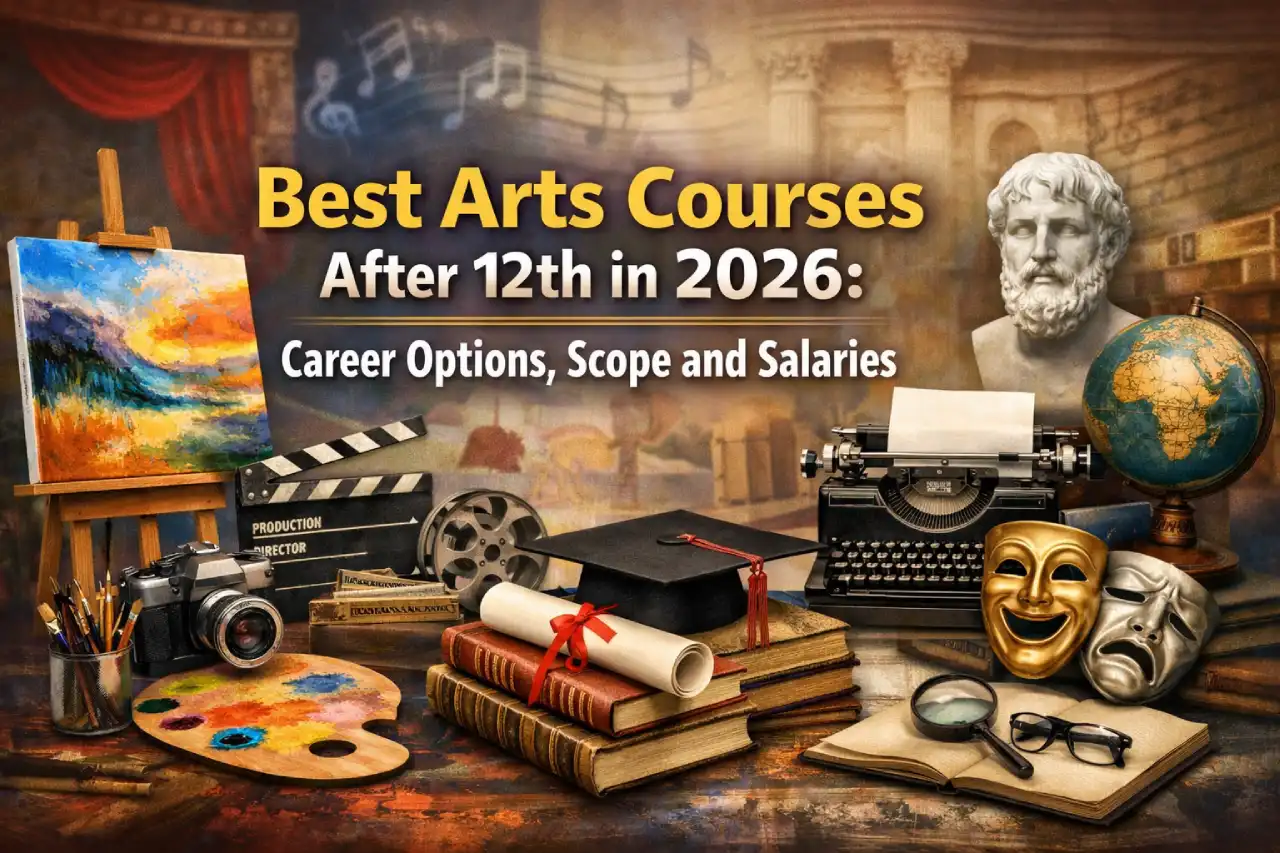
Choosing the Arts stream after Class 10 or 12 is no longer seen as a “backup option.” In fact, Arts has grown into one of the most diverse and opportunity-rich fields in India. From media and design to psychology, law, public policy and digital marketing, students today have access to career paths that are creative, meaningful and well-paying. As we move into 2026, the demand for professionals with strong communication, analytical thinking and cultural understanding is only expected to rise.
I am writing this article because many students and parents still feel confused about what to do after choosing Arts. Science and Commerce often get more attention, while Arts is misunderstood as limited in scope. That is far from the truth. Knowing the right courses early can help students make smarter decisions and build careers that match their interests and strengths.
Why Arts Stream Is Gaining Popularity
The Arts stream focuses on developing critical thinking, creativity, communication skills and social awareness.
Some key reasons why more students are opting for Arts include:
- Wider range of career choices
- Growing demand in creative and service sectors
- Flexibility to combine subjects and skills
- Better alignment with emerging digital and social fields
Arts graduates today work in corporate companies, startups, government departments, NGOs, media houses and international organisations.
Bachelor of Arts (BA) in Psychology
Psychology continues to be one of the most popular Arts courses.
What students learn:
- Human behaviour and mental processes
- Counselling basics
- Research and assessment techniques
Career options:
- Counsellor or therapist (with higher studies)
- School psychologist
- HR executive
- Research assistant
This course suits students who are empathetic, patient and interested in understanding people.
BA in English / Literature
A classic degree with modern relevance.
What it offers:
- Strong communication and writing skills
- Critical reading and analysis
- Exposure to global literature
Career options:
- Content writer or editor
- Journalist
- Teacher or lecturer
- Corporate communication executive
With digital media booming, skilled writers are in constant demand.
BA in Journalism and Mass Communication
Ideal for students who want to work in media and storytelling.
What students study:
- Reporting and news writing
- TV, radio and digital journalism
- Advertising and public relations
Career options:
- Journalist or reporter
- News anchor
- Social media manager
- Public relations executive
This course combines creativity with real-world exposure.
BA in Political Science
A strong foundation for careers in governance and public policy.
What it covers:
- Indian and international politics
- Constitution and political theory
- Public administration
Career options:
- Civil services aspirant
- Policy analyst
- Research assistant
- Political consultant
It is a good choice for students interested in current affairs and social change.
BA in Economics
Economics is one of the most career-oriented Arts subjects.
What students learn:
- Micro and macroeconomics
- Statistics and data analysis
- Development economics
Career options:
- Economist
- Data analyst
- Banking and finance roles
- Government jobs
This course suits students who enjoy numbers and logical thinking.
Bachelor of Fine Arts (BFA)
Perfect for creatively inclined students.
Specialisations include:
- Painting
- Sculpture
- Applied arts
- Visual communication
Career options:
- Artist
- Illustrator
- Art director
- Animator
With design and creative industries expanding, BFA graduates have good scope.
BA in Sociology
Focuses on understanding society and human relationships.
What it includes:
- Social institutions and structures
- Gender studies
- Social research
Career options:
- Social worker
- NGO professional
- Researcher
- Community development officer
This course suits students interested in social issues.
BA in History
A subject that builds analytical and research skills.
What students study:
- Ancient, medieval and modern history
- World history
- Historiography
Career options:
- Teacher or professor
- Archivist
- Museum professional
- Civil services
History graduates often do well in competitive exams.
BA in Digital Marketing / Media Studies
A modern Arts course aligned with industry needs.
What students learn:
- SEO and content marketing
- Social media strategy
- Online advertising
Career options:
- Digital marketer
- SEO executive
- Brand strategist
- Social media manager
This field offers quick entry into high-growth careers.
How to Choose the Right Arts Course
Before finalising a course, students should:
- Identify their interests and strengths
- Check future career scope
- Look at college reputation and faculty
- Understand higher study options
I always suggest students speak to seniors or career counsellors before deciding.