JOIN WHATSAPP
STORIES

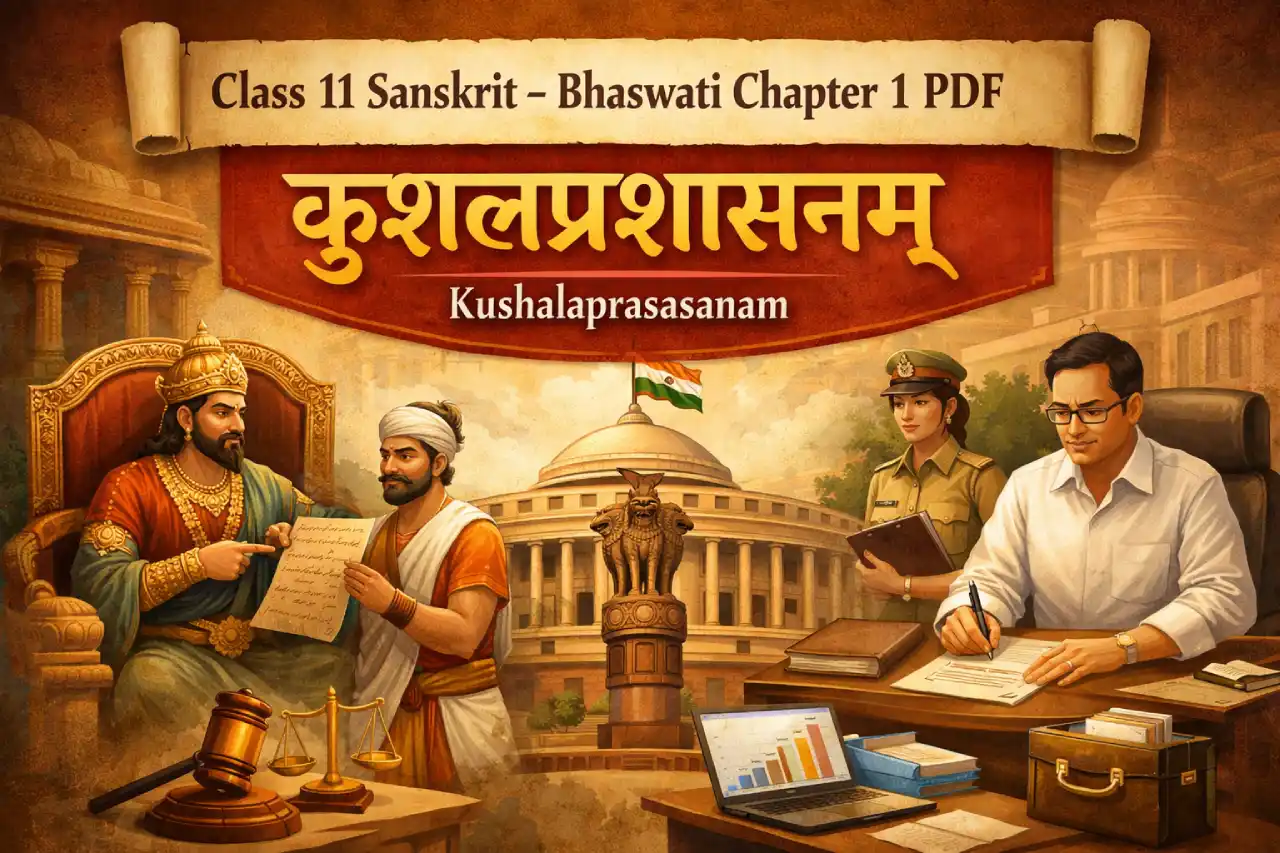
Class 11 Sanskrit – Bhaswati Chapter 1 PDF: कुशलप्रशासनम्

Class 11 Sanskrit – Bhaswati Chapter 1 PDF: कुशलप्रशासनम्

NCERT Class 11 Sanskrit Bhaswati Chapter 1, titled कुशलप्रशासनम्, introduces students to the idea of good governance through simple yet meaningful Sanskrit language. This chapter focuses on the qualities of an ideal ruler or administrator and explains how proper administration ensures peace, order, and progress in society.

I am writing about this chapter because many Class 11 students search for a clear explanation along with the official PDF for revision. Sanskrit becomes much easier when we understand the message behind the lesson instead of just memorising words. कुशलप्रशासनम् is not only important from an exam point of view but also teaches practical values about leadership, responsibility, and discipline. Having access to the original NCERT PDF helps students practise translation, understand grammar, and prepare confidently for school tests and board-level examinations.

About the Chapter: कुशलप्रशासनम्

The word कुशलप्रशासनम् means “efficient administration” or “good governance.” The lesson highlights:

  • The role of a responsible ruler
  • Importance of justice and fairness
  • Duties towards citizens
  • Maintenance of law and order
  • Welfare of the people

Through structured Sanskrit sentences, the chapter explains that administration is successful only when it focuses on public welfare and moral values.

Key Themes Explained

1. Qualities of a Good Administrator

The chapter describes that an ideal administrator should be:

  • Wise and knowledgeable
  • Just and impartial
  • Disciplined
  • Concerned about public welfare

A ruler who listens to people and works for their benefit ensures social harmony.

2. Importance of Justice

Justice is presented as the backbone of administration. If laws are applied fairly and equally, society remains stable and peaceful.

3. Public Welfare

The lesson clearly states that governance is not about power but about service. Welfare of citizens, safety, and development are central responsibilities.

Why This Chapter Is Important for Students

  • Builds vocabulary related to governance and society
  • Strengthens translation skills
  • Helps understand moral and civic values
  • Frequently used for short and long answer questions in exams

Many schools frame comprehension and explanation questions directly from this lesson.

Study Tips for Better Understanding

  • Read the Sanskrit passage aloud to improve pronunciation
  • Break long sentences into smaller parts for translation
  • Write meanings of new words in a separate notebook
  • Revise grammar concepts connected to the chapter

Regular practice will make Sanskrit feel simple and logical.

How to Download NCERT Class 11 Sanskrit Bhaswati Chapter 1 PDF

Students can download the official chapter PDF from the National Council of Educational Research and Training website by following these steps:

Always download from the official source to ensure you get the latest and correct version.

Leave a Comment

End of Article

Class 11 Sanskrit Shashwati Chapter 11 PDF: नवद्रव्याणि Explained

Class 11 Sanskrit Shashwati Chapter 11 PDF: नवद्रव्याणि Explained

NCERT Class 11 Sanskrit Shashwati Chapter 11, titled “नवद्रव्याणि”, introduces students to an important concept from Indian philosophy—the nine fundamental substances that make up the universe. The chapter explains these elements in a simple and structured way, helping students understand how ancient thinkers tried to explain the nature of reality through observation and logic.

I am writing about this chapter because many students search for the official NCERT PDF along with a simple explanation before exams. In my experience, topics like “नवद्रव्याणि” may feel slightly abstract at first, but once you understand the list and their meanings, it becomes quite easy to remember and revise. This chapter is important not only for Sanskrit exams but also for gaining a basic idea of traditional Indian philosophy. It helps students connect language learning with deeper concepts. Studying from the official NCERT book and revising regularly can make this chapter scoring and easy to handle.

About the Chapter: नवद्रव्याणि

The term “नवद्रव्याणि” means “nine substances.” These are considered the basic elements that exist in the universe according to classical Indian thought.

The chapter explains each of these substances and their role in the functioning of the world.

The Nine Substances Explained

Here is a simple table to understand the nine dravyas:

Sanskrit TermMeaning (Simple English)
पृथ्वी (Prithvi)Earth
आपः (Apah)Water
तेजः (Tejas)Fire
वायु (Vayu)Air
आकाश (Akasha)Space
काल (Kala)Time
दिशा (Disha)Direction
आत्मा (Atma)Soul
मनः (Manas)Mind

These elements together explain the physical and non-physical aspects of existence.

Key Ideas in the Chapter

1. Understanding the Universe

The chapter explains how everything in the world is made up of basic substances.

2. Physical and Non-Physical Elements

Some substances like earth and water are physical, while others like time and soul are abstract.

3. Connection Between Mind and Body

The inclusion of “मनः” (mind) and “आत्मा” (soul) shows the importance of inner consciousness.

Why This Chapter Is Important for Students

  • Helps understand basic philosophical concepts
  • Improves Sanskrit reading and comprehension
  • Important for exam questions and explanations
  • Builds logical and conceptual thinking

Students who understand the list properly can easily score marks.

Study Tips for Chapter 11

  • Memorise the nine dravyas and their meanings
  • Understand the difference between physical and abstract elements
  • Practise writing short explanations
  • Revise regularly using a table format

This makes the chapter easier to revise before exams.

How to Download NCERT Class 11 Sanskrit Shashwati Chapter 11 PDF

Students can download the official chapter PDF from the National Council of Educational Research and Training website by following these steps:

Always use the official NCERT website to ensure you get the correct and updated version.

Leave a Comment

End of Article

Loading more posts...