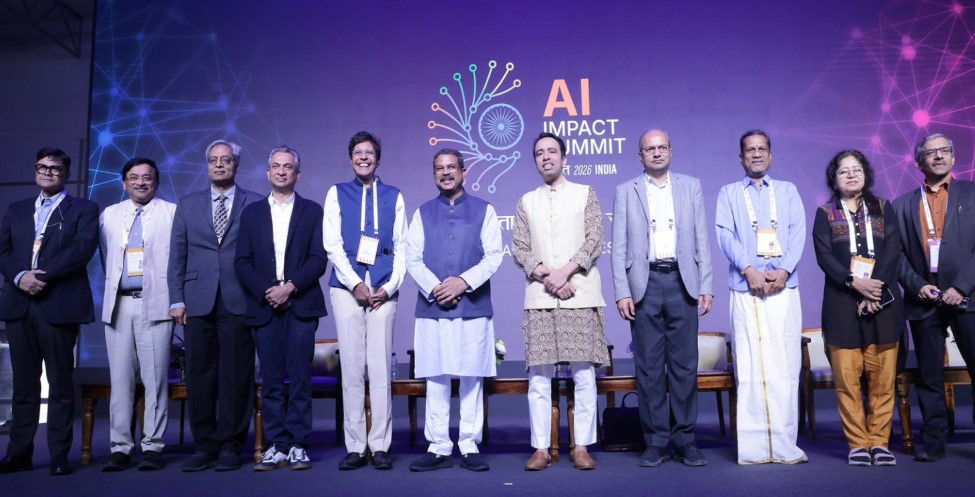
The Ministry of Education recently showcased how Artificial Intelligence is beginning to reshape India’s education system at the India AI Impact Summit 2026 held at Bharat Mandapam. During a special session titled “Ministry of Education – Pushing the Frontier of AI in India”, senior officials and education leaders discussed the government’s vision to embed AI across schools, colleges, universities, and skill development institutions. The focus was on making learning more personalised, accessible, and future-ready.
I am writing about this because the way India adopts AI in education today will decide how well our students compete globally tomorrow. From improving teaching quality to widening access in remote areas, AI has the potential to solve long-standing challenges in Indian education. Understanding these developments helps students, parents, teachers, and institutions prepare for the changes ahead.
What Was Discussed at the Special Ministry of Education Session
The dedicated session at the summit highlighted how AI is no longer seen as an optional add-on but as a core enabler of educational reform.
Key points from the discussion included:
- Integrating AI tools into classrooms and digital learning platforms
- Using data-driven systems to improve student outcomes
- Creating a nationwide ecosystem for AI-based education solutions
- Encouraging innovation through collaboration with industry and academia
Officials stressed that these efforts aim to make education more inclusive and responsive to individual learning needs.
Union Education Minister’s Vision for AI in Education
Union Education Minister Dharmendra Pradhan described the India AI Impact Summit as a pathbreaking initiative inspired by the vision of Prime Minister Narendra Modi. He said that AI will play a central role in shaping India into a global knowledge superpower.
According to the Minister:
- AI will support personalised and adaptive learning
- Technology-driven assessment systems will improve transparency
- India’s youth will be trained for emerging tech-driven careers
He also linked AI adoption in education with the broader national goal of achieving Viksit Bharat 2047.
How AI Can Transform Teaching and Learning
AI is expected to change the traditional classroom model in several practical ways.
Some of the major possibilities include:
- Smart tutoring systems that adapt to a student’s pace
- Automated evaluation of assignments and exams
- Virtual labs and simulations for practical learning
- Language translation tools to overcome regional barriers
These tools can help teachers focus more on mentoring and less on repetitive administrative work.
Focus on Skilling and Employability
Another important theme was aligning education with industry needs. AI-driven platforms can analyse job market trends and help design courses that match real-world demand.
Benefits for students include:
- Early exposure to in-demand skills
- Better career guidance using data insights
- Access to online courses and certifications
This approach aims to reduce the gap between education and employment.
Building a Responsible and Ethical AI Ecosystem
Speakers at the session also underlined the importance of responsible AI use. The government plans to ensure that AI systems in education are transparent, unbiased, and secure.
Key priorities include:
- Protecting student data and privacy
- Preventing algorithmic bias
- Promoting ethical AI research
Responsible use will be critical to building trust in these technologies.