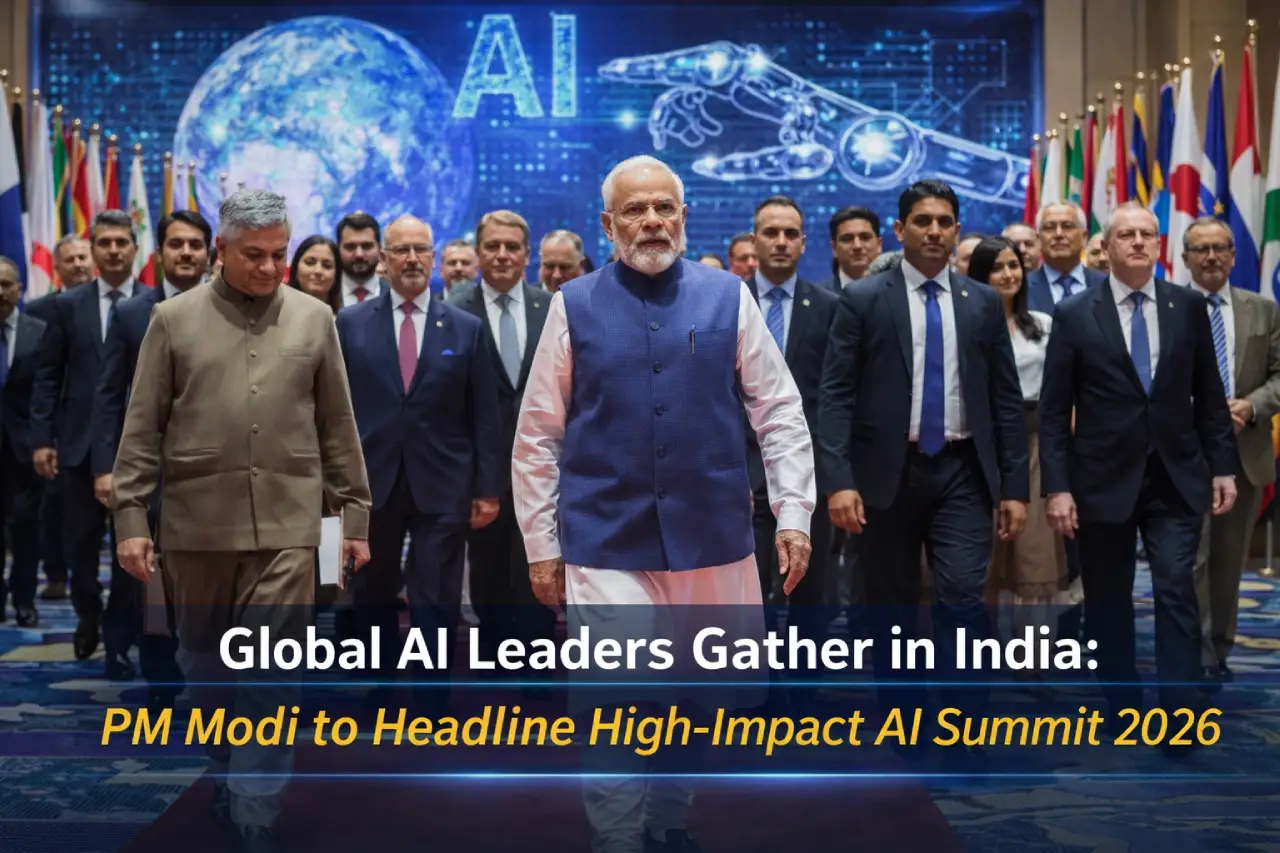
India is set to take centre stage in the global artificial intelligence conversation as Prime Minister Narendra Modi prepares to address the AI Impact Summit on Thursday, February 19, 2026. The high-profile event will bring together heads of state, technology pioneers, and industry leaders to discuss how artificial intelligence is reshaping economies, governance, and everyday life across the world.
I am writing about this development because it highlights India’s growing influence in shaping the future of emerging technologies. With AI now touching everything from healthcare and education to finance and national security, understanding who is leading these discussions and what they aim to achieve helps readers stay informed about the direction in which global technology policy is heading.
India’s Leadership at the Centre of the AI Conversation
The Prime Minister’s address is expected to focus on India’s vision for responsible and inclusive use of artificial intelligence. Over the past few years, the government has pushed for a balance between innovation and regulation, ensuring that AI growth benefits society while addressing concerns such as data privacy, bias, and job displacement.
Key themes likely to feature in Mr. Modi’s speech include:
- India’s digital public infrastructure and its role in AI adoption
- The need for ethical and transparent AI systems
- International cooperation on AI governance
- Using AI for social good, especially in health, agriculture, and education
By opening the summit, India signals its intention to be a key player not just in using AI, but in shaping global norms around it.
Star-Studded Line-up of Global Tech Leaders
Following the Prime Minister’s address, a series of keynote sessions will feature some of the most influential names in the technology and policy world.
Key speakers include:
- Sam Altman, CEO of OpenAI
- Dennis Hassabis, CEO of Google DeepMind
- Mukesh Ambani, Chairman and Managing Director of Reliance Industries Limited
- Bill Gates, Chair of the Gates Foundation
- Brad Smith, President of Microsoft
Their presence underlines the summit’s importance as a platform where policy, technology, and business intersect.
What the Keynotes Are Expected to Focus On
While each speaker brings a unique perspective, their sessions are likely to revolve around a few common priorities:
- The future of generative AI and large language models
- AI safety, alignment, and risk management
- Scaling AI for real-world impact in developing and developed economies
- Partnerships between governments and private companies
For many observers, these discussions will provide clues about where global AI investment and regulation are heading next.
Why This Summit Matters for India
Hosting such a high-level AI gathering places India among the countries actively shaping the global AI agenda. It also reinforces the country’s ambition to become a hub for AI research, talent, and innovation.
Some key takeaways for India include:
- Greater visibility for Indian AI startups and researchers
- Opportunities for international collaborations
- Stronger positioning in global policy discussions
For students, professionals, and entrepreneurs, the summit sends a clear message that AI will be a central pillar of India’s digital future.
A Moment That Reflects a Bigger Shift
The AI Impact Summit is more than just another conference. It reflects a broader shift where artificial intelligence is no longer a niche technology but a core driver of economic and social change. When political leaders and technology chiefs share the same stage, it shows how closely policy and innovation are now linked.
As the world watches this summit unfold, the conversations held here could influence how AI is developed, regulated, and used for years to come.