JOIN WHATSAPP
STORIES

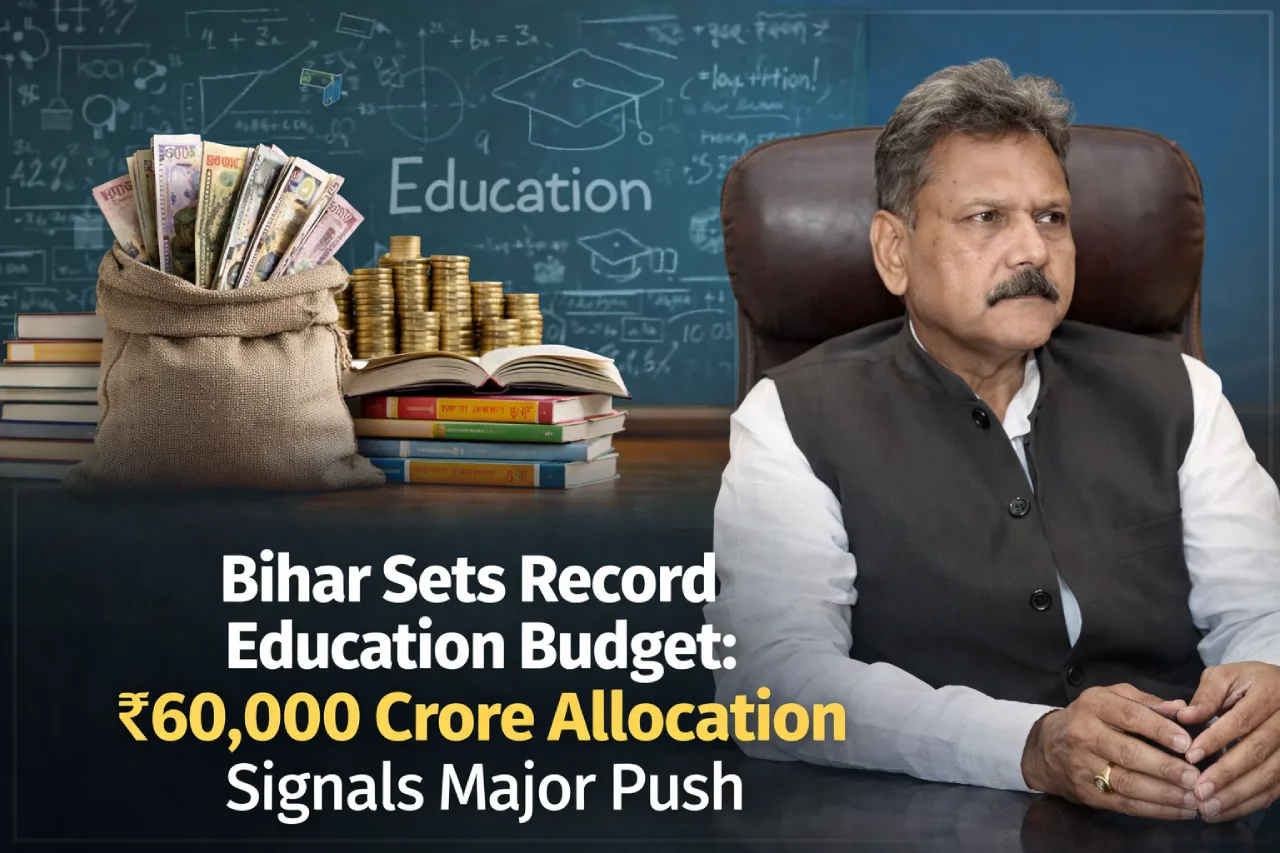
Bihar Sets Record Education Budget: ₹60,000 Crore Allocation Signals Major Push

Bihar Sets Record Education Budget: ₹60,000 Crore Allocation Signals Major Push

The Government of Bihar has created a major milestone by allocating its highest-ever budget for the education sector in the 2026–27 financial year. Under the leadership of Nitish Kumar, the state has earmarked over ₹60,000 crore for education, making it the largest allocation among all departments in the state budget.

I am writing about this development because budget decisions directly reflect a government’s priorities. When a state chooses to invest such a large amount in education, it sends a strong message about its long-term vision. For students, parents, teachers, and job seekers in Bihar, this allocation could shape the future of schools, colleges, and skill development across the state.

Record Allocation Passed in Bihar Vidhan Sabha

The Bihar Vidhan Sabha passed the education department’s budget of ₹60,204.60 crore by voice vote on Thursday. This allocation is the highest ever for any single department in the state’s history.

The budget was cleared amid an Opposition boycott during the minister’s reply on issues related to the quality of education. Despite the disruption, the government went ahead with the passage, highlighting the importance it attaches to the sector.

Education Gets 20% of Bihar’s Total Budget

Education Minister Sunil Kumar said that around 20 per cent of Bihar’s total annual budget has been allocated to education.

He pointed out that:

  • This is the highest percentage of budget allocation to education by any state in India
  • The national average allocation for education is around 14 per cent
  • The increased spending reflects the government’s commitment to transforming Bihar through education

According to the minister, this strong focus is aimed at building human capital and preparing the youth for future opportunities.

Why This Budget Matters

Such a large allocation has the potential to bring visible changes on the ground.

Some expected focus areas include:

  • Improving school infrastructure
  • Hiring more teachers and staff
  • Strengthening digital and smart classroom facilities
  • Upgrading higher education institutions
  • Expanding skill development and vocational training

I feel this move is especially important for a state like Bihar, where access to quality education can be a powerful tool for social and economic change.

Push to Improve Quality of Education

The government has maintained that the additional funds will not only increase capacity but also improve the quality of education.

Key priorities are likely to include:

  • Teacher training and professional development
  • Curriculum modernisation
  • Better monitoring of learning outcomes
  • Support for marginalised and disadvantaged students

The aim is to ensure that higher spending translates into better learning experiences for students.

Political Context of the Budget Passage

The education budget was passed while the Opposition staged a boycott during discussions.

Opposition members raised concerns over:

  • Learning levels in government schools
  • Teacher shortages in some areas
  • Overall quality of education

Despite this, the government stood by its claim that sustained investment is the first step towards solving long-standing problems.


Leave a Comment

End of Article

Maharashtra to Recruit 5,500 Assistant Professors by June: Minister Chandrakant Patil Gives Timeline

Maharashtra to Recruit 5,500 Assistant Professors by June: Minister Chandrakant Patil Gives Timeline

Maharashtra’s Higher Education Minister Chandrakant Patil has assured that the long-awaited recruitment of 5,500 assistant professors across state universities will be completed by June 2026. This announcement comes after the initial deadline of March was missed due to administrative and procedural delays. The recruitment drive is aimed at filling vacant teaching positions in government and aided institutions, which have been affecting the quality of education and overall academic functioning in the state.

I am writing about this because faculty shortages have been a major concern in higher education for quite some time. From what I have seen, students often struggle due to a lack of permanent teachers, which directly impacts classroom learning and research opportunities. This update is important not just for job aspirants but also for students and institutions, as it promises to improve the student-teacher ratio and bring stability to the academic environment.

What the Minister Announced

Higher Education Minister Chandrakant Patil has clearly stated that the recruitment process is now on track.

Key points from the announcement:

  • 5,500 assistant professor posts to be filled
  • New deadline set for June 2026
  • Delay caused by administrative and procedural issues
  • Recruitment to cover multiple universities and colleges

The government has assured that efforts are being made to complete the process without further delay.

Why the Recruitment Was Delayed

The recruitment drive was initially expected to be completed by March but faced several challenges.

Some major reasons include:

  • Complexities in finalising eligibility criteria
  • Large number of applications to be reviewed
  • Scheduling of examinations and interviews
  • Inclusion of newly established colleges and institutions

From my understanding, these delays are common in large-scale recruitment, but they often create uncertainty among candidates.

Role of MPSC in the Recruitment Process

The Maharashtra Public Service Commission (MPSC) is handling the recruitment process.

  • Responsible for conducting exams and interviews
  • Ensures selection based on merit and transparency
  • Evaluates academic qualifications and performance

The commission is currently working to finalise the list of eligible candidates.

Selection Process Explained

The recruitment will follow a structured and rigorous selection process.

  • Screening of applications
  • Evaluation of academic credentials
  • Interviews conducted as per guidelines
  • Final selection based on merit

This process is aligned with University Grants Commission (UGC) norms.

Why This Recruitment is Important

Filling these vacancies is crucial for improving higher education in the state.

  • Helps improve student-teacher ratio
  • Ensures better classroom interaction and learning
  • Strengthens research and academic output
  • Provides stability in teaching staff

In my opinion, qualified faculty is the backbone of any strong education system.

Concerns Raised by Students and Academic Bodies

There have been growing concerns regarding the delay.

  • Student unions have highlighted lack of teachers
  • Academic bodies have raised issues about declining quality
  • Vacant posts affecting regular classes and research work

The latest assurance from the government is expected to address these concerns.

Government’s Broader Education Plan

The recruitment is part of a larger plan to improve higher education.

  • Focus on strengthening infrastructure and resources
  • Bringing in skilled and experienced faculty
  • Improving overall education standards
  • Aligning with future academic and industry needs

The government aims to create a more competitive and modern education system.

Key Highlights at a Glance

ParticularsDetails
Total Vacancies5,500 Assistant Professors
Revised DeadlineJune 2026
Conducting AuthorityMPSC
Recruitment TypeGovernment & Aided Institutions
Selection ProcessMerit-based with interviews

What This Means for Aspirants

For candidates waiting for these jobs, this update is quite important.

  • Recruitment process is moving forward
  • Clear timeline now available
  • Opportunity to secure teaching positions
  • Need to stay prepared for upcoming stages

From what I have seen, staying updated and prepared is key during such recruitment cycles.

Leave a Comment

End of Article

Loading more posts...