JOIN WHATSAPP
STORIES

Best Diploma Courses After 12th in 2026: High-Demand Career Options

Best Diploma Courses After 12th in 2026: High-Demand Career Options

Choosing the right course after completing Class 12 is one of the most important decisions for any student. While many opt for traditional degree programmes, diploma courses are becoming increasingly popular because they focus on practical skills and faster entry into the job market. In 2026, industries are looking for skilled professionals who can start working with minimal additional training, and diploma programmes are well suited to meet this demand.

I am writing about this topic because many students and parents are still unaware of the wide range of diploma options available after 12th. These programmes can lead to good-paying jobs, technical roles, or even further studies. Knowing the top diploma programmes for 2026 can help students choose a career path that matches their interests and future goals.

Why Choose a Diploma After 12th

Diploma programmes offer a skill-oriented approach to education.

Key benefits include:

  • Shorter course duration
  • Practical and industry-focused training
  • Lower cost compared to degree courses
  • Early employment opportunities
  • Option to pursue higher studies later

These advantages make diploma courses a smart choice for many students.

Top Diploma Programs After 12th in 2026

Below are some of the most promising diploma courses students can consider.

Diploma in Engineering (Polytechnic)

One of the most popular choices after Class 10 or 12.

Specialisations include:

  • Mechanical Engineering
  • Civil Engineering
  • Electrical Engineering
  • Computer Engineering
  • Electronics and Communication

Career options exist in manufacturing, construction, IT, and government sectors.

Diploma in Computer Applications (DCA)

This course focuses on basic to intermediate computer skills.

Covers:

  • Programming fundamentals
  • Office automation
  • Database management
  • Internet and web basics

Suitable for entry-level IT and office jobs.

Diploma in Information Technology

More advanced than DCA, this programme trains students in:

  • Software development
  • Networking
  • Cyber security basics
  • Web technologies

Good scope in IT companies and start-ups.

Diploma in Hotel Management

Ideal for students interested in hospitality.

Includes:

  • Front office operations
  • Housekeeping
  • Food and beverage services
  • Customer relations

Opportunities in hotels, resorts, airlines, and cruise lines.

Diploma in Fashion Designing

For creative students interested in design.

Teaches:

  • Garment construction
  • Textile knowledge
  • Pattern making
  • Fashion illustration

Careers in boutiques, fashion houses, and manufacturing units.

Diploma in Medical Laboratory Technology (DMLT)

Healthcare-focused diploma.

Covers:

  • Sample collection
  • Laboratory testing
  • Equipment handling
  • Reporting procedures

Jobs in hospitals, clinics, and diagnostic labs.

Diploma in Pharmacy (D.Pharm)

Suitable for science students.

Leads to roles such as:

  • Pharmacist
  • Medical representative
  • Pharmacy assistant

Opportunities in hospitals and retail pharmacies.

Diploma in Animation and Multimedia

For students interested in creative digital work.

Includes:

  • Animation
  • Graphic design
  • Video editing
  • Visual effects

Careers in media houses, gaming, and advertising agencies.

Diploma in Automobile Engineering

Focuses on vehicle technology.

Covers:

  • Engine systems
  • Vehicle maintenance
  • Electrical systems
  • Workshop practices

Jobs in automobile service centres and manufacturing companies.

Diploma in Interior Designing

For students with interest in space planning and design.

Teaches:

  • Design principles
  • CAD software
  • Material selection
  • Project planning

Careers in design firms and real estate sector.

How to Choose the Right Diploma Course

Consider the following:

  • Your interests and strengths
  • Job opportunities in the field
  • Course duration and fees
  • Reputation of the institute
  • Scope for further studies

Making an informed choice is important.

Career Options After Diploma

After completing a diploma, students can:

  • Start working in relevant industry
  • Pursue lateral entry into degree courses
  • Take specialised certification courses

Diploma education offers flexibility.

Leave a Comment

End of Article

Career vs Job Explained Clearly: Key Differences, Examples and How to Choose the Right Path

Career vs Job Explained Clearly: Key Differences, Examples and How to Choose the Right Path

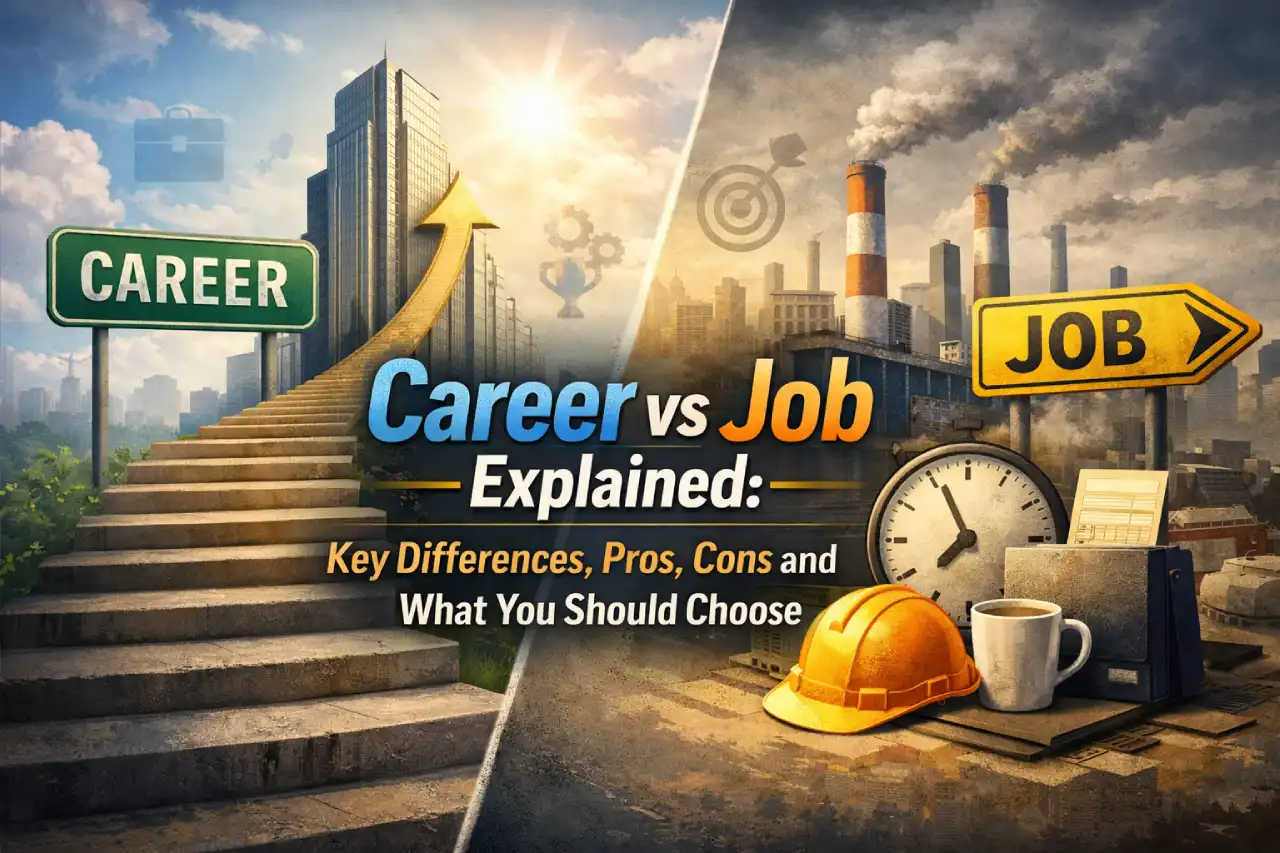
If you are confused between a job and a career, you are not alone. Many people use these two words interchangeably, but they actually mean different things. A job is something you do to earn money, usually for a short-term purpose, while a career is a long-term journey built around your skills, interests, and goals. Understanding this difference is important, especially if you are planning your future or thinking about what you really want to achieve in life.

I am writing about this because I have seen many students and even working professionals struggle with this confusion. Some people jump from one job to another without direction, while others feel stuck because they are not sure what they are working towards. Knowing the difference between a job and a career can help you make better decisions, stay focused, and build a path that gives both financial stability and personal satisfaction.

What is a Job

A job is a role where you work for a company or organisation in exchange for money.

Key features of a job:

  • Short-term focus
  • Mainly done to earn income
  • Limited connection with long-term goals
  • Fixed responsibilities
  • Less emphasis on growth or passion

For example, working as a cashier, delivery executive, or temporary office assistant can be considered a job.

What is a Career

A career is a long-term professional journey where you grow, learn, and build your identity over time.

Key features of a career:

  • Long-term vision
  • Focus on growth and development
  • Connected with your interests and skills
  • Offers progression and opportunities
  • Builds expertise over time

For example, becoming a teacher, engineer, doctor, or writer is part of a career path.

Career vs Job: Key Differences

Here is a simple comparison to understand the difference clearly:

AspectJobCareer
DurationShort-termLong-term
PurposeEarn moneyBuild future
GrowthLimitedContinuous
MotivationSalaryPassion + growth
StabilityTemporaryMore stable over time

From my perspective, a job can be a part of your career, but not every job leads to a meaningful career.

Can a Job Become a Career

Yes, a job can turn into a career if you approach it with the right mindset.

  • If you learn new skills in your job
  • If you grow within the same field
  • If you set long-term goals

For example, starting as a junior employee and growing into a manager or expert can turn a job into a career.

Why Understanding the Difference Matters

Knowing the difference can help you:

  • Make better career decisions
  • Avoid feeling lost or stuck
  • Choose jobs that align with your goals
  • Plan your future more effectively

In my opinion, this clarity can save you years of confusion and frustration.

How to Choose Between a Job and a Career

If you are just starting out, it is okay to take a job. But over time, you should think about building a career.

Ask yourself:

  • What are my interests and strengths
  • Where do I see myself in 5 or 10 years
  • Am I learning something valuable in my current role
  • Does this job help me grow

Your answers will guide your decisions.

Common Mistakes People Make

Many people unknowingly make these mistakes:

  • Choosing jobs only based on salary
  • Not planning long-term goals
  • Ignoring skill development
  • Staying in comfort zones for too long

From what I have seen, avoiding these mistakes can make a big difference in your journey.

Tips to Build a Strong Career

If you want to move from a job mindset to a career mindset, here are some simple tips:

  • Keep learning and upgrading your skills
  • Set clear long-term goals
  • Network with people in your field
  • Take calculated risks
  • Stay consistent and patient

Building a career takes time, but it is worth the effort.

Leave a Comment

End of Article

Loading more posts...