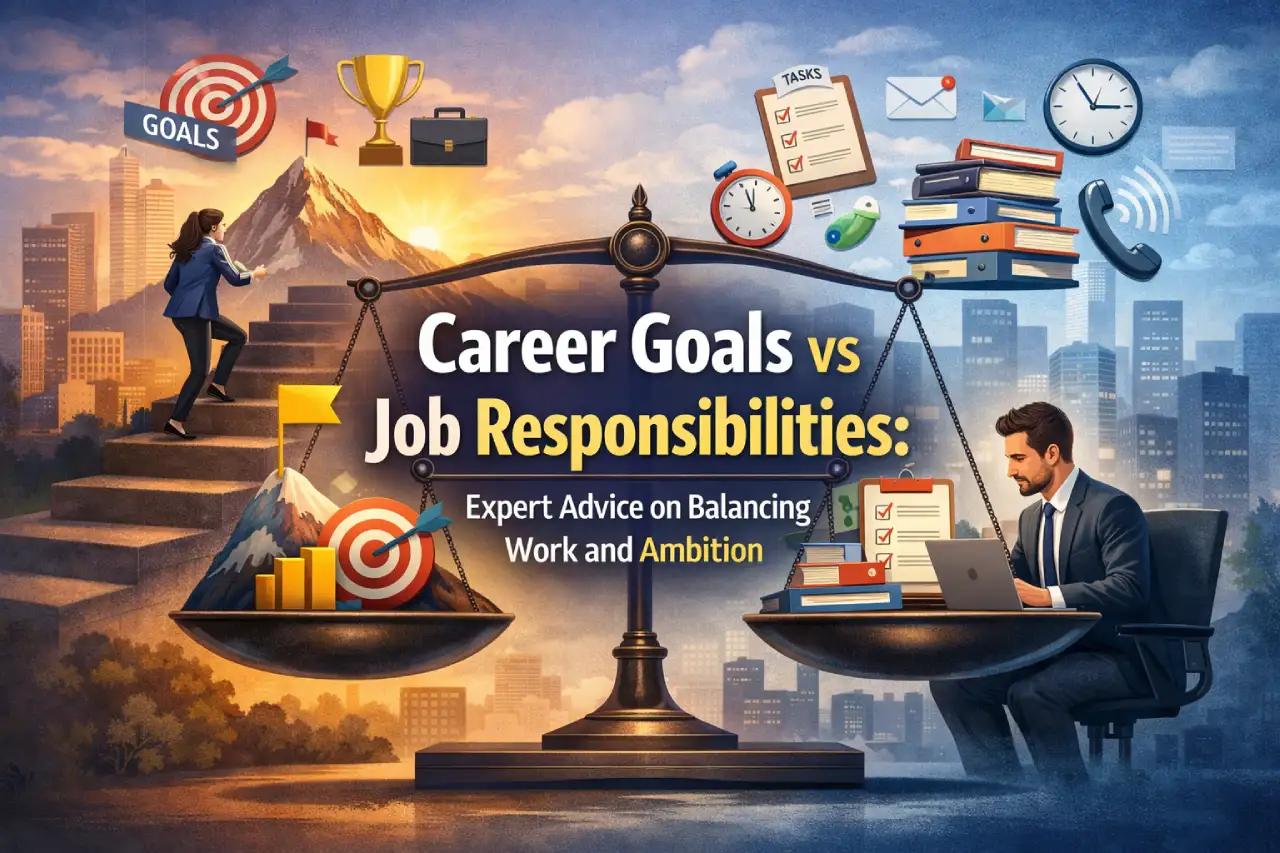
Many professionals today often find themselves balancing two important aspects of their working life: their long-term career goals and their day-to-day job responsibilities. Career goals represent the bigger picture — where a person wants to reach professionally in the future. Job responsibilities, on the other hand, are the tasks and duties that must be handled every day in the workplace. Experts say that understanding the relationship between these two aspects is essential for building a successful and fulfilling career.
I decided to write about this topic because many people struggle to align their daily work with their long-term ambitions. Early in a career, individuals often accept jobs mainly for stability or experience, but later they start thinking about growth, leadership roles, or career shifts. Knowing how to balance responsibilities at work while still progressing toward personal goals can make a huge difference in professional satisfaction and long-term success.
Understanding Career Goals
Career goals are the professional milestones that individuals hope to achieve over time. These goals can vary widely depending on personal interests, skills, and ambitions.
Some people aim to become leaders or managers in their field, while others focus on developing specialised expertise. Career goals often evolve over time as people gain experience and discover new opportunities.
Examples of common career goals include:
- Achieving a leadership or managerial position
- Becoming an expert in a specialised field
- Starting a business or entrepreneurial venture
- Improving professional skills and qualifications
- Achieving financial stability and career satisfaction
Experts suggest that clearly defining career goals helps individuals make better decisions about their professional path.
What Are Job Responsibilities?
Job responsibilities refer to the specific tasks and duties assigned to an employee as part of their role in an organisation. These responsibilities are usually defined in a job description and are essential for the smooth functioning of a company.
Typical job responsibilities may include:
- Completing assigned tasks and projects
- Meeting deadlines and performance targets
- Collaborating with team members
- Reporting progress to managers
- Maintaining professional standards in the workplace
While these duties may sometimes feel routine, they play a crucial role in building experience and credibility in a professional environment.
Why the Balance Between the Two Matters
Experts often say that career growth does not happen automatically. It requires conscious effort to ensure that daily work contributes to long-term goals.
When employees focus only on routine responsibilities without thinking about their career direction, they may feel stuck or unmotivated after some time. On the other hand, ignoring job responsibilities while focusing only on future ambitions can damage professional credibility.
A healthy balance between the two helps individuals:
- Gain practical experience
- Build a strong professional reputation
- Develop new skills
- Move gradually toward long-term goals
Maintaining this balance is often considered one of the key factors in sustainable career growth.
Common Challenges Professionals Face
Many professionals experience challenges when trying to align their career goals with their job responsibilities.
Some of the most common difficulties include:
- Limited opportunities for growth within a role
- Lack of time to develop new skills
- Pressure to prioritise routine tasks over long-term development
- Unclear career direction or changing interests
These challenges can create frustration if individuals feel that their daily work is not contributing to their future ambitions.
How Experts Suggest Aligning Goals and Responsibilities
Career advisors often recommend practical strategies that can help professionals connect their current work with future ambitions.
Some helpful approaches include:
- Setting clear short-term and long-term career goals
- Taking initiative to learn new skills within the workplace
- Seeking mentorship from experienced professionals
- Requesting projects that align with personal interests
- Continuously evaluating career progress
These steps can gradually transform routine job responsibilities into opportunities for growth.
Practical Example of Career Alignment
The relationship between career goals and job responsibilities can be understood through a simple example.
| Situation | Job Responsibility | Career Goal |
|---|---|---|
| Entry-level employee | Completing assigned tasks | Gaining experience |
| Mid-career professional | Managing projects | Developing leadership skills |
| Senior professional | Leading teams | Becoming a strategic leader |
In each stage, the responsibilities change, but they also help build the experience needed to achieve larger goals.
Importance of Continuous Learning
Experts emphasise that learning should never stop in a professional journey. Even if a job role does not directly align with long-term goals, it can still provide valuable experience.
Professionals who regularly update their skills and knowledge are often better prepared to move into new roles or industries when opportunities arise.
Learning can happen through:
- Professional courses and certifications
- Workshops and training programmes
- Reading industry publications
- Networking with professionals in the field
Continuous learning ensures that job responsibilities contribute to long-term career development.