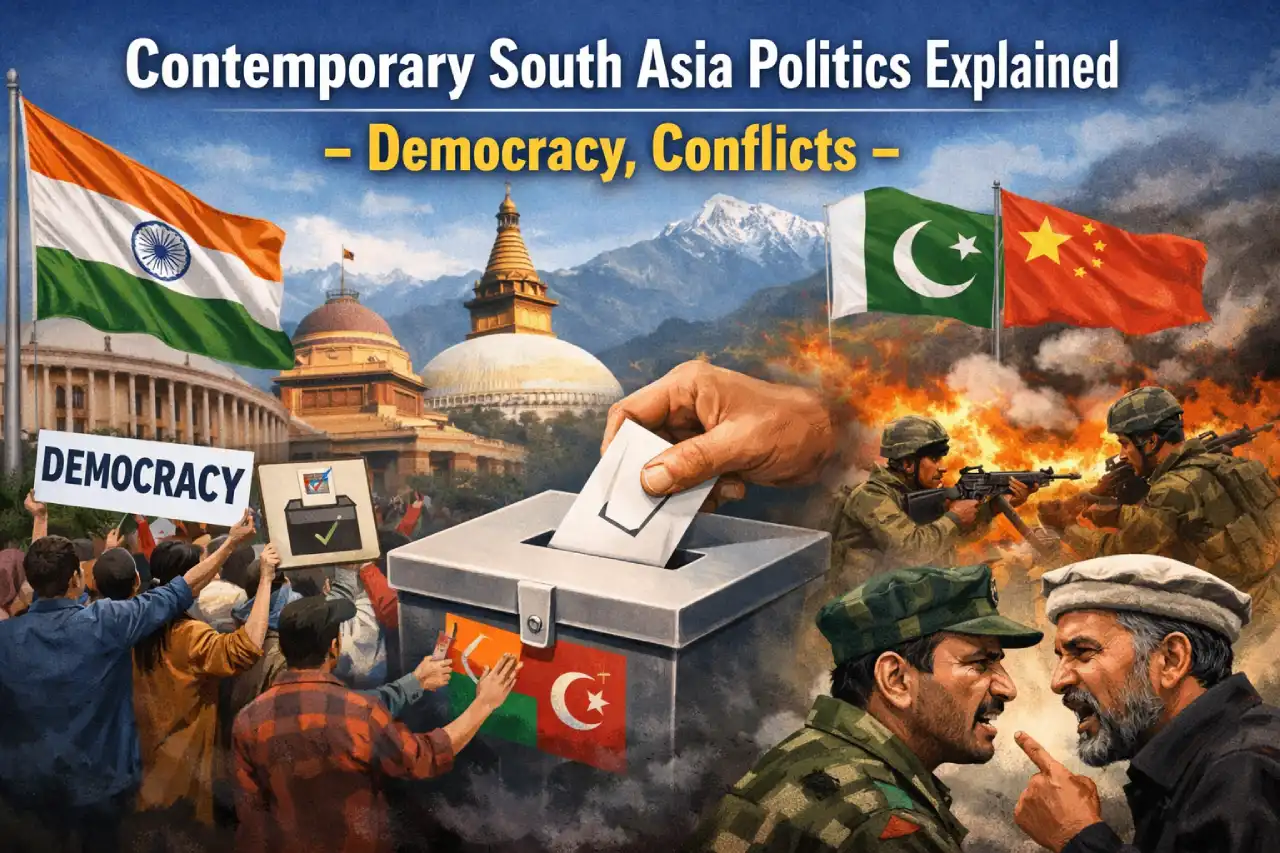
South Asia is one of the most politically active and historically complex regions in the world. The region includes countries such as India, Pakistan, Bangladesh, Nepal, Sri Lanka, Bhutan, Maldives and Afghanistan. Each of these nations has its own political system, social structure and historical experiences, yet they share many common challenges. Issues such as democracy, military rule, ethnic conflicts and regional cooperation have shaped the political landscape of South Asia over the decades.
I am writing about this topic because understanding the politics of South Asia is essential for students studying political science and international relations. The region has witnessed wars, democratic movements, revolutions and peace efforts that continue to influence global politics. In my opinion, learning about the political developments of neighbouring countries helps students understand India’s foreign policy and regional relations more clearly. It also shows how democracy and cooperation are gradually becoming stronger ideals across South Asia.
Countries That Form South Asia
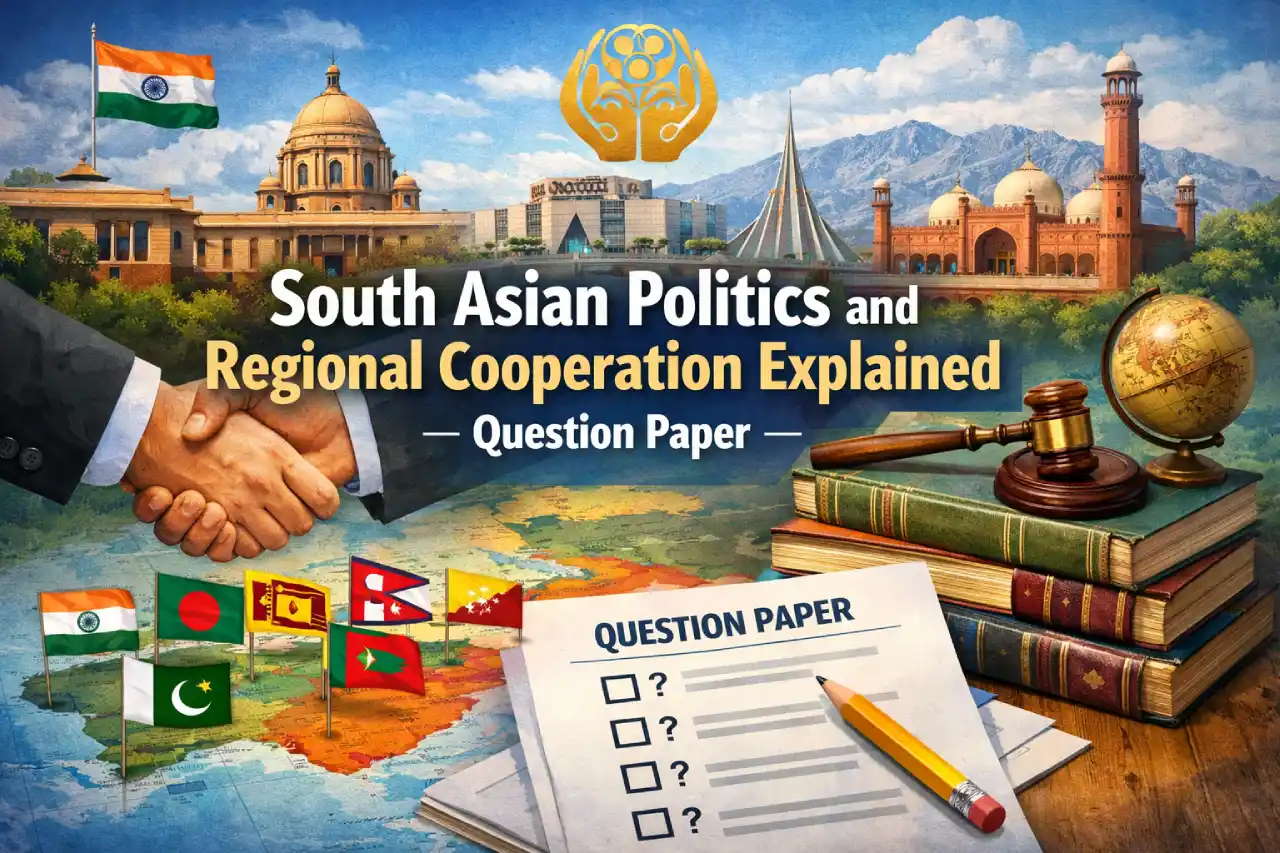
South Asia is a geographical and political region consisting of several neighbouring countries that share cultural, historical and economic links.
The major countries of South Asia include:
- India
- Pakistan
- Bangladesh
- Nepal
- Sri Lanka
- Bhutan
- Maldives
- Afghanistan
Among these, India occupies a central position in the region and shares borders with most of the other South Asian countries.
Political Systems in South Asia
South Asian countries follow different political systems, though many of them have adopted democratic structures over time.
Some important political arrangements include:
- India follows a democratic parliamentary system.
- Pakistan has experienced periods of both democratic governance and military rule.
- Bangladesh is a democratic republic but has faced political instability in the past.
- Nepal transitioned from monarchy to democracy after a long political struggle.
- Bhutan moved from monarchy towards a constitutional democratic system.
Despite differences in political systems, the idea of democracy has gradually gained wider acceptance in the region.
Democracy in the South Asian Region
Democracy is increasingly becoming an accepted political norm across South Asia. Many countries in the region have experienced struggles to establish democratic institutions.
For example:
- Nepal witnessed a strong popular movement that eventually led to the establishment of democracy.
- Bangladesh went through periods of military influence before strengthening democratic governance.
- Pakistan has alternated between civilian rule and military regimes.
These developments show that the people of South Asia strongly aspire for democratic governance despite various political challenges.
Regional Cooperation in South Asia
To improve cooperation among countries of the region, South Asian nations created a regional organisation aimed at strengthening economic and political collaboration.
The main objectives of this organisation include:
- Promoting regional peace and stability
- Encouraging economic cooperation
- Improving trade relations among member countries
- Supporting social and cultural development in the region
Regional cooperation helps countries work together on issues such as poverty, trade, education and environmental challenges.
Download this B-1 Contemporary South Asia WS 1 PDF File: Click Here
India and Its Neighbouring Countries
India plays a major role in the politics of South Asia because of its geographical location and economic influence. The country maintains important relationships with neighbouring nations.
Some key aspects of these relationships include:
- India shares open border arrangements with Nepal for travel and employment.
- India has strong diplomatic and economic ties with Bhutan.
- India played a significant role in supporting the independence of Bangladesh in 1971.
- India has maintained complex relations with Pakistan due to historical conflicts.
These relationships shape the political and strategic balance within South Asia.
Ethnic Conflicts and Political Challenges
South Asia has also witnessed several ethnic and political conflicts.
One example is the ethnic conflict in Sri Lanka between different communities, which lasted for several decades. Similarly, political movements and internal conflicts have affected stability in countries such as Nepal, Pakistan and Bangladesh.
These conflicts highlight the challenges faced by governments while maintaining political stability and national unity.
Major Historical Events in the Region
Several historical developments have shaped modern South Asian politics.
Some of the most important events include:
- The partition of India in 1947 and the creation of Pakistan
- The independence of Bangladesh in 1971
- Democratic movements in Nepal
- Political transitions in Bhutan
- Efforts at regional cooperation among South Asian countries
These events continue to influence the political environment of the region.
Challenges to Regional Cooperation
Although South Asian countries share common interests, cooperation in the region often faces difficulties.
Some major challenges include:
- Political tensions between neighbouring countries
- Border disputes
- Economic inequalities
- Differences in national interests
These issues sometimes slow down regional integration and cooperation.
Importance of Studying South Asian Politics
Studying the political developments of South Asia helps students understand the broader dynamics of international relations.
It allows learners to:
- Analyse democratic movements in developing countries
- Understand regional conflicts and cooperation
- Study the role of international organisations in promoting peace
- Examine how neighbouring countries influence each other’s politics
Such knowledge is important for students pursuing political science and international studies.