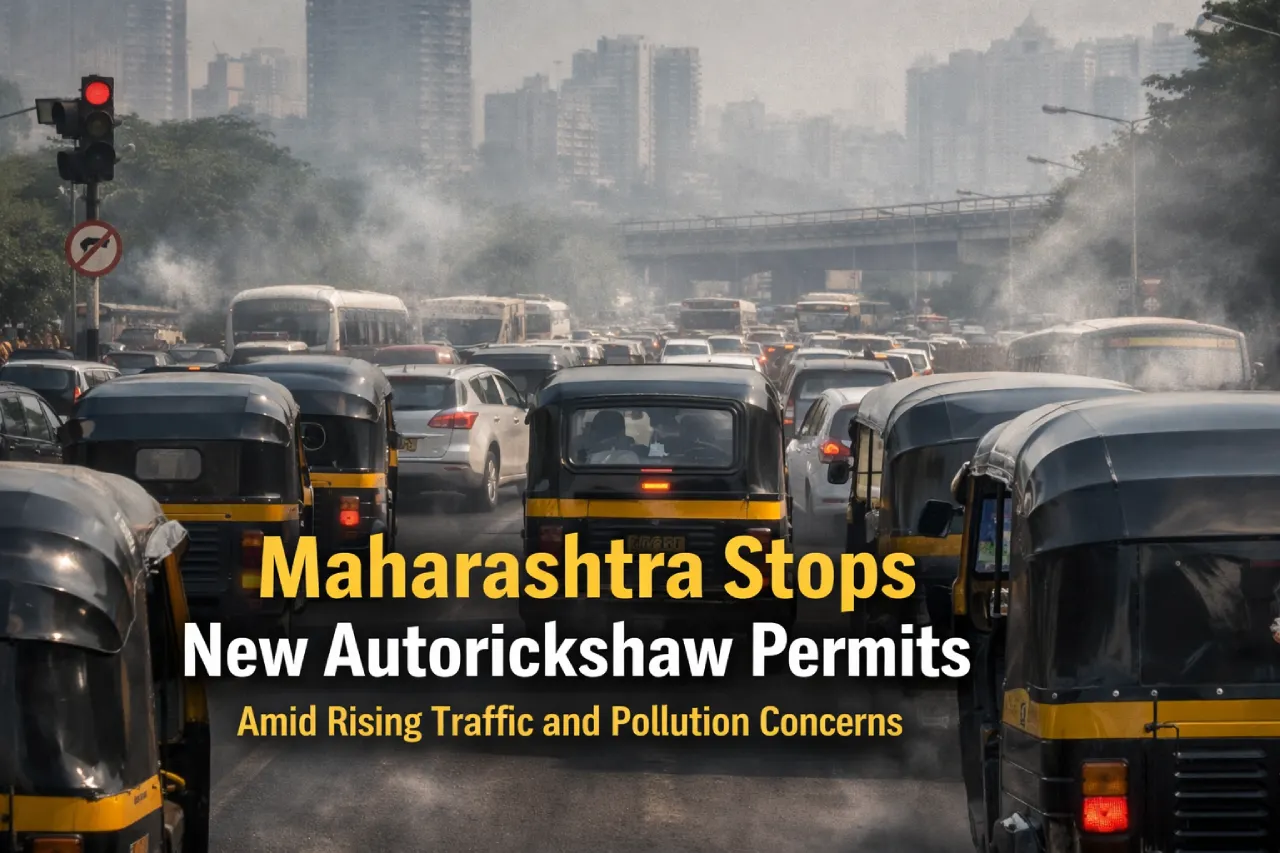
The Government of Maharashtra has announced a suspension on issuing new autorickshaw permits across the state. The decision was shared by state transport minister Pratap Sarnaik, who said the move has been taken in response to increasing traffic congestion and pollution levels in several urban areas. According to officials, the suspension came into effect from March 9 and will remain in place until the state cabinet finalises new criteria and guidelines for granting autorickshaw permits in the future.
I am writing about this development because transport policies like this affect both drivers and daily commuters. Autorickshaws are a key part of urban mobility in Maharashtra, especially in cities where they provide affordable last-mile connectivity. However, the rapid growth in the number of vehicles on the road has created challenges such as traffic congestion and environmental concerns. Understanding why the government has paused new permits helps explain how authorities are trying to balance mobility needs with urban planning.
Why the Government Stopped New Autorickshaw Permits
According to the state transport department, the decision was made after reviewing the increasing number of autorickshaws operating in major cities.
Officials said that around 1.4 million autorickshaw permits have already been issued across Maharashtra. In many urban areas, the number of vehicles has grown significantly over the years, leading to concerns about traffic congestion and pollution.
Some of the key reasons behind the decision include:
- Rising vehicle numbers in major cities
- Increasing traffic congestion in urban areas
- Environmental concerns related to pollution
- The need to regulate transport demand more effectively
The government said that pausing new permits will give authorities time to review the current situation and create updated rules.
Cities That Will Be Affected
The suspension of new autorickshaw permits will impact 23 cities in Maharashtra that have populations of more than 500,000 residents.
Under current transport regulations, state governments have the authority to decide how passenger vehicle permits are issued in large cities. These decisions are usually made in consultation with the central government, especially when transport demand and urban congestion become major concerns.
Cities with large populations often require stricter regulation of public transport vehicles to ensure smoother traffic flow.
Concerns Raised About Permit Distribution
During discussions in the state assembly, Transport Minister Pratap Sarnaik mentioned that the government had received complaints regarding irregularities in permit distribution.
Some of the issues highlighted included:
- Multiple autorickshaw permits allegedly issued to members of the same family
- Complaints that certain permits were granted through illegal means
- Allegations that permits were issued to individuals who were not eligible
Because of these concerns, the government decided to temporarily halt new permit approvals while reviewing the existing system.
Legal Authority Under the Motor Vehicles Act
The government’s decision is supported by provisions under the Motor Vehicles Act, 1988.
Under Section 67(3) of the Act, state governments have the authority to regulate transport permits for both passenger and goods vehicles. This allows them to introduce policies that address traffic congestion, improve public transport planning and consider environmental concerns.
These powers enable states to modify or limit permits when necessary to ensure better management of urban transportation systems.
Support from Autorickshaw Unions
Interestingly, the decision has received support from several autorickshaw unions across the state.
Union representatives had recently urged the government to stop issuing new permits, arguing that the number of autos on the road had already exceeded demand in some areas.
In the Mumbai Metropolitan Region alone, there are estimated to be around 500,000 autorickshaws, including nearly 300,000 operating within Mumbai. This translates to roughly one autorickshaw for every 40 people, according to union leaders.
They believe limiting new permits could help stabilise earnings for existing drivers and reduce excessive competition.
What Happens Next (Expected)
The suspension of new permits is not permanent. The Maharashtra state cabinet is expected to review the situation and introduce updated criteria for issuing autorickshaw permits in the future.
Possible changes may include:
- New guidelines for permit eligibility
- Limits on the number of vehicles in specific cities
- Stronger verification processes for applicants
- Measures to support sustainable transport policies
The government aims to strike a balance between providing transport services and controlling traffic congestion.