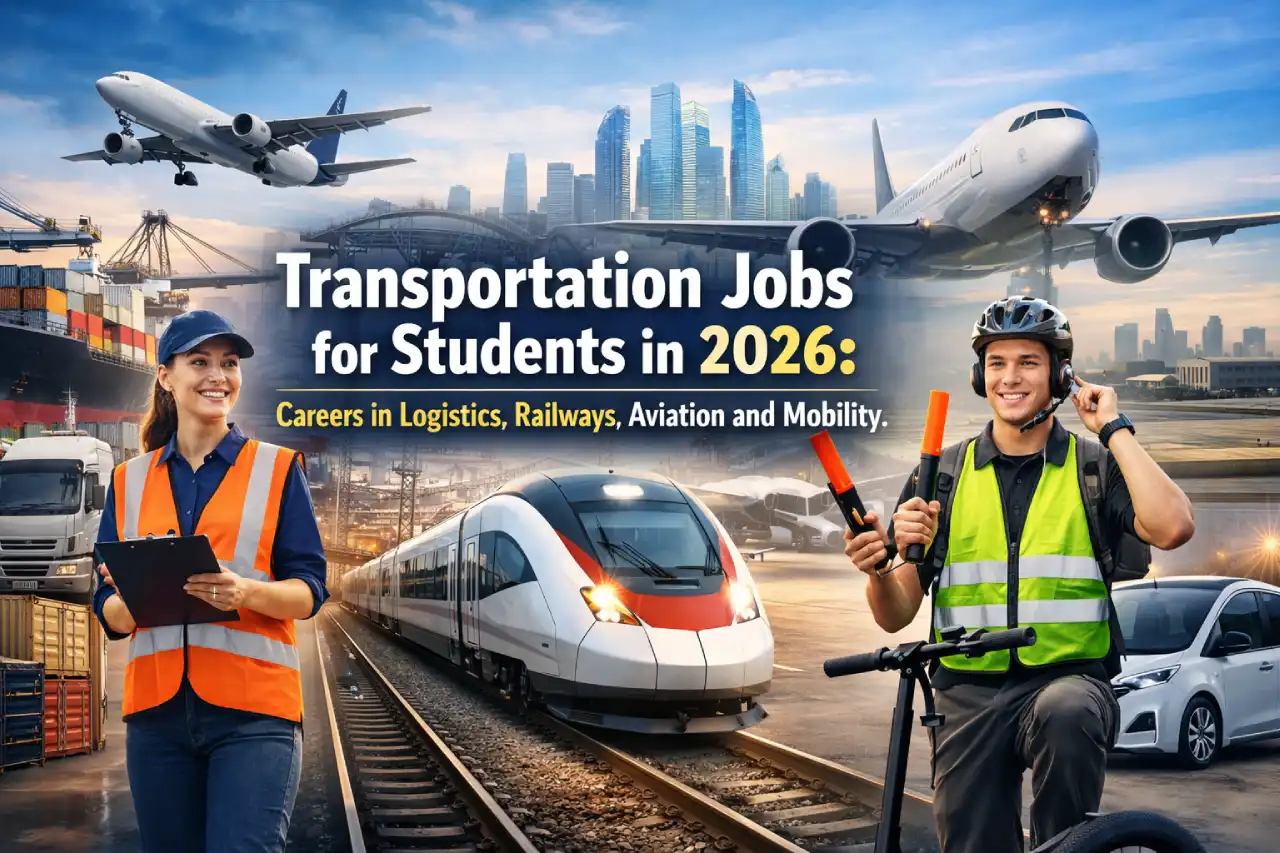
The transportation sector is emerging as one of the fastest-growing employment areas for students in 2026. With increasing investments in infrastructure, logistics networks, railways, aviation and urban mobility, the demand for skilled professionals in this sector continues to rise. From managing supply chains to operating modern transport systems, the industry offers a wide range of opportunities for students from different educational backgrounds. As governments and private companies expand transport networks, the sector is becoming an important source of employment for young professionals.
I am writing about this topic because many students are often unaware of the career options available in transportation beyond traditional driving or operational roles. Today, the sector includes advanced technology, data management, logistics planning and smart mobility solutions. Understanding these opportunities can help students choose careers that align with future industry demands. For those looking for stable jobs with growth potential, the transportation sector is becoming an attractive choice in 2026.
Why the Transportation Sector Is Growing
The transportation industry is expanding due to several economic and technological developments. Governments across the world are investing heavily in infrastructure projects, while private companies are improving logistics networks to support e-commerce and trade.
Some major factors driving growth include:
- Expansion of highway and railway networks
- Growth of e-commerce logistics and delivery services
- Development of smart transportation systems in cities
- Increased air travel and airport infrastructure projects
- Rising demand for efficient supply chain management
Because of these changes, transportation companies are hiring professionals with skills in management, engineering, technology and operations.
Major Transportation Career Paths for Students
Students interested in the transportation sector can explore a variety of career options depending on their education and skills.
Logistics and Supply Chain Management
One of the fastest-growing areas in transportation is logistics and supply chain management. Companies involved in shipping, warehousing and delivery require professionals who can manage the movement of goods efficiently.
Typical roles include:
- Logistics coordinator
- Supply chain analyst
- Warehouse operations manager
- Transportation planner
Students with degrees in business management, commerce or logistics can find strong opportunities in this field.
Railway Sector Jobs
Railways remain one of the largest employers in the transportation sector. Organisations such as Indian Railways regularly recruit engineers, technicians and administrative staff.
Career opportunities include:
- Railway engineers
- Station managers
- operations supervisors
- signal and telecom engineers
- ticketing and customer service staff
With ongoing railway modernisation projects, new roles are also emerging in digital systems and high-speed rail technology.
Aviation Industry Careers
The aviation industry is another area offering attractive opportunities for students. With increasing air travel demand and expansion of airports, the sector requires trained professionals across many roles.
Some career options include:
- Airport operations executive
- air traffic management staff
- aviation safety officers
- ground handling personnel
- aircraft maintenance engineers
Students with engineering, aviation management or hospitality backgrounds can explore these careers.
Urban Mobility and Smart Transport
Cities around the world are adopting smart transportation systems to manage traffic and public mobility. This includes metro rail networks, electric buses and intelligent traffic systems.
Jobs in this area include:
- urban transport planners
- mobility data analysts
- metro operations managers
- electric vehicle infrastructure specialists
As cities expand public transport systems, this sector is expected to create thousands of new jobs.
Skills Required for Transportation Careers
Students interested in transportation careers should focus on developing a mix of technical and managerial skills.
Some important skills include:
- Data analysis and problem-solving
- Communication and coordination skills
- Knowledge of logistics software and technology
- Basic understanding of transportation systems
- Project management and planning
In many roles, internships and practical training can also help students gain real-world experience.
Emerging Trends Shaping Transportation Jobs
The transportation sector is also changing due to new technologies and sustainability goals.
Some trends that are influencing future jobs include:
- Adoption of electric vehicles
- automation and digital logistics systems
- smart traffic management technologies
- sustainable and eco-friendly transport solutions
- integration of artificial intelligence in transport planning
Students who learn about these technologies will have better opportunities in the future job market.
Why Students Should Consider This Sector
The transportation industry offers several advantages for young professionals entering the workforce.
Some benefits include:
- Wide range of career paths across industries
- Opportunities in both government and private sectors
- Growing demand for skilled professionals
- Possibility of international career opportunities
- Long-term career stability
As infrastructure and mobility systems continue to expand, employment opportunities in this sector are expected to grow steadily.