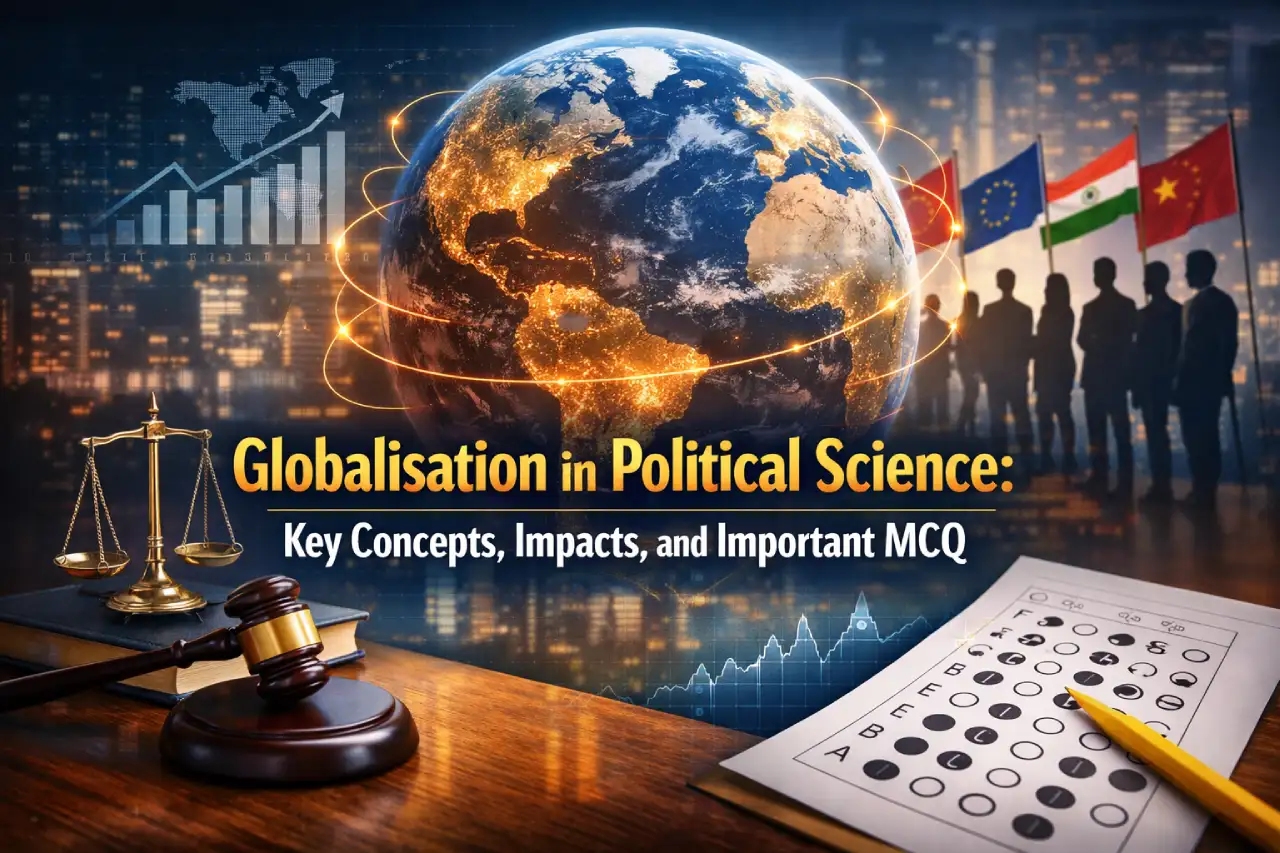
Globalisation has become one of the most significant concepts in modern political science and international relations. It refers to the growing interconnectedness of countries through trade, communication, technology, capital flows, and cultural exchange. Over the past few decades, technological progress and economic reforms have brought nations closer together, making economies and societies increasingly interdependent. Today, globalisation affects almost every aspect of life, including politics, culture, employment opportunities, and even daily lifestyle choices such as food, clothing, and entertainment.
I am writing about this topic because many students often encounter questions related to globalisation in political science examinations but struggle to understand the concept in a clear and structured way. Understanding globalisation is important not only for academic purposes but also for recognising how international developments influence our daily lives. By discussing the meaning, causes, consequences, and debates surrounding globalisation, this article aims to make the topic easier to understand for students preparing for exams and readers interested in global political developments.
Understanding the Concept of Globalisation
Globalisation refers to the increasing interaction and integration among countries through the movement of goods, services, ideas, capital, and people across national boundaries.
This process has created strong economic and cultural connections between societies across the world. Globalisation is often described as a multi-dimensional concept because it includes economic, political, and cultural aspects.
The process of globalisation mainly involves four important flows:
- Flow of ideas through communication and digital technologies
- Flow of capital through investments and financial markets
- Flow of goods and services through international trade
- Flow of people across borders for work, education, or migration
These flows create worldwide interconnectedness among different countries.
Causes of Globalisation
Several factors have contributed to the rapid expansion of globalisation over the past few decades.
Technological Development
Technology has been one of the strongest forces driving globalisation. Innovations in communication and transport have reduced geographical barriers.
Important technological developments include:
- Telecommunication technologies such as telephones and the internet
- Digital platforms that allow instant exchange of information
- Faster transport systems that make global trade easier
- Expansion of information technology industries
These developments have enabled faster movement of ideas, goods, and services between countries.
Economic Reforms and Liberalisation
Economic liberalisation has also encouraged globalisation. Many countries reduced trade restrictions and opened their markets to foreign investment.
These policies allow multinational companies to operate in different countries and increase economic cooperation between nations.
Role of International Organisations
International institutions have played an important role in regulating global economic activities.
Major institutions include:
- International Monetary Fund (IMF)
- World Trade Organization (WTO)
- World Bank
These organisations help promote international trade, financial stability, and economic cooperation.
Economic Consequences of Globalisation
Globalisation has significantly influenced global economic systems.
Some important economic consequences include:
- Increase in international trade and economic exchanges
- Greater flow of foreign direct investment
- Growth of multinational corporations
- Expansion of global markets and consumer choices
Many developing countries have benefited from new investment opportunities and increased trade.
However, critics argue that globalisation sometimes increases inequality and benefits powerful economies more than weaker ones.
Cultural Impact of Globalisation
Globalisation has also transformed cultural practices and lifestyles across different societies.
Some cultural effects include:
- Spread of global fashion trends and clothing styles
- Popularity of international food chains and cuisines
- Influence of global media, music, and entertainment
- Cultural exchange through tourism and communication networks
The cultural consequences of globalisation are often discussed through two concepts:
Cultural Homogenisation
This refers to the fear that globalisation may create a uniform global culture where local traditions are replaced by dominant international influences.
Cultural Heterogenisation
This refers to the blending of global influences with local traditions, creating new cultural combinations.
For example, global fashion trends may mix with traditional clothing styles to create unique cultural expressions.
Download this B-1 Globalisation WS 2 PDF File: Click Here
Political Consequences of Globalisation
Globalisation has also influenced political systems and the role of governments.
Some important political consequences include:
- Reduction in the traditional economic role of the state
- Increased influence of multinational corporations
- Greater involvement of international organisations in policymaking
- Shift from welfare-oriented policies to market-based economic systems
In many cases, governments now focus on regulating markets rather than directly controlling economic activities.
Resistance to Globalisation
Despite its benefits, globalisation has faced criticism and resistance from different groups.
Some common reasons for resistance include:
- Concerns about economic inequality
- Fear of loss of cultural identity
- Opposition to multinational corporations
- Concerns about weakening state sovereignty
Political groups, social organisations, and trade unions have often raised concerns about the unequal impact of globalisation on societies.
Effects of Globalisation on Daily Life
Globalisation has affected everyday life in several noticeable ways.
Examples include:
- Changes in food habits with the popularity of global cuisines
- Adoption of international clothing styles
- Access to global entertainment and media
- Availability of international brands and products
These changes show how globalisation influences not only economies and politics but also everyday cultural practices.