JOIN WHATSAPP
STORIES

NCERT Class 10 Political Science Chapter 1 PDF – Power-sharing

NCERT Class 10 Political Science Chapter 1 PDF – Power-sharing

NCERT Class 10 Political Science (Civics) Chapter 1, Power-sharing, introduces students to one of the core ideas in democracy—sharing of power among different groups and levels to avoid conflict and ensure good governance. The chapter explains this concept using real-world examples like Belgium and Sri Lanka, helping students understand why power-sharing is not only important but also necessary in a diverse society.

I am writing about this topic because it builds a foundation for understanding how democratic systems work in real life. Many students assume power is only held by elected leaders, but this chapter shows how it is distributed among communities, governments, and institutions. It gives practical knowledge about how power-sharing helps maintain peace, protect minority interests, and strengthen democracy. Whether you’re preparing for your board exams or simply want to understand how politics works in everyday life, it helps to Click Here to Download NCERT Class 10 Political Science Chapter 1: Power-sharing PDF for easy reading and revision.

NCERT Class 10 Political Science Chapter 1 Syllabus

  • Case studies of Belgium and Sri Lanka
  • Need for power-sharing in democracy
  • Forms of power-sharing:
    • Among different organs of government
    • Among governments at different levels
    • Among social groups
    • Among political parties, pressure groups and movements

What You Will Learn in Chapter 1: Power-sharing

The chapter begins by comparing two countries—Belgium and Sri Lanka. Belgium successfully solved its ethnic tension by carefully sharing power between Dutch-speaking and French-speaking communities. Sri Lanka, on the other hand, ignored the demands of the Tamil-speaking population, which led to civil war and unrest. These examples clearly show why inclusive politics is better than majoritarianism.

Next, the chapter explains different forms of power-sharing that exist in a democracy:

  • Power is shared among different organs of government like the legislature, executive, and judiciary. This is called horizontal distribution and ensures a system of checks and balances.
  • Power is also shared among governments at different levels—central, state, and local. This vertical division is seen in federal structures like in India.
  • Power can be shared among different social groups, especially in countries with diverse ethnic or religious backgrounds. This protects minority interests.
  • Political parties and pressure groups also share power by representing different voices in society. Through elections and movements, they influence how power is used.

The idea behind power-sharing is simple—if power is concentrated in one group or person, it leads to inequality and possibly conflict. But when power is distributed, it creates balance and trust in the system.

Download PDF

Click Here to Download NCERT Class 10 Political Science Chapter 1: Power-sharing PDF
Leave a Comment

End of Article

Class 11 Sanskrit Shashwati Chapter 11 PDF: नवद्रव्याणि Explained

Class 11 Sanskrit Shashwati Chapter 11 PDF: नवद्रव्याणि Explained

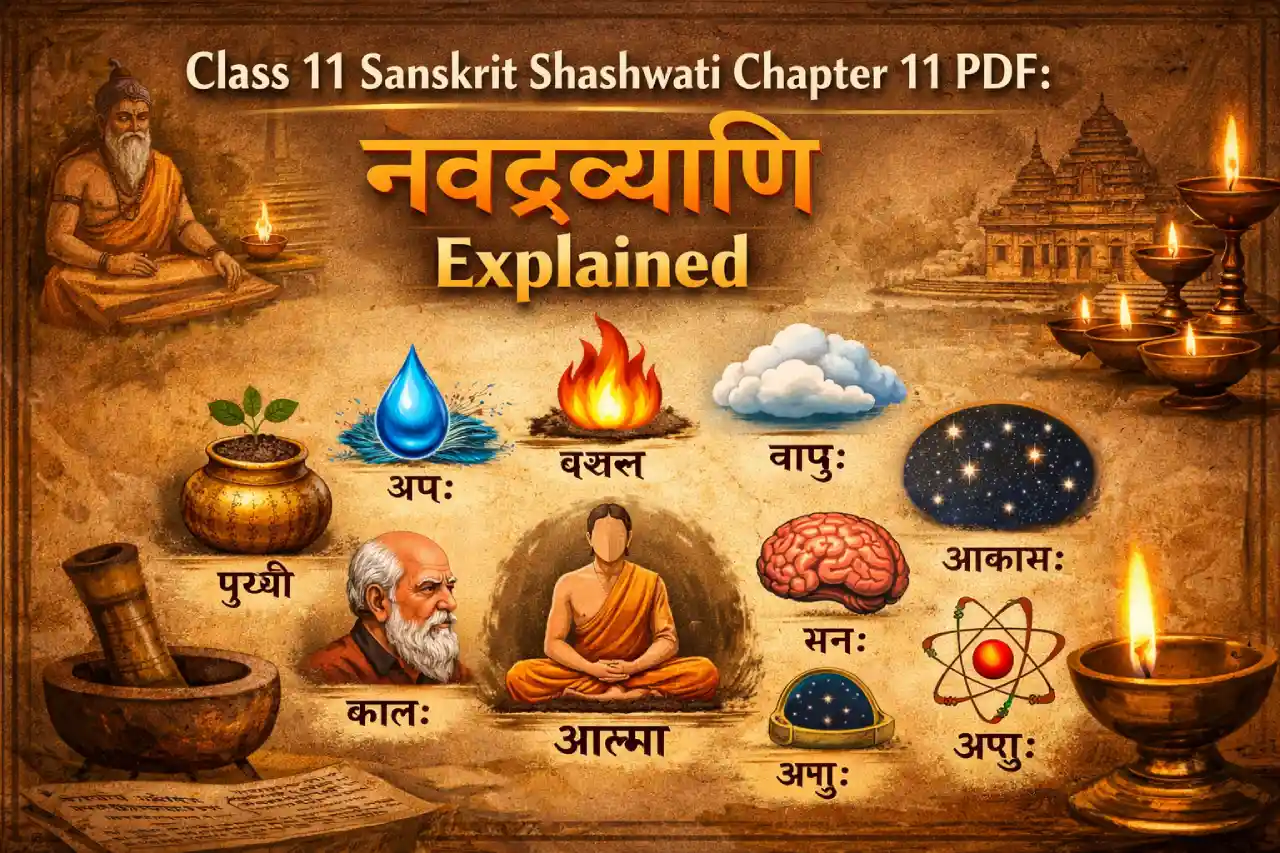
NCERT Class 11 Sanskrit Shashwati Chapter 11, titled “नवद्रव्याणि”, introduces students to an important concept from Indian philosophy—the nine fundamental substances that make up the universe. The chapter explains these elements in a simple and structured way, helping students understand how ancient thinkers tried to explain the nature of reality through observation and logic.

I am writing about this chapter because many students search for the official NCERT PDF along with a simple explanation before exams. In my experience, topics like “नवद्रव्याणि” may feel slightly abstract at first, but once you understand the list and their meanings, it becomes quite easy to remember and revise. This chapter is important not only for Sanskrit exams but also for gaining a basic idea of traditional Indian philosophy. It helps students connect language learning with deeper concepts. Studying from the official NCERT book and revising regularly can make this chapter scoring and easy to handle.

About the Chapter: नवद्रव्याणि

The term “नवद्रव्याणि” means “nine substances.” These are considered the basic elements that exist in the universe according to classical Indian thought.

The chapter explains each of these substances and their role in the functioning of the world.

The Nine Substances Explained

Here is a simple table to understand the nine dravyas:

Sanskrit TermMeaning (Simple English)
पृथ्वी (Prithvi)Earth
आपः (Apah)Water
तेजः (Tejas)Fire
वायु (Vayu)Air
आकाश (Akasha)Space
काल (Kala)Time
दिशा (Disha)Direction
आत्मा (Atma)Soul
मनः (Manas)Mind

These elements together explain the physical and non-physical aspects of existence.

Key Ideas in the Chapter

1. Understanding the Universe

The chapter explains how everything in the world is made up of basic substances.

2. Physical and Non-Physical Elements

Some substances like earth and water are physical, while others like time and soul are abstract.

3. Connection Between Mind and Body

The inclusion of “मनः” (mind) and “आत्मा” (soul) shows the importance of inner consciousness.

Why This Chapter Is Important for Students

  • Helps understand basic philosophical concepts
  • Improves Sanskrit reading and comprehension
  • Important for exam questions and explanations
  • Builds logical and conceptual thinking

Students who understand the list properly can easily score marks.

Study Tips for Chapter 11

  • Memorise the nine dravyas and their meanings
  • Understand the difference between physical and abstract elements
  • Practise writing short explanations
  • Revise regularly using a table format

This makes the chapter easier to revise before exams.

How to Download NCERT Class 11 Sanskrit Shashwati Chapter 11 PDF

Students can download the official chapter PDF from the National Council of Educational Research and Training website by following these steps:

Always use the official NCERT website to ensure you get the correct and updated version.

Leave a Comment

End of Article

Loading more posts...