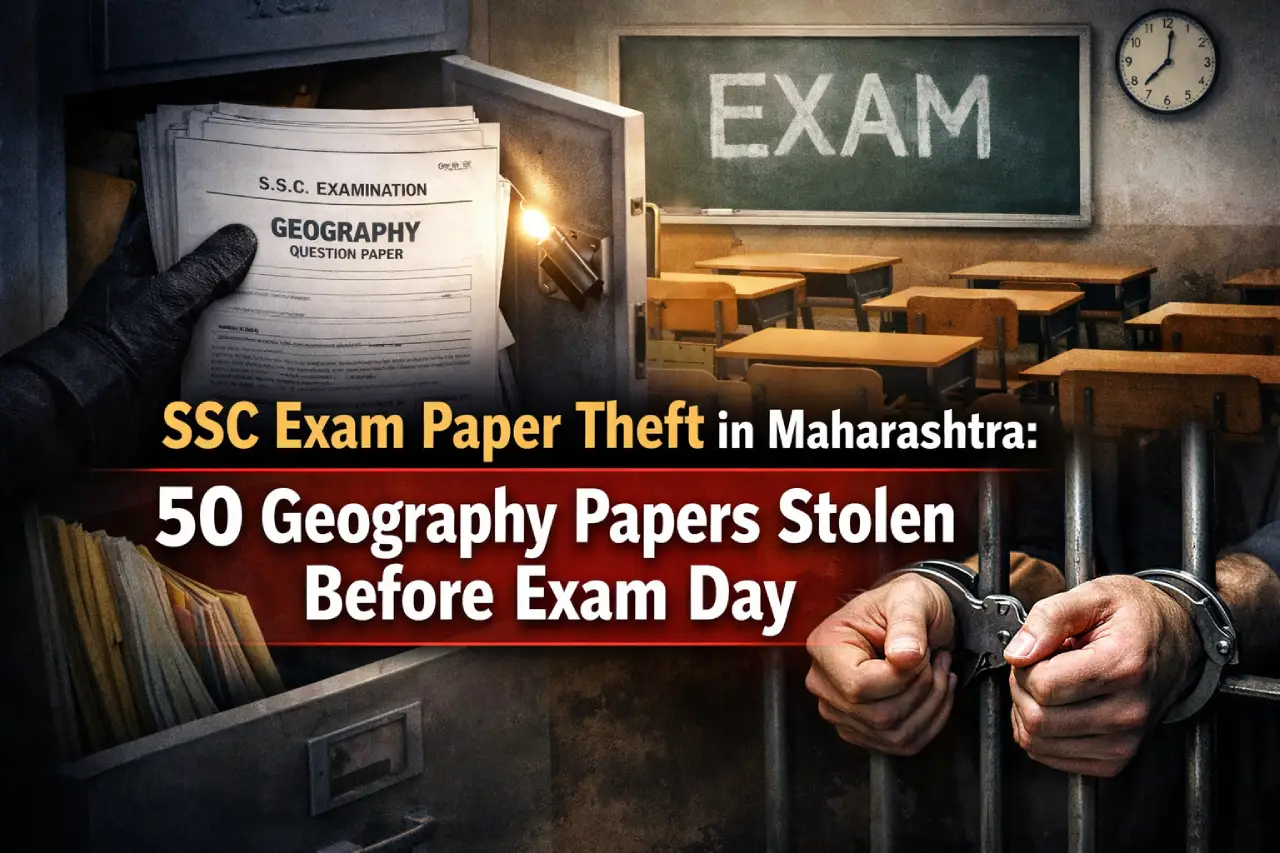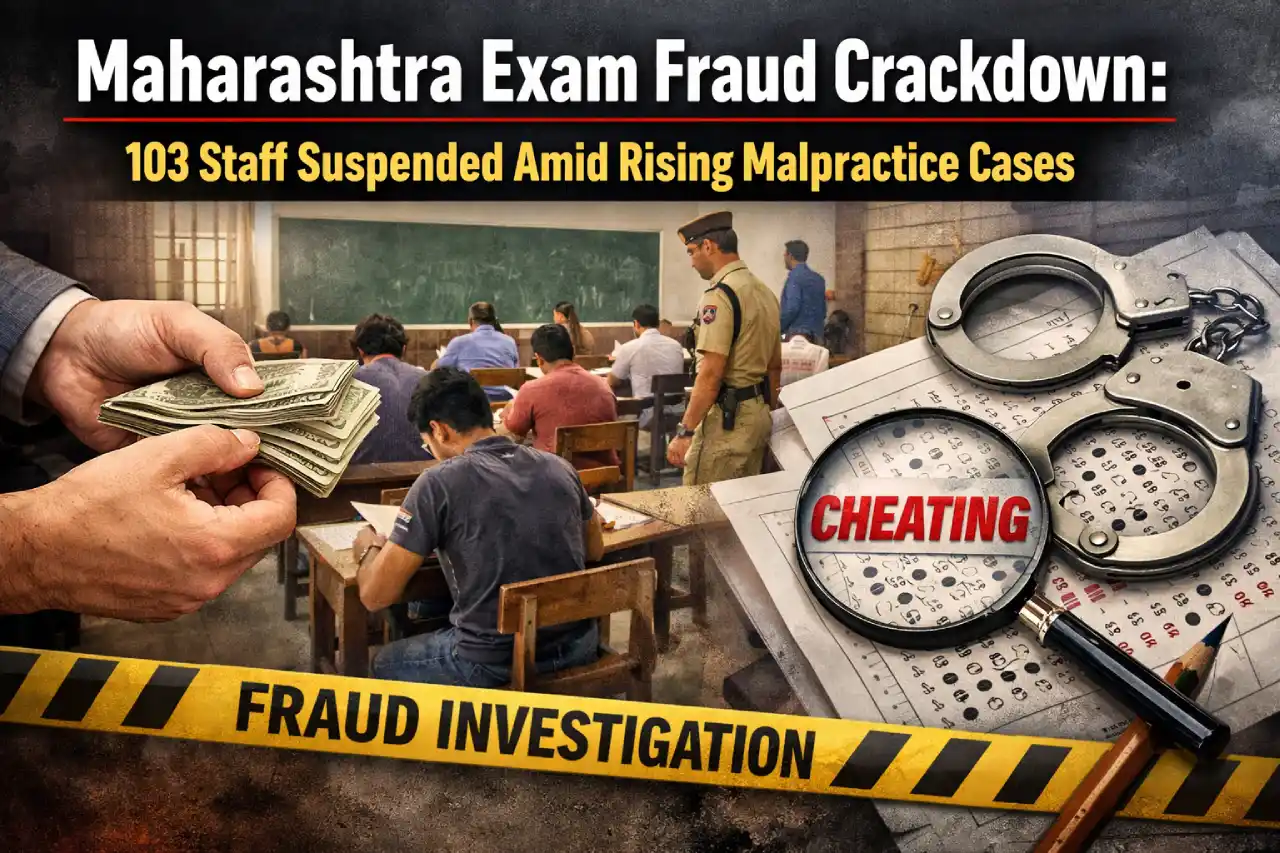
In an unprecedented move, Maharashtra has suspended 103 teaching and non-teaching staff members over malpractice during this year’s Higher Secondary Certificate (HSC) and Secondary School Certificate (SSC) board examinations. This is the highest number of suspensions ever recorded in connection with board exam fraud in the state. Officials say the rise in detected cases is largely due to increased CCTV surveillance across exam centres, which has made it easier to identify irregularities.
I am writing about this development because exam integrity is something that directly affects lakhs of students every year. From what I have seen, even a few unfair practices can create distrust in the entire system. This strong action by the authorities shows that stricter monitoring is now in place. It also sends a clear message that malpractice will not be tolerated, which is important for maintaining fairness in competitive academic environments.
What Led to the Suspensions
The suspensions are linked to various malpractice cases during SSC and HSC exams.
- A total of 103 staff members have been suspended
- Includes both teaching and non-teaching personnel
- Earlier reports had indicated 81 suspensions, but the number has now increased
- Cases were identified through surveillance and monitoring systems
This marks a significant increase compared to previous years.
Role of CCTV Surveillance
One of the main reasons behind the surge in detected cases is improved monitoring.
- Over 85% of HSC exam centres had CCTV coverage
- Around 90% of SSC exam centres were monitored through cameras
- CCTV footage provided strong evidence in malpractice cases
- Authorities could take action based on recorded proof
According to officials, such large-scale suspensions were not possible earlier due to limited surveillance.
Exam Centres Coverage Details
Here is a quick overview of monitoring across exam centres:
| Examination | Total Centres | CCTV Coverage |
|---|---|---|
| HSC Exams | 3,387 Centres | Over 85% |
| SSC Exams | 5,111 Centres | Around 90% |
This widespread coverage has significantly improved transparency in the examination process.
What Types of Malpractice Were Detected
While detailed case-wise information is still being reviewed, common issues include:
- Assisting students unfairly during exams
- Allowing use of unauthorised materials
- Negligence in invigilation duties
- Violations of exam protocols
Such practices compromise the fairness of the examination system.
Impact on Students and Education System
Strict action against malpractice has both immediate and long-term effects.
- Builds trust among students appearing honestly
- Ensures fair evaluation of performance
- Discourages future misconduct
- Strengthens the credibility of board exams
In my opinion, strict monitoring is necessary to maintain a level playing field for all students.
Authorities’ Stand on the Issue
Officials have clearly indicated that such actions are part of a broader effort to clean up the system.
- Increased surveillance will continue in future exams
- More accountability will be enforced at exam centres
- Strict penalties will be imposed for violations
- Focus on maintaining transparency and fairness
This suggests that such crackdowns may become more common going forward.
Challenges and Concerns
While the move is important, it also raises some concerns.
- Need for proper training of exam staff
- Ensuring that genuine mistakes are not treated as misconduct
- Balancing strict monitoring with fair procedures
Any enforcement system must be both strict and fair.