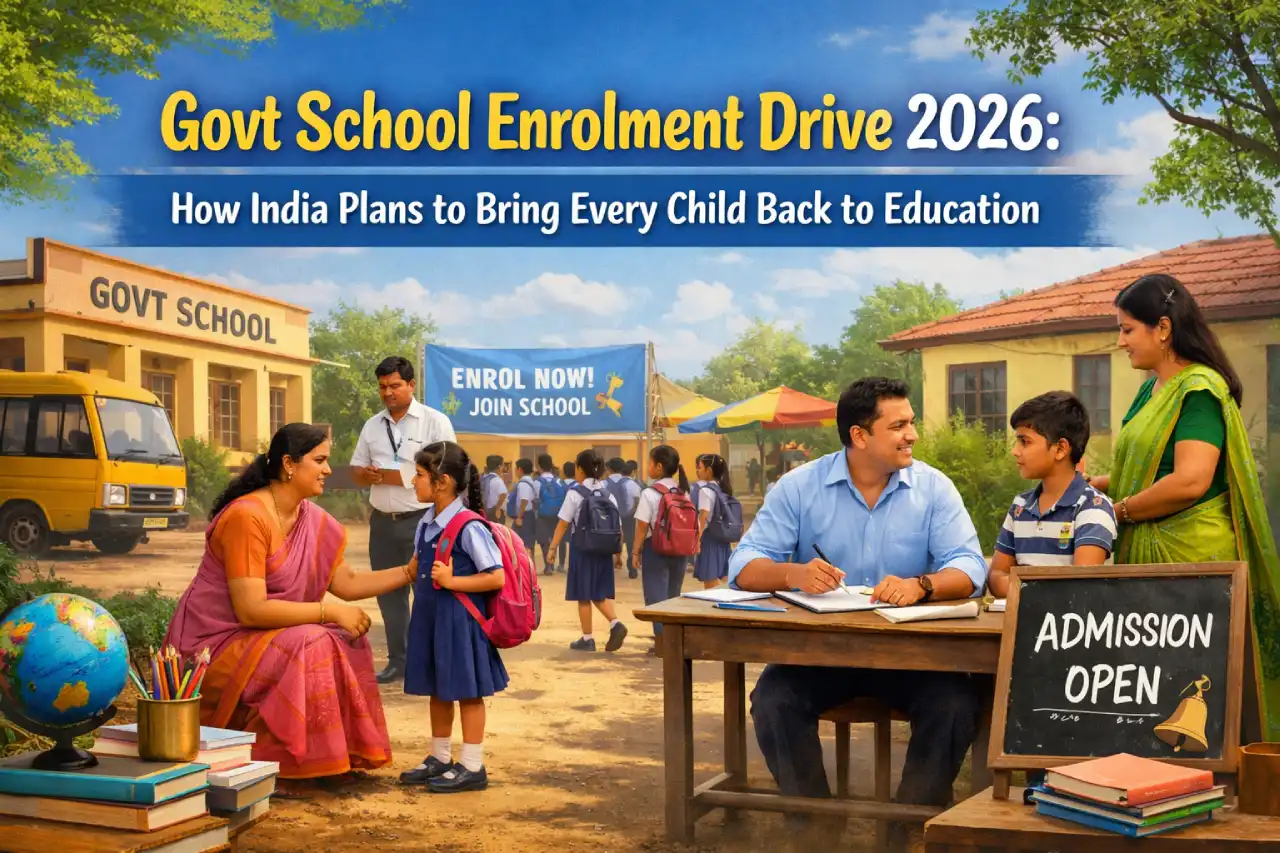
The government is set to launch a nationwide drive to identify and enrol out-of-school and dropout children, aiming to bring them back into the education system. This initiative is part of a larger effort to achieve the National Education Policy (NEP) target of 100 per cent Gross Enrolment Ratio from pre-school to secondary level by 2030. Along with regular schooling, the plan also highlights the importance of open schooling as a flexible option for children who cannot attend traditional classrooms due to social, economic, or geographical challenges.
I am writing about this because access to education is still a major concern in many parts of India. Even today, thousands of children drop out or never enrol due to various reasons like financial difficulties, family responsibilities, or lack of nearby schools. Understanding this initiative is important because it shows how the government is trying to solve a real problem and ensure that every child gets a fair chance at education, no matter their background or circumstances.
What is the Nationwide Enrolment Drive?
The nationwide drive is a focused campaign to identify children who are currently not part of the formal education system and bring them back into learning.
This includes:
- Children who have never enrolled in school
- Students who dropped out midway
- Children facing barriers like poverty, migration, or remote living conditions
The aim is to ensure that no child is left behind and every child has access to basic education.
Link with National Education Policy (NEP) 2020
This initiative directly supports the goals of the National Education Policy 2020, which emphasises universal access to education.
The key target is:
- Achieving 100 per cent Gross Enrolment Ratio (GER) from pre-school to secondary level by 2030
To meet this goal, the government is focusing not just on enrolment, but also on retention and re-entry of students into the education system.
Role of Open Schooling in This Initiative
One of the most important parts of this drive is the promotion of open schooling.
Open schooling provides a flexible learning system for students who cannot attend regular schools. It is especially useful for:
- Children from economically weaker backgrounds
- Students involved in work or family responsibilities
- Learners in remote or difficult geographical areas
This approach ensures that education adapts to the child’s situation, rather than the other way around.
About National Institute of Open Schooling (NIOS)
The National Institute of Open Schooling (NIOS) plays a central role in this initiative. It is an autonomous body under the Ministry of Education and is known as the largest open school board in the world.
Here are some key features of NIOS:
- More than 10,000 Study and Examination Centres across India
- Flexible admission process
- Multiple chances to clear exams
- On-Demand Examination System
- Certification recognised at par with other national and state boards
NIOS provides a scalable platform that can bring a large number of out-of-school children back into the education system.
Key Focus Areas of the Government
Along with enrolment, the government is also working on improving the overall education system. The focus areas include:
- Expanding access to education in underserved areas
- Improving the quality of teaching and learning
- Standardising education systems across regions
- Strengthening open schooling frameworks
These steps aim to make education not just accessible, but also effective and meaningful.
Why This Initiative Matters
From my perspective, this initiative is a crucial step towards building a more inclusive education system in India.
Here’s why it is important:
- It ensures equal learning opportunities for all children
- It addresses the issue of school dropouts in a structured way
- It supports flexible learning options for different needs
- It contributes to long-term social and economic development
When more children are educated, it benefits not just individuals but the entire country.