JOIN WHATSAPP
STORIES

NCERT Class 10 Physical Education Chapter 5 PDF – Individual Games and Sports II

NCERT Class 10 Physical Education Chapter 5 PDF – Individual Games and Sports II

NCERT Class 10 Physical Education Chapter 5, Individual Games and Sports II, is a continuation of Chapter 4 and focuses on a different set of individual sports such as gymnastics, martial arts, and other solo games that encourage personal discipline, fitness, and mental strength. The chapter explains rules, techniques, history, and advantages of these sports in a simple and easy-to-understand format, helping students grasp both the theoretical and practical aspects.

I am writing about this topic because many students often overlook individual sports beyond athletics and yoga. But games like gymnastics or martial arts offer excellent opportunities for self-growth, agility, and self-defence skills. This chapter doesn’t just explain how to play or perform—it gives a structured understanding of how these sports improve overall personality and fitness. Having studied this topic myself, I found it useful not only for board exams but also for building confidence in sports activities beyond cricket and football. Whether you’re a sports lover or someone new to physical activity, this chapter is worth going through in detail.

Chapter Overview: Individual Games and Sports II

What’s Covered in Chapter 5?

  • Introduction to Gymnastics
  • Basics of Martial Arts (like Judo, Karate, Taekwondo)
  • Terminologies and Techniques
  • Safety Guidelines
  • Rules, Scoring, and Referee Signals
  • Importance of Individual Participation

Gymnastics: Flexibility and Strength

Gymnastics is a sport that focuses on physical strength, balance, and body control. The chapter covers different types of gymnastics including floor exercises, balance beam, and vault. It also gives students an idea about proper warm-up routines and posture alignment to prevent injury. Practising gymnastics regularly improves flexibility and posture—important even in daily life.

Martial Arts: Discipline and Self-Defence

Students are introduced to various martial arts forms like Karate, Taekwondo, and Judo. These sports build mental focus, reflexes, and self-confidence. The chapter explains belt levels, basic stances, and the value of learning martial arts for both physical fitness and self-protection.

Role of Practice and Dedication

Unlike team sports, individual sports require personal motivation. The chapter helps students understand how consistent training in individual games helps build resilience. Even without a partner or a team, regular practice can lead to personal achievement in state-level or school-level competitions.

Why Focus on Individual Games?

  • They help in self-assessment and improvement
  • Build personal responsibility and accountability
  • Reduce dependency on teammates
  • Can be practised anywhere without group arrangements

This chapter reminds students that sports are not always about winning trophies but about improving one’s physical health and mindset.
Download PDF

Click Here to Download NCERT Class 10 Physical Education Chapter 5: Individual Games and Sports II PDF

Leave a Comment

End of Article

Class 11 Sanskrit Shashwati Chapter 11 PDF: नवद्रव्याणि Explained

Class 11 Sanskrit Shashwati Chapter 11 PDF: नवद्रव्याणि Explained

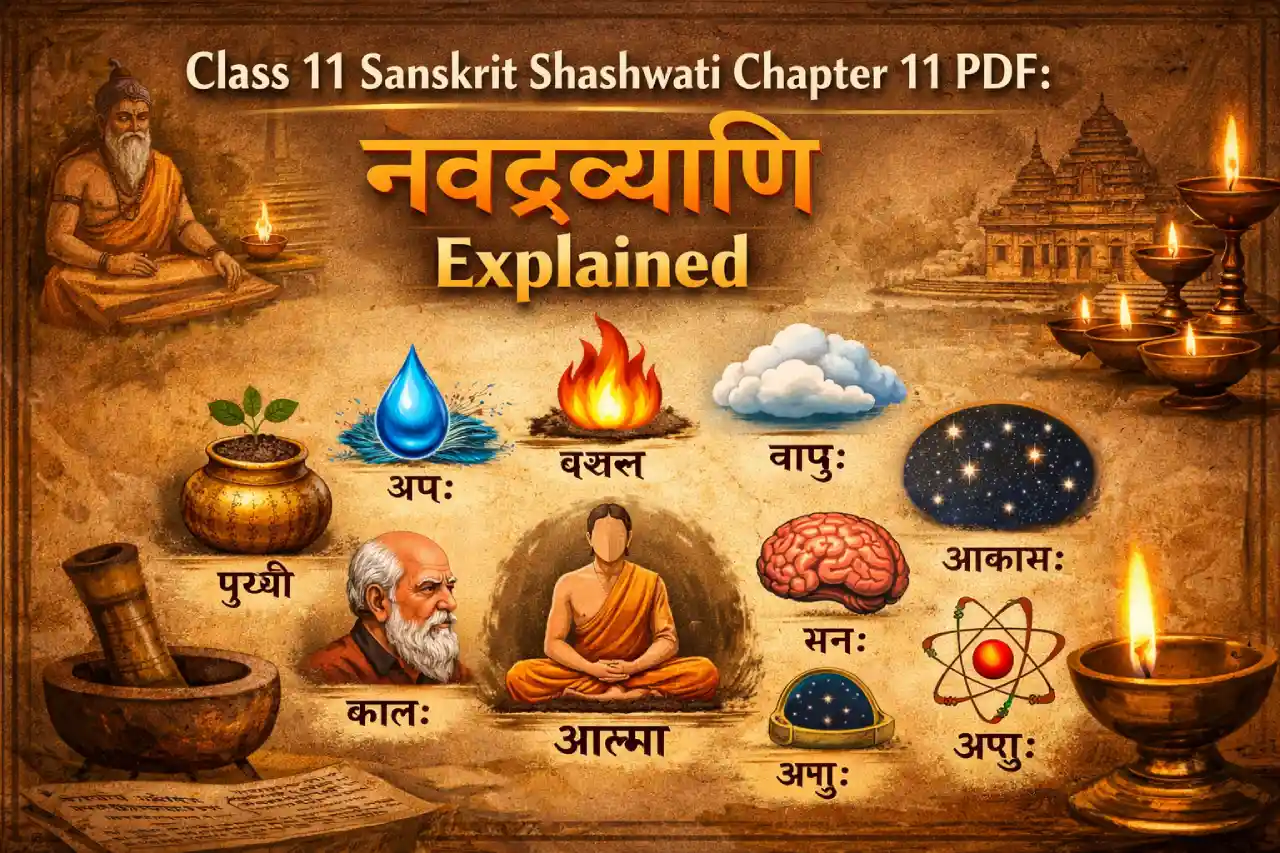
NCERT Class 11 Sanskrit Shashwati Chapter 11, titled “नवद्रव्याणि”, introduces students to an important concept from Indian philosophy—the nine fundamental substances that make up the universe. The chapter explains these elements in a simple and structured way, helping students understand how ancient thinkers tried to explain the nature of reality through observation and logic.

I am writing about this chapter because many students search for the official NCERT PDF along with a simple explanation before exams. In my experience, topics like “नवद्रव्याणि” may feel slightly abstract at first, but once you understand the list and their meanings, it becomes quite easy to remember and revise. This chapter is important not only for Sanskrit exams but also for gaining a basic idea of traditional Indian philosophy. It helps students connect language learning with deeper concepts. Studying from the official NCERT book and revising regularly can make this chapter scoring and easy to handle.

About the Chapter: नवद्रव्याणि

The term “नवद्रव्याणि” means “nine substances.” These are considered the basic elements that exist in the universe according to classical Indian thought.

The chapter explains each of these substances and their role in the functioning of the world.

The Nine Substances Explained

Here is a simple table to understand the nine dravyas:

Sanskrit TermMeaning (Simple English)
पृथ्वी (Prithvi)Earth
आपः (Apah)Water
तेजः (Tejas)Fire
वायु (Vayu)Air
आकाश (Akasha)Space
काल (Kala)Time
दिशा (Disha)Direction
आत्मा (Atma)Soul
मनः (Manas)Mind

These elements together explain the physical and non-physical aspects of existence.

Key Ideas in the Chapter

1. Understanding the Universe

The chapter explains how everything in the world is made up of basic substances.

2. Physical and Non-Physical Elements

Some substances like earth and water are physical, while others like time and soul are abstract.

3. Connection Between Mind and Body

The inclusion of “मनः” (mind) and “आत्मा” (soul) shows the importance of inner consciousness.

Why This Chapter Is Important for Students

  • Helps understand basic philosophical concepts
  • Improves Sanskrit reading and comprehension
  • Important for exam questions and explanations
  • Builds logical and conceptual thinking

Students who understand the list properly can easily score marks.

Study Tips for Chapter 11

  • Memorise the nine dravyas and their meanings
  • Understand the difference between physical and abstract elements
  • Practise writing short explanations
  • Revise regularly using a table format

This makes the chapter easier to revise before exams.

How to Download NCERT Class 11 Sanskrit Shashwati Chapter 11 PDF

Students can download the official chapter PDF from the National Council of Educational Research and Training website by following these steps:

Always use the official NCERT website to ensure you get the correct and updated version.

Leave a Comment

End of Article

Loading more posts...