JOIN WHATSAPP
STORIES

NCERT Class 10 Physical Education Chapter 6 PDF – Team Games and Sports I

NCERT Class 10 Physical Education Chapter 6 PDF – Team Games and Sports I

NCERT Class 10 Physical Education Chapter 6, Team Games and Sports I, introduces students to the basics of popular team sports such as football, hockey, and volleyball. This chapter explains the rules, playing techniques, and importance of teamwork in these sports. It not only teaches the physical aspects but also highlights communication, cooperation, and sportsmanship—key values developed through team games.

I chose to write about this chapter because I’ve personally seen how students bond, learn responsibility, and grow in confidence through team sports. Team games teach more than just how to win—they teach how to share victory, accept defeat, and improve together. This chapter is especially important for those preparing for practical exams or school-level competitions. Understanding the positions, rules, and strategies of games like football and hockey can also help students participate more actively on the field and enjoy the sport better. So, even if you’re not aiming to become a professional athlete, this chapter will help you become a better team player—something useful in life beyond school too.

Key Highlights of Chapter 6: Team Games and Sports I

What Sports Are Covered?

  • Football – Field layout, player positions, common fouls, and rules
  • Hockey – Stick handling, scoring, fouls, penalties, and referee signals
  • Volleyball – Service, rotation, net rules, and scoring system

Each sport section in the chapter is broken down clearly so that students can understand the practical part along with the theory.

Importance of Team Games

Playing in a team builds qualities that go beyond fitness:

  • Leadership – Captaining a team teaches how to take responsibility
  • Coordination – Understanding timing and positions
  • Discipline – Following rules and respecting the referee
  • Communication – Verbal and non-verbal signals help during play

These qualities are not just helpful in sports but are also useful in group projects, future workplaces, and social life.

Skill Development

The chapter also includes basic drills and skill improvement methods. For example, in football, students are encouraged to practise dribbling and passing. In volleyball, underarm and overarm serves are explained with step-by-step instructions.

Safety Measures

Each sport section ends with safety tips such as warming up, using proper gear, and maintaining hydration during long matches. Injuries are common in team sports, and this chapter explains how to avoid them responsibly.

Download PDF

Click here to download NCERT Class 10 Physical Education Chapter 6: Team Games and Sports I PDF
Leave a Comment

End of Article

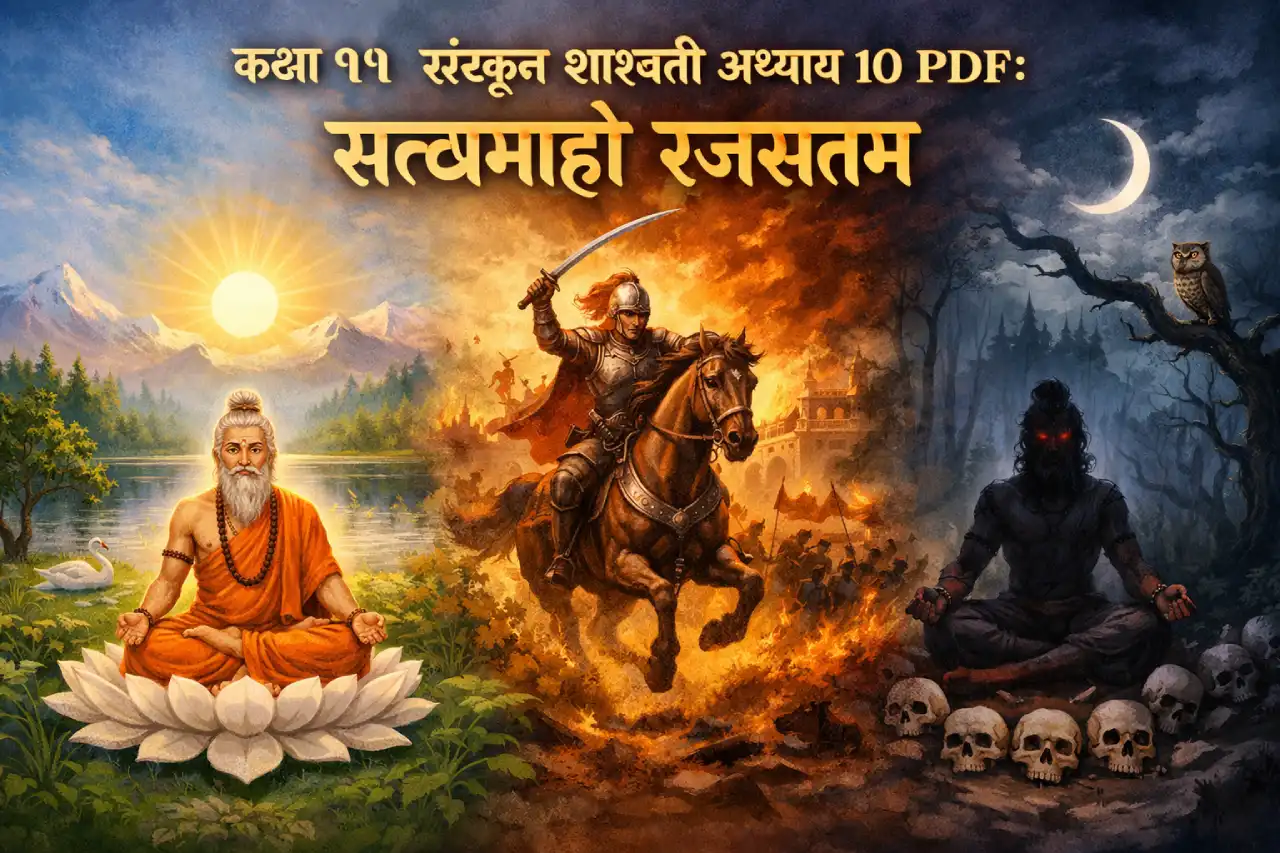
Class 11 Sanskrit Shashwati Chapter 11 PDF: नवद्रव्याणि Explained

Class 11 Sanskrit Shashwati Chapter 11 PDF: नवद्रव्याणि Explained

NCERT Class 11 Sanskrit Shashwati Chapter 11, titled “नवद्रव्याणि”, introduces students to an important concept from Indian philosophy—the nine fundamental substances that make up the universe. The chapter explains these elements in a simple and structured way, helping students understand how ancient thinkers tried to explain the nature of reality through observation and logic.

I am writing about this chapter because many students search for the official NCERT PDF along with a simple explanation before exams. In my experience, topics like “नवद्रव्याणि” may feel slightly abstract at first, but once you understand the list and their meanings, it becomes quite easy to remember and revise. This chapter is important not only for Sanskrit exams but also for gaining a basic idea of traditional Indian philosophy. It helps students connect language learning with deeper concepts. Studying from the official NCERT book and revising regularly can make this chapter scoring and easy to handle.

About the Chapter: नवद्रव्याणि

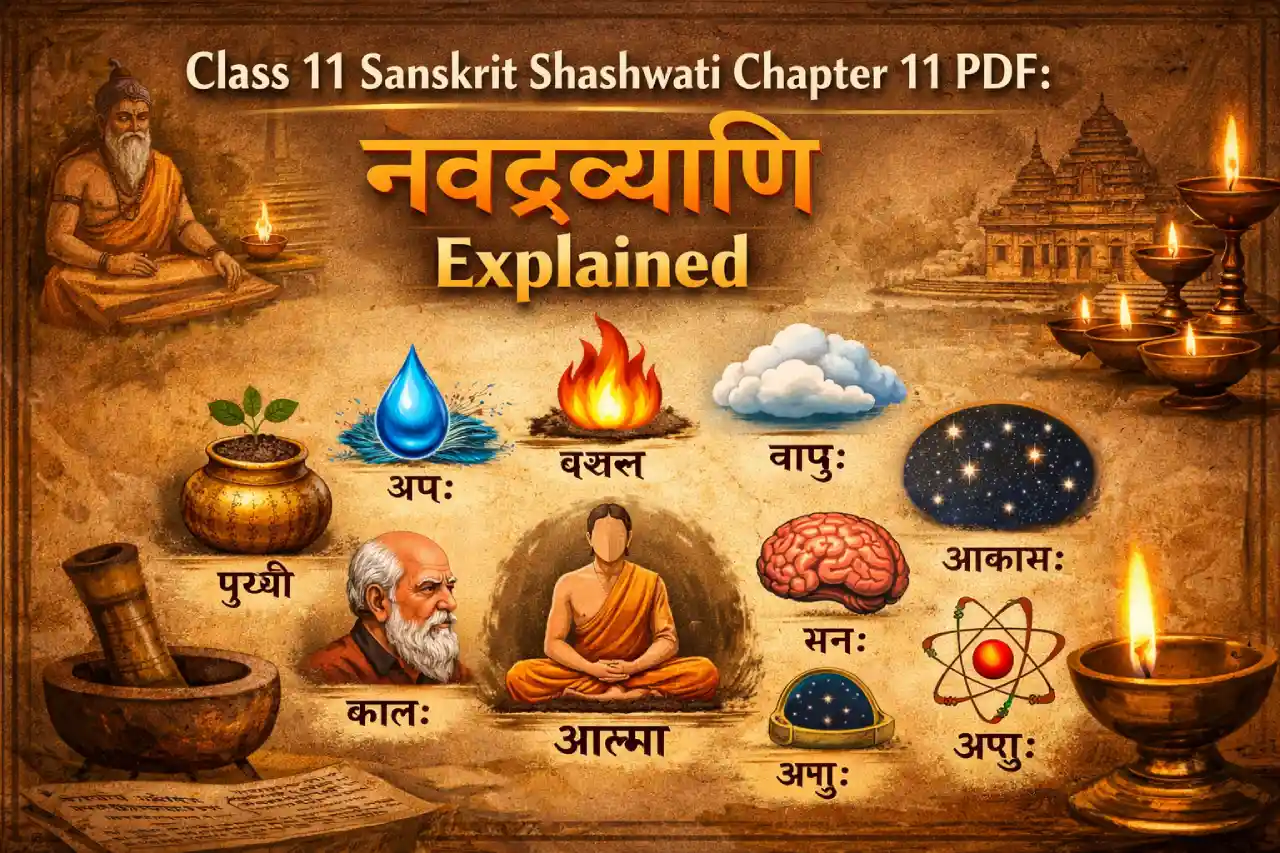
The term “नवद्रव्याणि” means “nine substances.” These are considered the basic elements that exist in the universe according to classical Indian thought.

The chapter explains each of these substances and their role in the functioning of the world.

The Nine Substances Explained

Here is a simple table to understand the nine dravyas:

Sanskrit TermMeaning (Simple English)
पृथ्वी (Prithvi)Earth
आपः (Apah)Water
तेजः (Tejas)Fire
वायु (Vayu)Air
आकाश (Akasha)Space
काल (Kala)Time
दिशा (Disha)Direction
आत्मा (Atma)Soul
मनः (Manas)Mind

These elements together explain the physical and non-physical aspects of existence.

Key Ideas in the Chapter

1. Understanding the Universe

The chapter explains how everything in the world is made up of basic substances.

2. Physical and Non-Physical Elements

Some substances like earth and water are physical, while others like time and soul are abstract.

3. Connection Between Mind and Body

The inclusion of “मनः” (mind) and “आत्मा” (soul) shows the importance of inner consciousness.

Why This Chapter Is Important for Students

  • Helps understand basic philosophical concepts
  • Improves Sanskrit reading and comprehension
  • Important for exam questions and explanations
  • Builds logical and conceptual thinking

Students who understand the list properly can easily score marks.

Study Tips for Chapter 11

  • Memorise the nine dravyas and their meanings
  • Understand the difference between physical and abstract elements
  • Practise writing short explanations
  • Revise regularly using a table format

This makes the chapter easier to revise before exams.

How to Download NCERT Class 11 Sanskrit Shashwati Chapter 11 PDF

Students can download the official chapter PDF from the National Council of Educational Research and Training website by following these steps:

Always use the official NCERT website to ensure you get the correct and updated version.

Leave a Comment

End of Article

Loading more posts...