JOIN WHATSAPP
STORIES

Delhi School Results 2026 for Class 6-8: Check Scorecard Link, Steps and Latest Update

Delhi School Results 2026 for Class 6-8: Check Scorecard Link, Steps and Latest Update

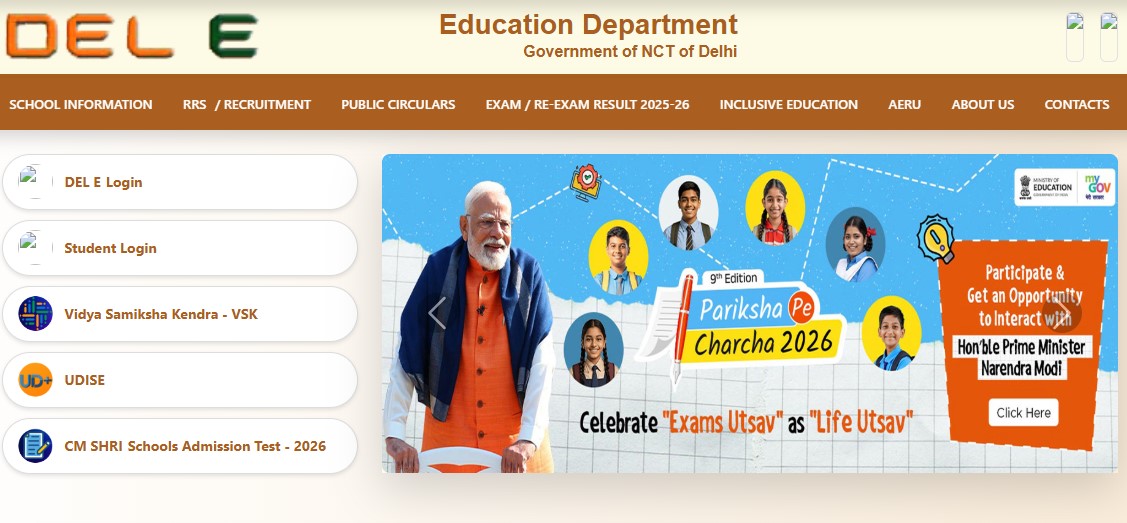
The Directorate of Education (DoE), Delhi is set to release the results for Classes 6, 7, and 8 on March 28, 2026. Students who appeared for the annual examinations for the academic session 2025–26 will be able to check their results online once the link is activated on the official website. The scorecard will reflect each student’s performance in the yearly exams and will be accessible using login credentials like Student ID and Date of Birth.

I am writing this because school results are an important moment for both students and parents, especially at the middle school level where academic foundations become stronger. Many students feel nervous while waiting, and having clear information about how to check the result can reduce confusion. From my experience, being prepared with login details and understanding the process in advance helps avoid last-minute stress when the result is finally declared.

Delhi School Result 2026 Overview

Here is a quick summary of the key details:

ParticularsDetails
Classes6, 7, and 8
Conducting AuthorityDirectorate of Education (DoE), Delhi
Academic Session2025–2026
Result DateMarch 28, 2026
Mode of ResultOnline
Credentials RequiredStudent ID and Date of Birth
Official Websiteedudel.nic.in

How to Check Delhi Class 6-8 Results 2026

Students and parents can follow these simple steps to check the result:

  • Visit the official website edudel.nic.in
  • On the homepage, click on “Online Result 2025-26”
  • Select the appropriate class result link
  • Enter your Student ID and Date of Birth
  • Click on the Submit button
  • Your result will appear on the screen
  • Download and take a printout for future reference

It is better to keep your login details ready before checking the result.

Details Mentioned on the Scorecard

Once the result is displayed, students should carefully verify the following details:

  • Student’s Name
  • Class and Section
  • Subject-wise Marks
  • Total Marks
  • Grade or Result Status

If there is any mistake, students should contact their school immediately.
Leave a Comment

End of Article

Why General Education Requirements Matter: Benefits, Skills and Career Impact Explained

Why General Education Requirements Matter: Benefits, Skills and Career Impact Explained

General education requirements are often seen as unnecessary or unrelated to a student’s main field of study, but in reality, they play a very important role in shaping well-rounded individuals. These courses, which include subjects like language, history, science and social studies, are designed to give students a broader understanding of the world beyond their chosen specialisation. Instead of being a burden, they can actually strengthen both academic and personal growth.

I am writing this because many students question why they need to study subjects outside their main interest. From my experience, it is only later that we realise how useful these subjects are in real life. General education is not just about passing exams, it is about developing thinking skills, communication ability and awareness, which are essential in any career.

What Are General Education Requirements

General education requirements are basic courses that all students must complete.

  • Include subjects from different fields like humanities, science and mathematics
  • Designed to provide a balanced education
  • Usually part of undergraduate programmes

These courses ensure that students are not limited to a single area of knowledge.

Why Students Often Dislike Them

Many students feel these subjects are unnecessary.

  • They seem unrelated to career goals
  • Add extra workload
  • Require studying topics outside interest areas

I have felt this too at times, but the value becomes clear over time.

Benefits of General Education

General education offers several important advantages.

  • Develops critical thinking and problem-solving skills
  • Improves communication and writing ability
  • Builds awareness of society, culture and global issues
  • Encourages curiosity and lifelong learning

These skills are useful in every profession.

Helps in Career Flexibility

One major advantage is adaptability.

  • Students can explore multiple fields
  • Opens doors to different career paths
  • Useful in changing job markets

From my perspective, this flexibility is very important today.

Builds a Strong Foundation

General education strengthens basic knowledge.

  • Improves understanding of core concepts
  • Helps in advanced studies
  • Supports interdisciplinary learning

It creates a solid academic base.

Real-Life Applications

These subjects are not just theoretical.

  • Communication skills help in interviews and workplace
  • Social awareness improves decision-making
  • Basic science and maths are used in daily life

You may not realise it immediately, but these skills are always in use.

Comparison: Specialisation vs General Education

AspectGeneral EducationSpecialisation
FocusBroad knowledgeSpecific field
SkillsCommunication, thinkingTechnical expertise
FlexibilityHighLimited
Career ImpactLong-term growthImmediate job skills

Both are important and complement each other.

How to Make the Most of It

Students can benefit more by changing their approach.

  • Try to connect subjects with real-life situations
  • Focus on understanding rather than memorising
  • Participate in discussions and activities
  • Use these subjects to improve overall skills

Changing Perspective on Education

Education is not just about one subject.

  • Modern careers require multiple skills
  • Employers value communication and adaptability
  • A broad mindset leads to better opportunities

From my experience, the more you learn, the more confident you become.

Leave a Comment

End of Article

Loading more posts...

Important Video