JOIN WHATSAPP
STORIES

Blind Students Explore Astronomy at Delhi University: Inclusive Learning Initiative at Kirori Mal College

Blind Students Explore Astronomy at Delhi University: Inclusive Learning Initiative at Kirori Mal College

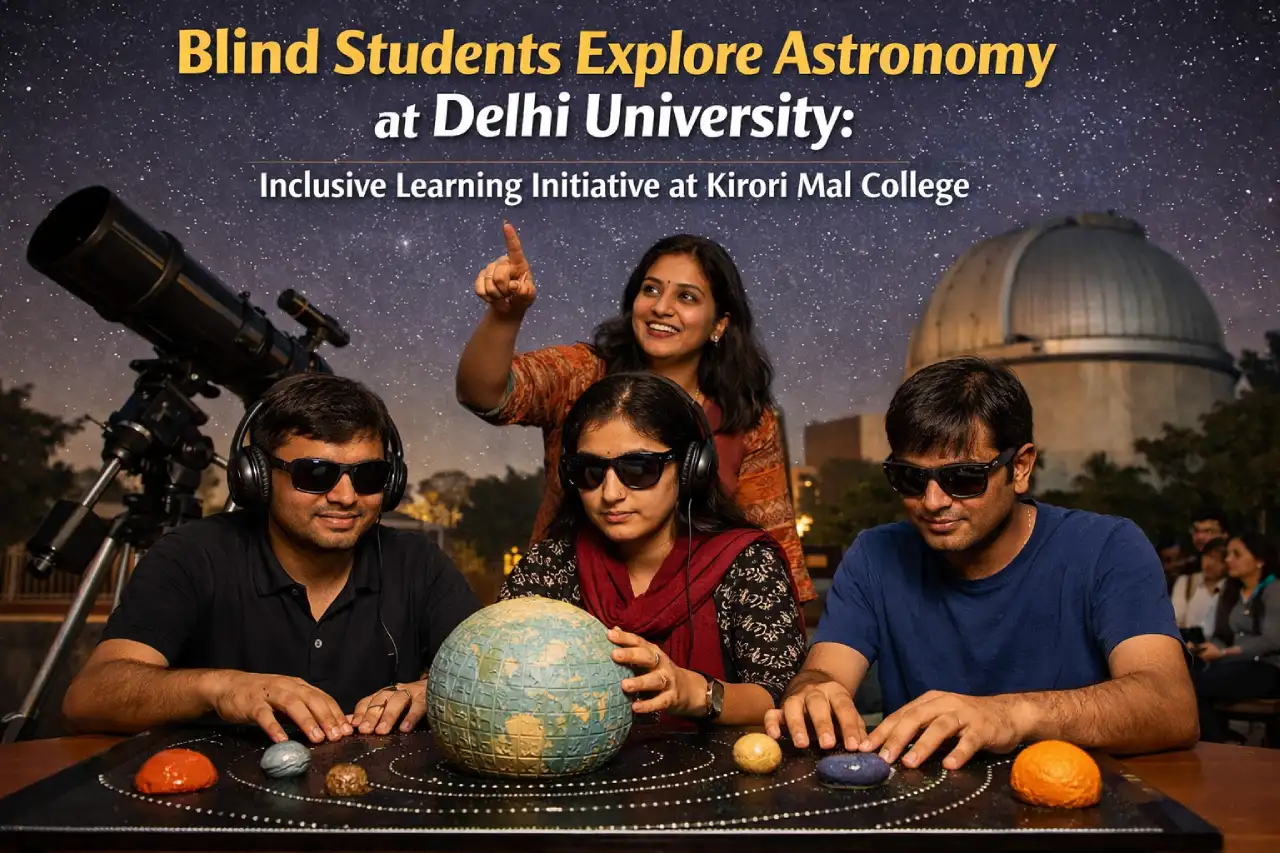
More than 60 blind and low-vision students recently experienced astronomy in a completely new way at Kirori Mal College, Delhi University. The event, titled “Stars for All”, was designed to make science accessible through touch, sound and Braille-labelled models. Organised by the college’s Centre for Disability Research and Training along with the Physics Astronomy Club, the initiative aimed to break traditional barriers in science education and ensure that everyone, regardless of ability, can explore the universe.

I am writing about this because such initiatives show how education can truly become inclusive when thoughtful efforts are made. Many students with disabilities often miss out on hands-on learning experiences, especially in subjects like astronomy. From my perspective, events like this not only create awareness but also inspire institutions to rethink how learning can be made accessible for all. It is a reminder that education should adapt to students, not the other way around.

What Was “Stars for All” Event

The event was organised to celebrate accessibility and inclusion in education.

  • Conducted at Kirori Mal College, Delhi University
  • Marked the occasion of World Accessibility Day
  • Focused on making astronomy understandable through alternative methods
  • Brought together students, educators and volunteers

The aim was simple—to make science learning inclusive and engaging.

How Students Experienced Astronomy

Instead of traditional visual methods, the event used creative techniques.

  • Tactile models helped students feel the structure of the solar system
  • Braille-labelled exhibits explained key concepts
  • Audio-based learning introduced ideas like constellations and moon phases
  • Hands-on interaction made complex topics easier to understand

This approach allowed students to experience astronomy in a meaningful way.

Unique Attractions at the Event

The exhibition included several interesting and engaging elements.

  • 3D tactile models of famous monuments like Golden Temple, Qutub Minar, Gateway of India and Hawa Mahal
  • A simulation zone where participants experienced disabilities like blindness and mobility challenges
  • Interactive setups that encouraged learning through touch and sound

Many participants described the experience as eye-opening and deeply engaging.

Role of Organisers and Institutions

The event was made possible through collaborative efforts.

  • Organised by Centre for Disability Research and Training (CDRT)
  • Supported by the Physics Astronomy Club
  • Aligned with broader campaigns promoting accessibility and inclusion

The organisers focused on making learning innovative and inclusive.

Voices from the Event

The organisers and faculty highlighted the importance of accessibility.

  • College principal emphasised that accessibility is a fundamental right, not a privilege
  • Organisers shared that the goal was to make astronomy accessible to everyone
  • Faculty members stressed the importance of equal opportunities in education and careers

I feel these statements reflect a strong commitment towards inclusive education.

Career-Focused Initiative: “CareerAble”

Alongside the astronomy event, another programme was organised.

  • Titled “CareerAble: Opportunities Without Barriers”
  • Focused on career opportunities for persons with disabilities
  • Brought together students, professionals and academics
  • Discussed workplace inclusion and equal opportunities

The initiative aimed to expand career possibilities and change perceptions.

Importance of Inclusive Education

This event highlights a larger message for society.

  • Education should be accessible to all, regardless of physical limitations
  • Innovative teaching methods can bridge learning gaps
  • Inclusive practices can empower students and boost confidence

From my experience, such initiatives can inspire long-term change in the education system.
Leave a Comment

End of Article

MAHA TET 2026 Registration Started: Check Exam Date, Eligibility, Fees and How to Apply

MAHA TET 2026 Registration Started: Check Exam Date, Eligibility, Fees and How to Apply

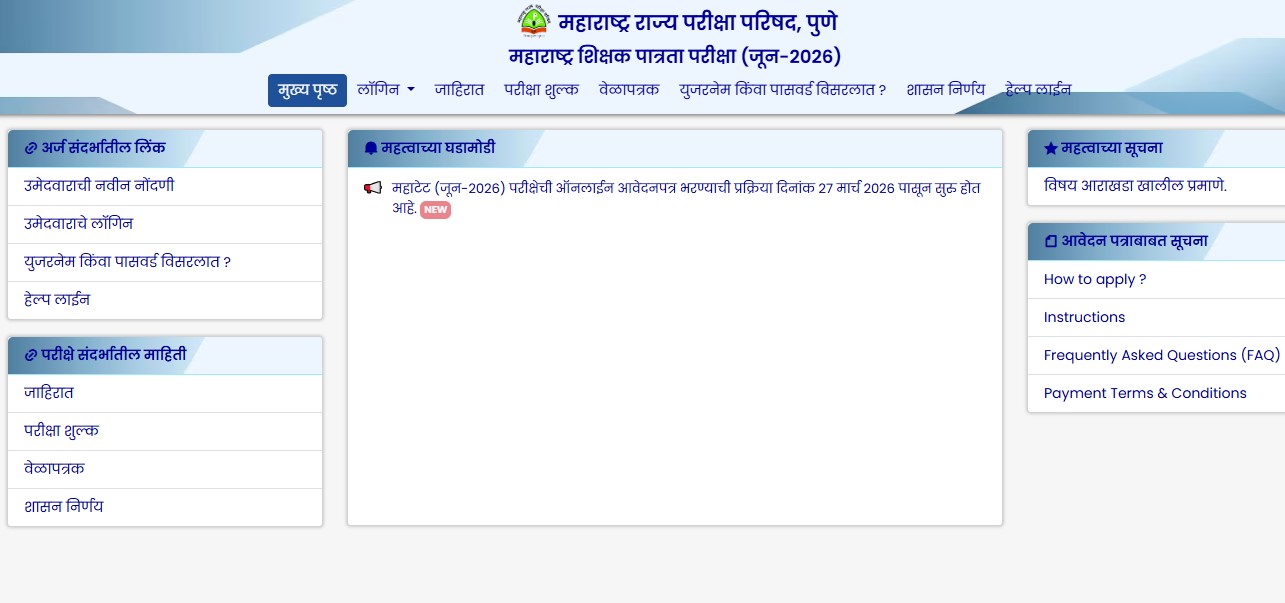
The Maharashtra State Council of Examination has officially released the MAHA TET 2026 notification, and the registration process has started from March 27, 2026. This is an important opportunity for candidates who want to become teachers in government and government-aided schools across Maharashtra. The application window will remain open till April 16, giving aspirants enough time to complete the process and start their preparation for the exam scheduled on June 21, 2026.

I am writing this because MAHA TET is one of the most important exams for teaching aspirants in Maharashtra, and missing the registration deadline can delay your career plans. From my experience, many candidates wait till the last moment and face issues like server errors or incomplete forms. It is always better to understand the process early and apply on time so that you can focus fully on preparation.

MAHA TET 2026 Overview

Here is a quick look at the key details:

ParticularsDetails
Exam NameMaharashtra Teacher Eligibility Test (MAHA TET) 2026
Conducting BodyMaharashtra State Council of Examination
Registration Start DateMarch 27, 2026
Last Date to ApplyApril 16, 2026
Exam DateJune 21, 2026
Admit Card ReleaseJune 9, 2026
Mode of ApplicationOnline
Official Websitemahatet.in

What is MAHA TET

MAHA TET is a state-level eligibility exam for teaching jobs.

  • Required for teaching in government schools in Maharashtra
  • Conducted for two levels:
    • Paper I: Classes 1 to 5
    • Paper II: Classes 6 to 8
  • Candidates can apply for one or both papers

Clearing this exam is essential if you want to become a teacher in the state.

MAHA TET 2026 Exam Timing

The exam will be held in two shifts on the same day:

PaperTiming
Paper I10:30 AM to 1:00 PM
Paper II2:30 PM to 5:00 PM

Candidates should reach the exam centre early with required documents.

Eligibility Criteria

Candidates must meet the following requirements:

Paper I (Classes 1–5)

  • 12th pass with at least 50% marks
  • Diploma in Elementary Education (D.El.Ed/D.Ed)
  • Or appearing in the final year

Paper II (Classes 6–8)

  • Graduation with B.Ed
  • Or Graduation with Diploma in Elementary Education
  • Or equivalent qualifications as per NCTE norms

Age Limit

  • Minimum age: 18 years
  • No upper age limit

MAHA TET 2026 Exam Pattern

Here is what the exam looks like:

  • Each paper has 150 multiple-choice questions
  • Each question carries 1 mark
  • No negative marking
  • Multiple language options available

This means you can attempt all questions without fear of losing marks.

How to Apply for MAHA TET 2026

Candidates can easily complete the application process online. Here’s how to do it:

  • Visit the official website mahatet.in
  • Click on the MAHA TET 2026 application link
  • Register using your name, mobile number and email ID
  • Fill in personal, academic and contact details
  • Upload required documents
  • Pay the application fee
  • Submit the form and download the confirmation page

Always double-check your details before submitting.

Admit Card Details

  • Admit card will be available from June 9, 2026
  • Candidates must download it from the official website
  • Carry a printed copy along with a valid photo ID
  • Entry without admit card will not be allowed

Important Tips for Candidates

  • Complete your registration early to avoid last-minute issues
  • Keep all documents ready before applying
  • Start your preparation immediately
  • Regularly check the official website for updates

Leave a Comment

End of Article

Loading more posts...

Important Video