JOIN WHATSAPP
STORIES

Maharashtra Schools to Go Semi-English: New Plan to Boost Enrolment and Improve Learning

Maharashtra Schools to Go Semi-English: New Plan to Boost Enrolment and Improve Learning

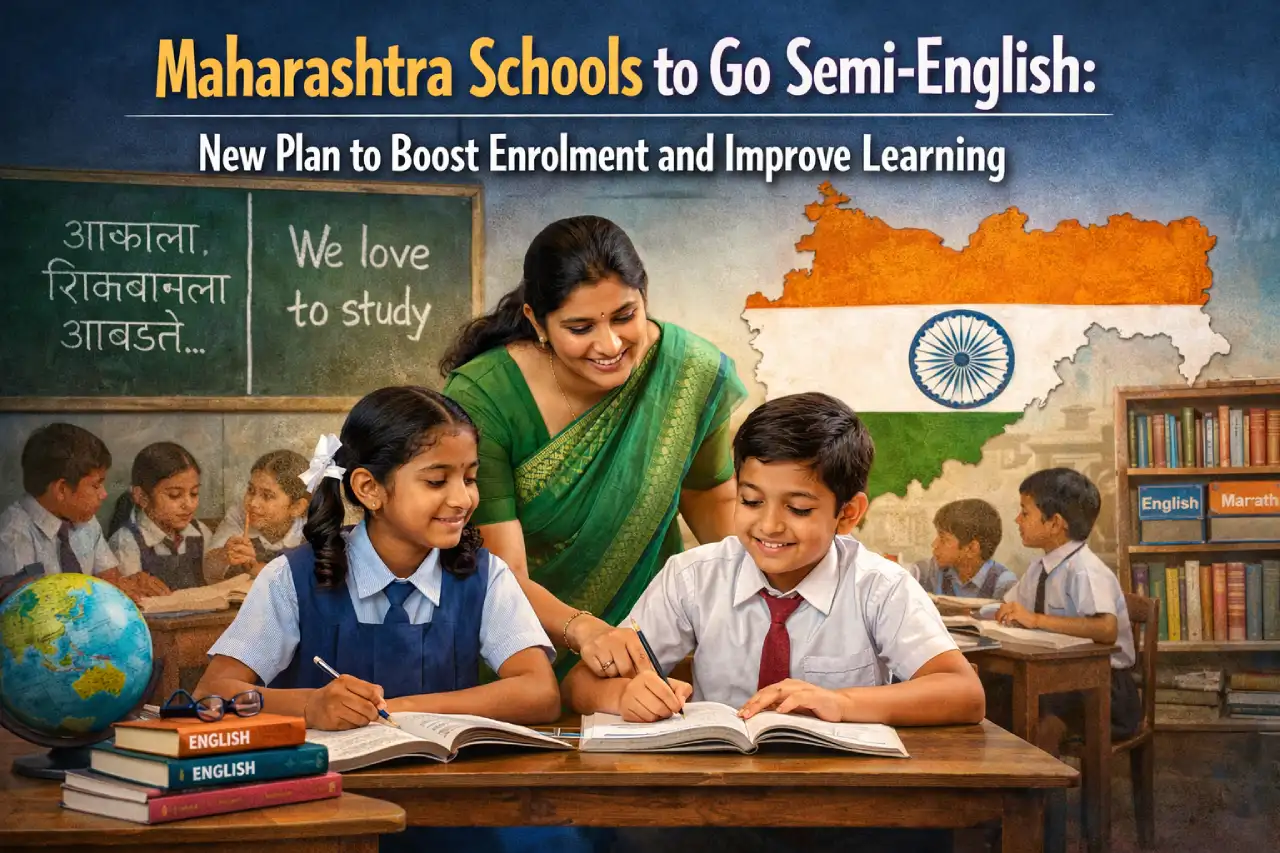
A state-appointed panel in Maharashtra has recommended introducing a ‘semi-English’ teaching model in Marathi-medium government schools to address the steady decline in student enrolment. The idea is to make these schools more appealing to parents and students who are increasingly shifting towards private English-medium institutions. By combining regional language instruction with English for key subjects, the government aims to strike a balance between accessibility and modern learning needs.

I am writing about this because the shift in education preferences is something we see across India, where English-medium schools are often seen as better for future opportunities. From my experience, many parents want their children to be comfortable in English but also connected to their roots. This proposal tries to address both concerns. It also highlights how government schools are evolving to stay relevant and competitive in today’s education system.

Why the Proposal Was Made

The recommendation comes in response to a noticeable trend.

  • Declining enrolment in government and vernacular schools
  • Increasing preference for private English-medium schools
  • Growing concern over closure of Marathi-medium institutions
  • Need to improve quality and perception of government schools

The panel believes that introducing English in a structured way can help reverse this trend.

What Is the ‘Semi-English’ Model

The semi-English system is not entirely new but is now being proposed more widely.

  • Science and Mathematics will be taught using English textbooks
  • Other subjects will continue in Marathi or regional language
  • Bilingual teaching approach will be followed
  • Implementation will require approval from School Management Committees (SMCs)

This model aims to make students comfortable with both languages.

Existing Practice and Policy Background

This concept has already been used in some schools.

  • Semi-English teaching has been followed in cities like Mumbai and Pune
  • A government resolution in 2009 allowed bilingual instruction for certain subjects
  • Some civic schools have already adopted this model successfully

The new proposal aims to expand this approach across more schools.

Focus on Teacher Training

For the plan to work effectively, teacher preparation is crucial.

  • Teachers will need training in bilingual teaching methods
  • Preference may be given to candidates with English-medium background
  • Continuous support and resources will be required

I feel this is one of the most important aspects, as the success of the plan depends on teachers.

Additional Recommendations by the Panel

The report includes several other suggestions to improve schools.

  • Use CSR funds and private support to upgrade infrastructure
  • Encourage NGOs and corporate bodies to adopt schools
  • Assign education officials to monitor clusters of schools
  • Improve coordination between Anganwadi centres and schools
  • Increase involvement of parents, alumni and local communities

These steps aim to improve both academic quality and infrastructure.

Role of Community and Parents

The panel has highlighted the importance of community participation.

  • Parents should be actively involved in school activities
  • Former students can contribute to development efforts
  • Local communities can support school improvement initiatives

This approach can create a stronger connection between schools and society.

Challenges and Considerations

While the proposal has potential, there are some challenges.

  • Need for proper teacher training and resources
  • Risk of imbalance between languages if not implemented well
  • Ensuring equal focus on regional language development

Careful planning and execution will be necessary.
Leave a Comment

End of Article

MAHA TET 2026 Registration Started: Check Exam Date, Eligibility, Fees and How to Apply

MAHA TET 2026 Registration Started: Check Exam Date, Eligibility, Fees and How to Apply

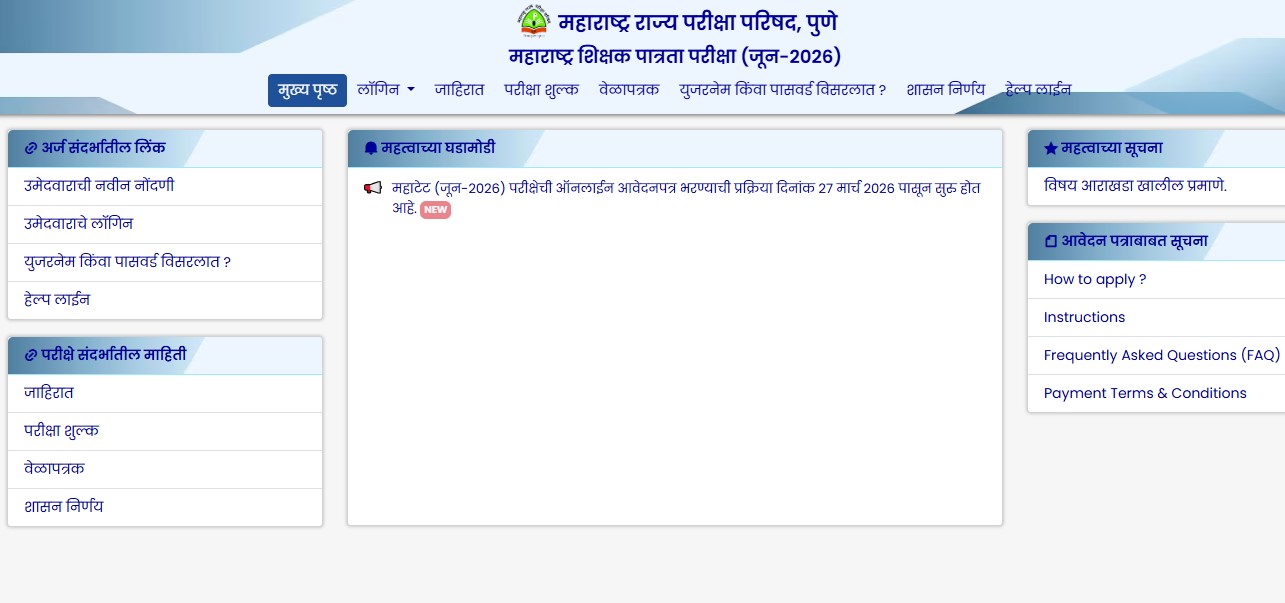
The Maharashtra State Council of Examination has officially released the MAHA TET 2026 notification, and the registration process has started from March 27, 2026. This is an important opportunity for candidates who want to become teachers in government and government-aided schools across Maharashtra. The application window will remain open till April 16, giving aspirants enough time to complete the process and start their preparation for the exam scheduled on June 21, 2026.

I am writing this because MAHA TET is one of the most important exams for teaching aspirants in Maharashtra, and missing the registration deadline can delay your career plans. From my experience, many candidates wait till the last moment and face issues like server errors or incomplete forms. It is always better to understand the process early and apply on time so that you can focus fully on preparation.

MAHA TET 2026 Overview

Here is a quick look at the key details:

ParticularsDetails
Exam NameMaharashtra Teacher Eligibility Test (MAHA TET) 2026
Conducting BodyMaharashtra State Council of Examination
Registration Start DateMarch 27, 2026
Last Date to ApplyApril 16, 2026
Exam DateJune 21, 2026
Admit Card ReleaseJune 9, 2026
Mode of ApplicationOnline
Official Websitemahatet.in

What is MAHA TET

MAHA TET is a state-level eligibility exam for teaching jobs.

  • Required for teaching in government schools in Maharashtra
  • Conducted for two levels:
    • Paper I: Classes 1 to 5
    • Paper II: Classes 6 to 8
  • Candidates can apply for one or both papers

Clearing this exam is essential if you want to become a teacher in the state.

MAHA TET 2026 Exam Timing

The exam will be held in two shifts on the same day:

PaperTiming
Paper I10:30 AM to 1:00 PM
Paper II2:30 PM to 5:00 PM

Candidates should reach the exam centre early with required documents.

Eligibility Criteria

Candidates must meet the following requirements:

Paper I (Classes 1–5)

  • 12th pass with at least 50% marks
  • Diploma in Elementary Education (D.El.Ed/D.Ed)
  • Or appearing in the final year

Paper II (Classes 6–8)

  • Graduation with B.Ed
  • Or Graduation with Diploma in Elementary Education
  • Or equivalent qualifications as per NCTE norms

Age Limit

  • Minimum age: 18 years
  • No upper age limit

MAHA TET 2026 Exam Pattern

Here is what the exam looks like:

  • Each paper has 150 multiple-choice questions
  • Each question carries 1 mark
  • No negative marking
  • Multiple language options available

This means you can attempt all questions without fear of losing marks.

How to Apply for MAHA TET 2026

Candidates can easily complete the application process online. Here’s how to do it:

  • Visit the official website mahatet.in
  • Click on the MAHA TET 2026 application link
  • Register using your name, mobile number and email ID
  • Fill in personal, academic and contact details
  • Upload required documents
  • Pay the application fee
  • Submit the form and download the confirmation page

Always double-check your details before submitting.

Admit Card Details

  • Admit card will be available from June 9, 2026
  • Candidates must download it from the official website
  • Carry a printed copy along with a valid photo ID
  • Entry without admit card will not be allowed

Important Tips for Candidates

  • Complete your registration early to avoid last-minute issues
  • Keep all documents ready before applying
  • Start your preparation immediately
  • Regularly check the official website for updates

Leave a Comment

End of Article

Loading more posts...

Important Video