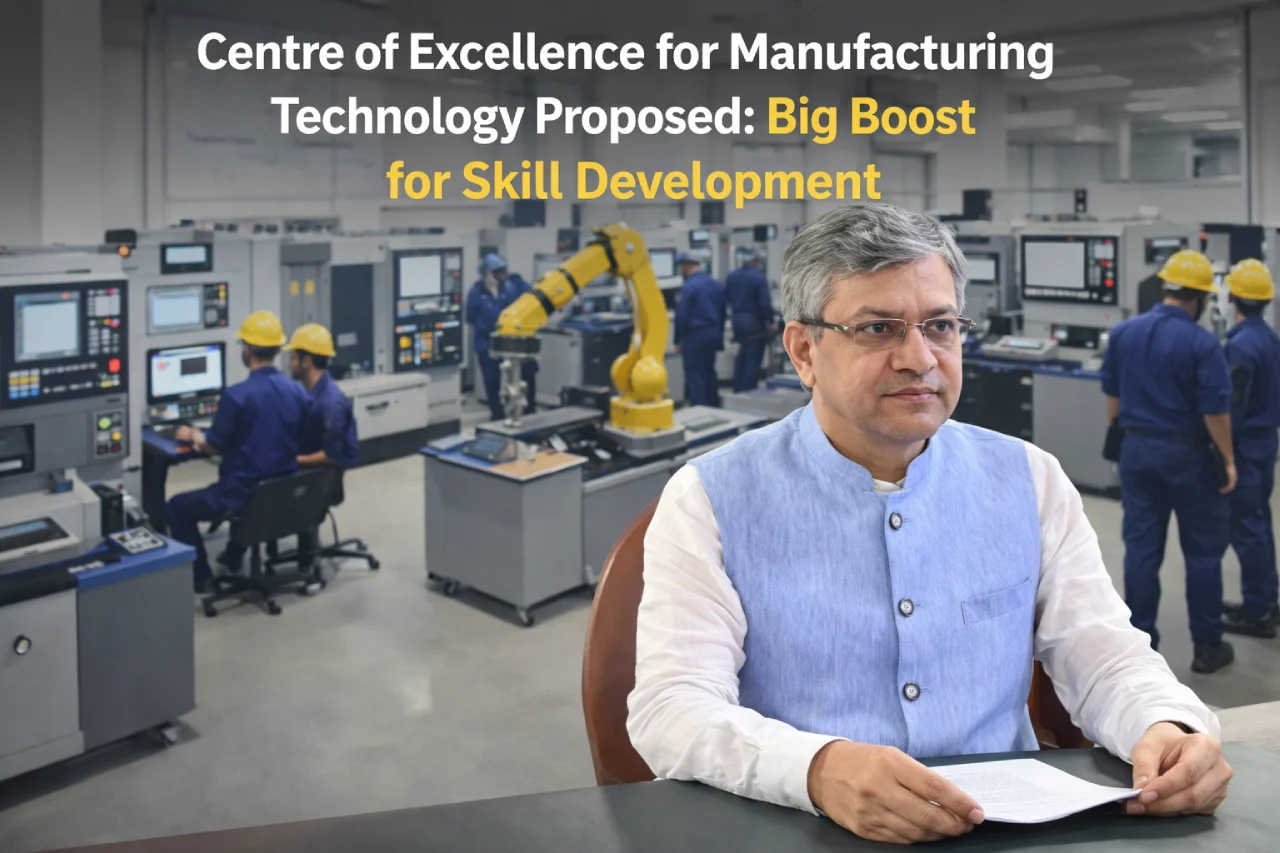
Railway Minister Ashwini Vaishnaw has proposed setting up a Centre of Excellence at Gati Shakti Vishwavidyalay (GSV) to strengthen manufacturing technology training in India. The idea was shared during an MoU signing event focused on improving aircraft maintenance engineering education. The proposed centre aims to build a skilled workforce in sectors like aviation, railways, marine, and electronics, where precision and technical expertise are extremely important.
I am writing about this because this move can have a direct impact on students and professionals looking to build careers in technical fields. From my understanding, India is moving towards becoming a global manufacturing hub, and initiatives like this can play a major role. Knowing about such developments helps students align their skills with future opportunities and make better career decisions.
What Is the Centre of Excellence Proposal
The proposal focuses on creating a specialised training hub.
- To be set up at Gati Shakti Vishwavidyalay, Vadodara
- Will focus on manufacturing technology skills
- Aims to train around 1,000 students every year
- Designed to meet industry requirements
This initiative is expected to bridge the gap between education and industry needs.
Why This Initiative Matters
Manufacturing technology is a critical sector.
- Requires high precision and technical knowledge
- Supports industries like aviation, railways, electronics, and marine
- Plays a key role in economic growth
From my perspective, building strong technical skills is essential for India’s future.
Focus on Global Standards
The training will not be limited to basic learning.
- Courses will follow global standards
- Inspiration from countries like Germany, the US, and Japan
- Emphasis on quality and advanced training methods
This approach will help Indian students compete at an international level.
Collaboration Between GSV and DGCA
A major highlight of the event was the MoU between GSV and DGCA.
- Focus on Aircraft Maintenance Engineering (AME) training
- Development of a three-year BSc programme
- Integration of academic learning with industry skills
- Alignment with regulatory requirements
This collaboration aims to create a future-ready workforce.
Key Objectives of the MoU
The agreement focuses on improving training quality.
- Standardising AME training across India
- Making MRO careers more attractive for students
- Strengthening industry-academia partnerships
- Developing skilled professionals for the aviation sector
This is expected to boost the aviation industry significantly.
Growing Demand in Aviation Sector
The aviation sector in India is expanding rapidly.
- Increasing number of flights and airlines
- Growing need for trained engineers and technicians
- Demand for high-quality maintenance services
This makes skill development even more important.
Role of Industry Support
The success of this initiative depends on collaboration.
- Industry participation in training programmes
- Real-world exposure for students
- Better job opportunities after completion
From what I have seen, industry involvement always improves learning outcomes.
What Students Should Take From This
This development is a signal for students.
- Technical and manufacturing skills are in demand
- Opportunities in aviation and engineering sectors are growing
- Focus on skill-based education is increasing
Students should consider these areas for future careers.