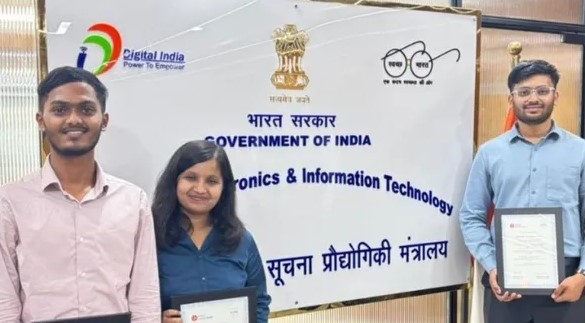
At a quiet computer lab in Maharashtra’s Rajarambapu Institute of Technology, three young engineering students are working on something far more meaningful than just code. Vaishnavi Patil, Abhishek Patil, and Ganesh Mahadik have developed an AI-powered chatbot designed to help parents of children with autism by answering their questions in real time. Their innovation recently won first place at GRASP 2026, a national-level AI hackathon, standing out among thousands of participants.
I am writing about this because stories like these show how technology can be used to solve real-life problems, especially in areas that often go unnoticed. Autism awareness and support are still limited in many parts of India, particularly in smaller towns. When students take the initiative to build something that directly helps families, it deserves attention. This is not just about innovation, but about empathy and practical impact.
Meet the Team Behind the Innovation
The project was developed by three 21-year-old students from Maharashtra.
- Vaishnavi Rajkumar Patil
- Abhishek Shivprasad Patil
- Ganesh Ramchandra Mahadik
They call themselves Team Neurostars.
All three come from small-town, agricultural backgrounds, where resources are limited but determination is strong. Their journey reflects how talent and purpose can come together to create meaningful solutions.
What the AI Chatbot Does
The chatbot is designed to support parents of children with autism.
- Answers questions related to autism in real time
- Provides guidance for daily challenges
- Helps parents understand behaviour and needs
- Offers accessible support without needing experts immediately
This kind of tool can be especially useful in areas where professional help is not easily available.
The Inspiration Behind the Project
The idea did not come from textbooks but from a real-life experience.
- A classmate shared his family’s struggle with autism
- The team realised how little awareness existed
- They understood the emotional and practical challenges faced by parents
This moment changed their perspective and gave direction to their project.
Vaishnavi shared that they had very little understanding of autism earlier, especially in rural areas where awareness is low and acceptance is even lower.
Journey from Small Towns to National Recognition
Each member of the team has a unique story.
- Vaishnavi discovered coding during the pandemic
- Abhishek developed interest after getting his first computer in school
- Ganesh balanced academics with responsibilities from his farming background
Despite different paths, they came together with a shared goal—to build something useful.
Winning GRASP 2026 Hackathon
Their project gained national attention after winning the GRASP 2026 hackathon.
- Competed against over 5,000 students
- Won in the “AI for Social Good” category
- Received ₹1 lakh prize
- Earned mentorship and internship opportunities
- Got a chance to collaborate with a European university
This recognition highlights the impact of their work.
Why This Innovation Matters
This chatbot addresses a real gap in society.
- Lack of awareness about autism
- Limited access to expert guidance in rural areas
- Need for quick and reliable information
Technology like this can make support more accessible and less intimidating for families.
From my perspective, this is a great example of how AI can be used for social good, not just business or automation.
Challenges in Autism Awareness
The project also highlights larger issues:
- Social stigma around autism
- Lack of proper information
- Limited support systems in smaller towns
By addressing these, the chatbot goes beyond being just a tool—it becomes a support system.
Future Potential of the Project
The team plans to continue improving the chatbot.
- Add more features and accuracy
- Expand accessibility to more users
- Collaborate with experts and organisations
This could eventually become a widely used support platform.