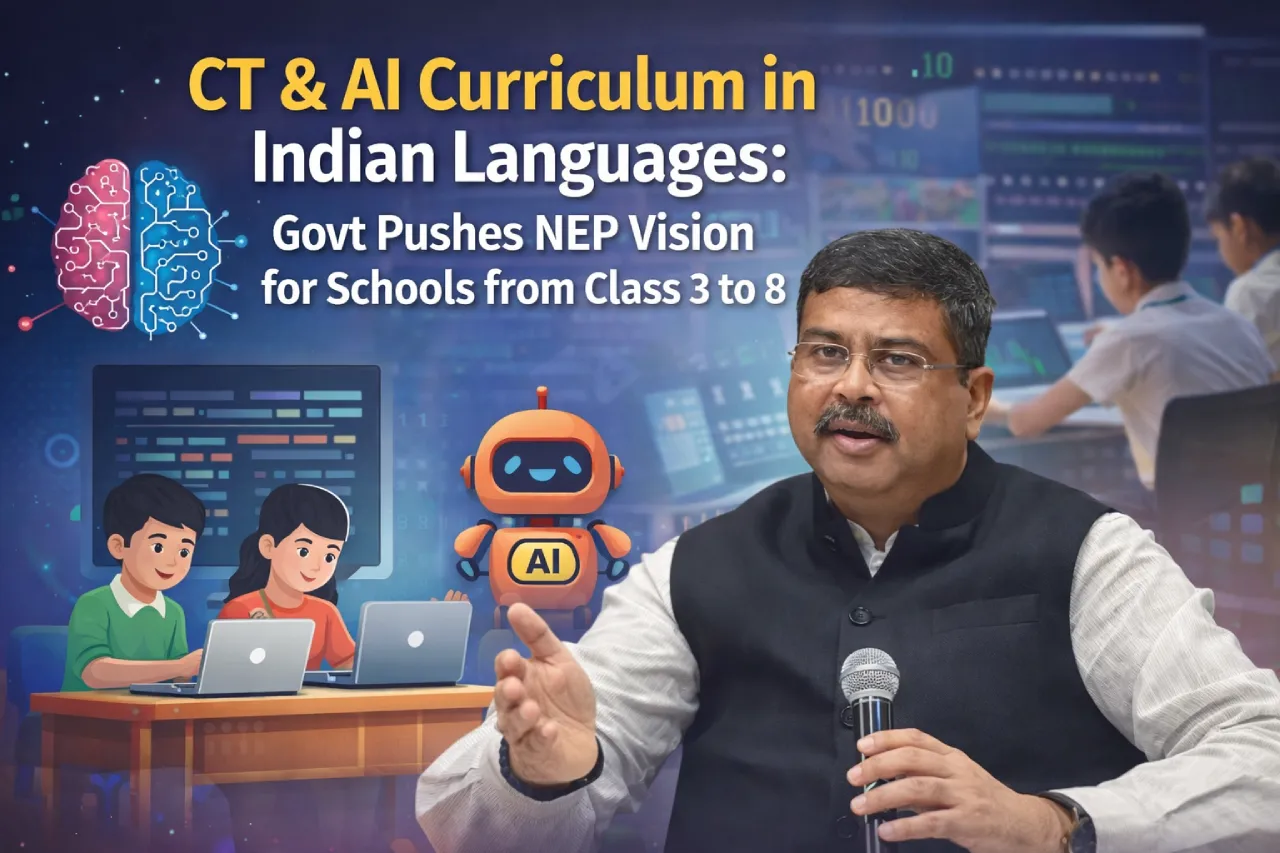
The Union Education Minister Dharmendra Pradhan has called for introducing Computational Thinking (CT) and Artificial Intelligence (AI) in Indian languages, aligning with the goals of the National Education Policy. The announcement came during the launch of a new curriculum designed for students from Classes III to VIII, aiming to bring early exposure to emerging technologies in school education across the country.
I am writing about this because this move could change how students in India learn technology from a very young age. Many students struggle with English-based technical content, especially in rural areas. By introducing AI and computational thinking in regional languages, education becomes more accessible and inclusive. This is not just a curriculum update—it is a step towards making future-ready skills available to every child, regardless of language background.
What Is the New CT & AI Curriculum?
The newly introduced curriculum focuses on building basic digital and analytical skills.
- Designed for Classes III to VIII
- Developed by the Central Board of Secondary Education
- Introduces students to problem-solving, logic, and AI concepts
- Aims to make students familiar with technology from an early stage
This is part of a larger effort to modernise school education.
Why Indian Languages Are Important
The minister emphasised that the curriculum should not remain limited to English.
- Many students learn better in their mother tongue
- Regional language learning improves conceptual understanding
- Helps bridge the gap between urban and rural education
- Supports inclusivity in education
This approach aligns with the core idea of NEP—education in local languages.
Role of NCERT and State Bodies
The National Council of Educational Research and Training has been given an important role.
- Coordinate with state education departments
- Translate curriculum into multiple Indian languages
- Ensure implementation within the academic year
- Support schools in adopting the new syllabus
This collaboration will be key to successful rollout.
How This Aligns with NEP Vision
The National Education Policy focuses on future-ready learning.
- Encourages innovative teaching methods
- Promotes skill-based education
- Supports early exposure to technology
- Focuses on multilingual education
This new curriculum directly supports these goals.
What Leaders Said About the Initiative
Along with Dharmendra Pradhan, Jayant Chaudhary also highlighted the importance of this step.
- The curriculum will be introduced in CBSE schools
- Focus on innovation and digital learning
- Prepares students for future careers
The government clearly wants to integrate technology into school education.
Why This Move Matters for Students
This initiative can have long-term benefits.
- Builds strong foundational skills in technology
- Makes learning more accessible for non-English speakers
- Encourages logical thinking and problem-solving
- Prepares students for AI-driven careers
From my perspective, starting early with such subjects can give students a big advantage.
India’s Historical Context and Learning
The minister also referred to India’s intellectual legacy.
- Scholars like Aryabhatta and Madhav contributed in native languages
- Knowledge has always been rooted in local understanding
- This approach continues that tradition in modern education
It shows that learning in one’s own language has always been powerful.
Challenges and What to Watch
While the move is promising, some challenges remain.
- Timely translation into all languages
- Teacher training for new subjects
- Infrastructure in rural schools
- Consistent implementation across states
Proper execution will decide the success of this initiative.