JOIN WHATSAPP
STORIES

NCERT Class 11 Accountancy Chapter 4: Recording of Transactions – 2 PDF Free Download

NCERT Class 11 Accountancy Chapter 4: Recording of Transactions 2

Chapter 4 of Class 11 Accountancy, Recording of Transactions – 2, is all about maintaining different types of subsidiary books. These books help businesses in recording transactions in an organised way. This chapter explains the purpose and format of various special journals like Cash Book, Purchases Book, Sales Book, and more. Instead of putting all transactions in one place, businesses divide them into different books for better clarity and time-saving.

I wanted to write about this chapter because many students don’t realise how important it is until they reach practical questions. If Chapter 3 teaches how to record entries, Chapter 4 shows how to group similar transactions and enter them into the right books. This makes your accounting work more structured and easy to manage. It’s not just for school learning—this system is actually used in real-life businesses too. I’ve also shared a link to download the full PDF of this chapter, so that you can keep it handy for revision and practice. This chapter is scoring, so you should not miss mastering it properly.

What You Will Learn in Recording of Transactions – 2

This chapter takes forward what was taught in the previous one. While Chapter 3 focused on recording in the journal, this one deals with special purpose books which are used when the number of transactions becomes large.

Here are the key parts covered in this chapter:

1. Need for Special Purpose Books

When a business grows, journal entries become too many. It becomes difficult to track everything from one place. So, businesses divide transactions and maintain separate books for each type.

2. Types of Subsidiary Books

The following books are covered in detail in this chapter:

  • Cash Book: Records all cash and bank transactions.
    • Single Column Cash Book: Only cash entries
    • Double Column: Cash and bank
    • Triple Column: Cash, bank and discount
  • Purchases Book: Records all credit purchases of goods
  • Sales Book: Records all credit sales of goods
  • Purchases Return Book: Records return of goods to suppliers
  • Sales Return Book: Records return of goods from customers
  • Journal Proper: For transactions that do not fit in other books

3. Format and Posting

Each book has a specific format. Once entries are made in these books, they are posted to respective ledger accounts.

Book TypeRecords What?Entry Type
Cash BookCash and bank transactionsReal Account
Purchases BookCredit purchases of goodsPersonal/Real
Sales BookCredit sales of goodsPersonal/Real
Journal ProperAdjustments, Opening entries etc.All types

4. Examples and Practice Entries

The chapter also provides examples of how to record actual transactions using the formats. You’ll learn how to balance cash book columns and post entries to ledgers.

Download PDF

Click Here to Download NCERT Class 11 Accountancy Chapter 4: Recording of Transactions – 2 PDF
Leave a Comment

End of Article

Class 11 Sanskrit Shashwati Chapter 11 PDF: नवद्रव्याणि Explained

Class 11 Sanskrit Shashwati Chapter 11 PDF: नवद्रव्याणि Explained

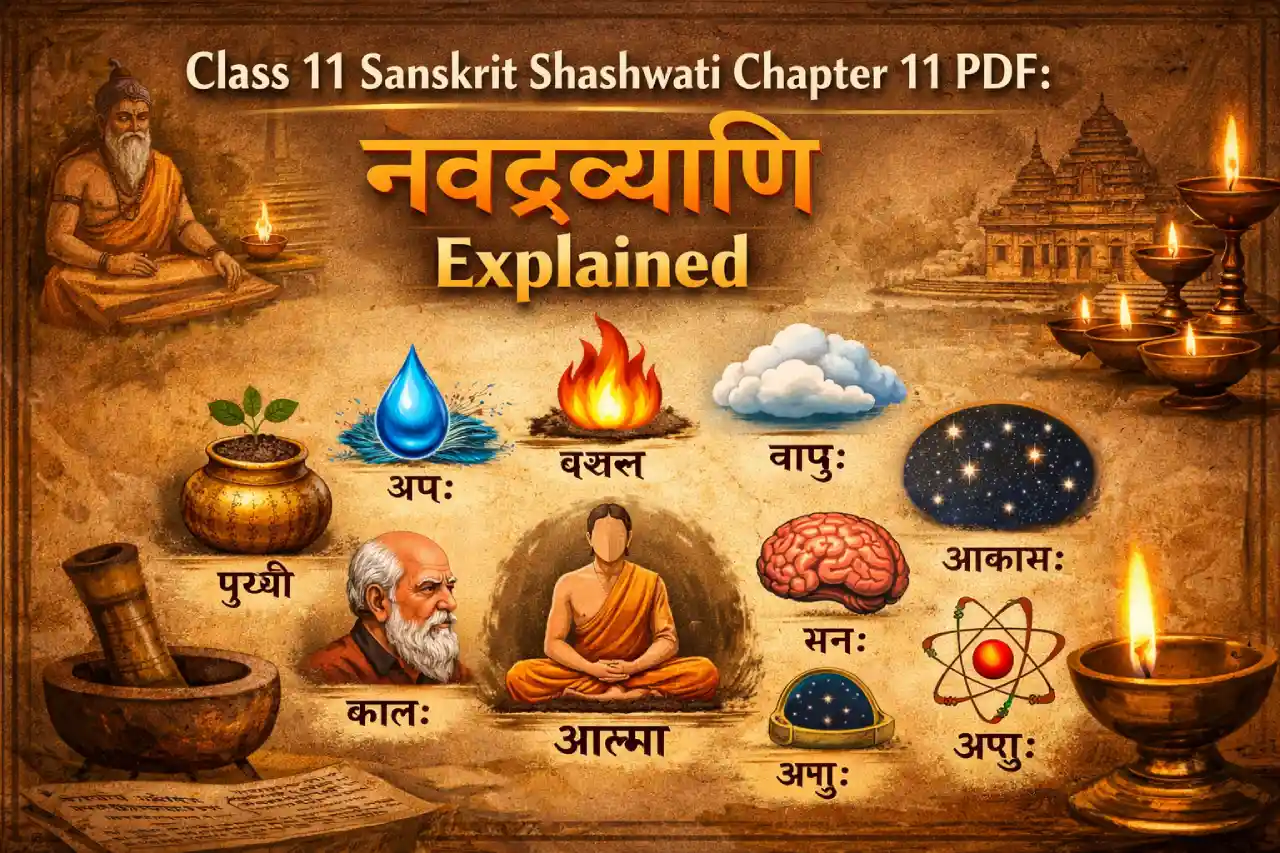
NCERT Class 11 Sanskrit Shashwati Chapter 11, titled “नवद्रव्याणि”, introduces students to an important concept from Indian philosophy—the nine fundamental substances that make up the universe. The chapter explains these elements in a simple and structured way, helping students understand how ancient thinkers tried to explain the nature of reality through observation and logic.

I am writing about this chapter because many students search for the official NCERT PDF along with a simple explanation before exams. In my experience, topics like “नवद्रव्याणि” may feel slightly abstract at first, but once you understand the list and their meanings, it becomes quite easy to remember and revise. This chapter is important not only for Sanskrit exams but also for gaining a basic idea of traditional Indian philosophy. It helps students connect language learning with deeper concepts. Studying from the official NCERT book and revising regularly can make this chapter scoring and easy to handle.

About the Chapter: नवद्रव्याणि

The term “नवद्रव्याणि” means “nine substances.” These are considered the basic elements that exist in the universe according to classical Indian thought.

The chapter explains each of these substances and their role in the functioning of the world.

The Nine Substances Explained

Here is a simple table to understand the nine dravyas:

Sanskrit TermMeaning (Simple English)
पृथ्वी (Prithvi)Earth
आपः (Apah)Water
तेजः (Tejas)Fire
वायु (Vayu)Air
आकाश (Akasha)Space
काल (Kala)Time
दिशा (Disha)Direction
आत्मा (Atma)Soul
मनः (Manas)Mind

These elements together explain the physical and non-physical aspects of existence.

Key Ideas in the Chapter

1. Understanding the Universe

The chapter explains how everything in the world is made up of basic substances.

2. Physical and Non-Physical Elements

Some substances like earth and water are physical, while others like time and soul are abstract.

3. Connection Between Mind and Body

The inclusion of “मनः” (mind) and “आत्मा” (soul) shows the importance of inner consciousness.

Why This Chapter Is Important for Students

  • Helps understand basic philosophical concepts
  • Improves Sanskrit reading and comprehension
  • Important for exam questions and explanations
  • Builds logical and conceptual thinking

Students who understand the list properly can easily score marks.

Study Tips for Chapter 11

  • Memorise the nine dravyas and their meanings
  • Understand the difference between physical and abstract elements
  • Practise writing short explanations
  • Revise regularly using a table format

This makes the chapter easier to revise before exams.

How to Download NCERT Class 11 Sanskrit Shashwati Chapter 11 PDF

Students can download the official chapter PDF from the National Council of Educational Research and Training website by following these steps:

Always use the official NCERT website to ensure you get the correct and updated version.

Leave a Comment

End of Article

Loading more posts...