JOIN WHATSAPP
STORIES

NCERT Class 11 Business Studies Chapter 11: International Business PDF Download

NCERT Class 11 Business Studies Chapter 11: International Business

Chapter 11 of Class 11 Business Studies focuses on International Business, which means trade between two or more countries. This includes exporting and importing goods, services, technology, capital, and even labour. The chapter explains the importance of global trade, its benefits, challenges, and various methods used by companies to do business across borders. Students also get to learn about the difference between domestic and international business, and the support provided by Indian institutions like EXIM Bank and ECGC.

I chose this topic because today, almost everything around us—from mobile phones to packaged food—is a result of international trade. Understanding how global trade works is essential not just for students, but for anyone curious about how the world is connected. This chapter also introduces young learners to terms like licensing, franchising, joint ventures, and WTO (World Trade Organization). With India being an active participant in global trade, students must understand the basics of international business, as it opens the door to career opportunities, business knowledge, and a better view of how economies interact globally.

What is International Business?

International business means commercial activities that happen between two or more countries. It involves:

  • Importing: Buying goods/services from other countries
  • Exporting: Selling goods/services to other countries
  • Licensing and Franchising
  • Joint Ventures and Wholly Owned Subsidiaries

Benefits of International Business

  • Wider market reach
  • Higher profits from foreign customers
  • Better utilisation of surplus production
  • Foreign exchange earnings
  • Exposure to advanced technology
  • Employment opportunities

Modes of Entry into International Business

  1. Exporting and Importing: Basic and most common method
  2. Contract Manufacturing: Outsourcing production to foreign firms
  3. Licensing: Giving permission to a foreign firm to use your product/process
  4. Franchising: Similar to licensing but mostly for service businesses like McDonald’s
  5. Joint Venture: Partnering with a foreign company to do business
  6. Wholly Owned Subsidiary: Owning 100% of a foreign business

Institutions Supporting International Trade in India

  • Export-Import Bank of India (EXIM Bank)
  • Export Credit Guarantee Corporation (ECGC)
  • Indian Trade Promotion Organisation (ITPO)
  • World Trade Organisation (WTO) – ensures smooth and fair global trade

These organisations help Indian businesses reduce risks, get finance, and promote exports.

Download PDF

Click Here to Download NCERT Class 11 Business Studies Chapter 11: International Business PDF
Leave a Comment

End of Article

Class 11 Sanskrit Shashwati Chapter 11 PDF: नवद्रव्याणि Explained

Class 11 Sanskrit Shashwati Chapter 11 PDF: नवद्रव्याणि Explained

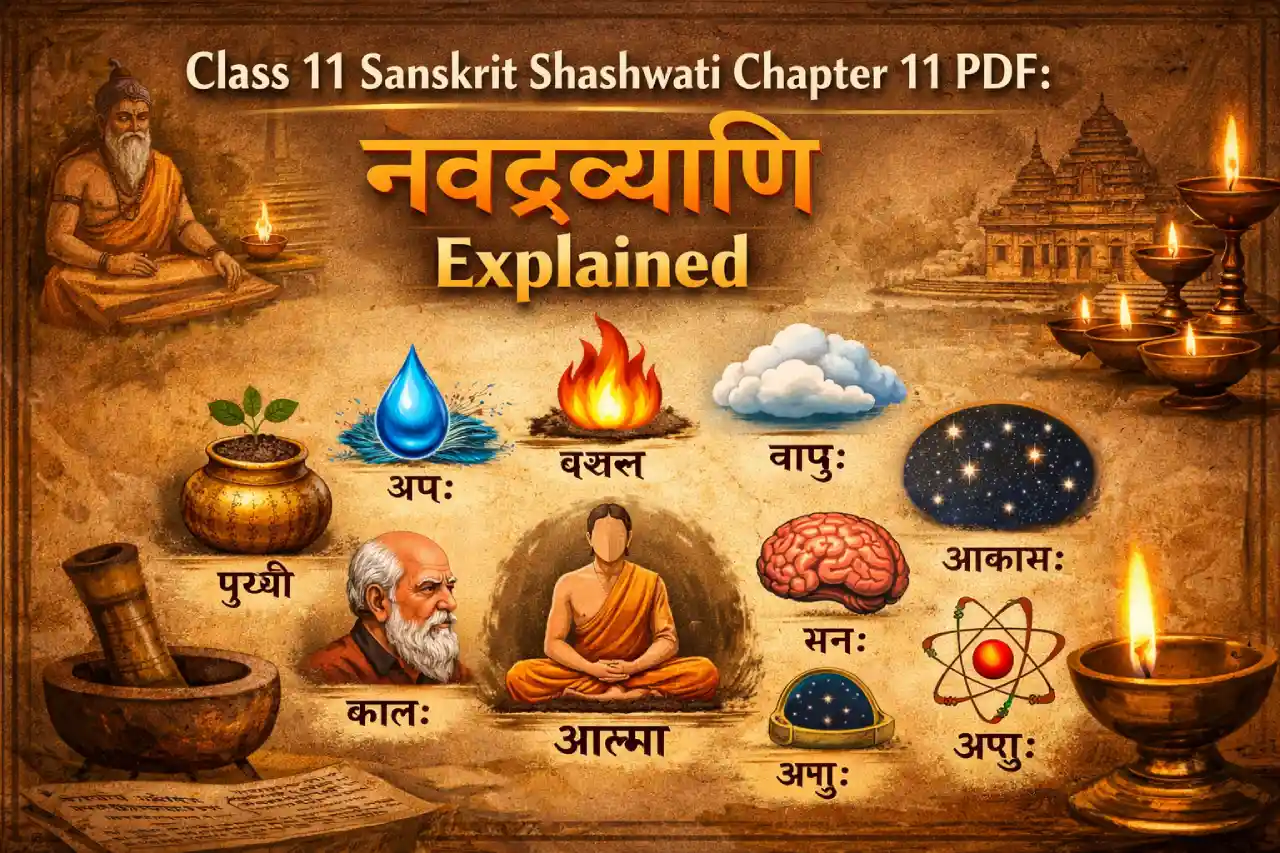
NCERT Class 11 Sanskrit Shashwati Chapter 11, titled “नवद्रव्याणि”, introduces students to an important concept from Indian philosophy—the nine fundamental substances that make up the universe. The chapter explains these elements in a simple and structured way, helping students understand how ancient thinkers tried to explain the nature of reality through observation and logic.

I am writing about this chapter because many students search for the official NCERT PDF along with a simple explanation before exams. In my experience, topics like “नवद्रव्याणि” may feel slightly abstract at first, but once you understand the list and their meanings, it becomes quite easy to remember and revise. This chapter is important not only for Sanskrit exams but also for gaining a basic idea of traditional Indian philosophy. It helps students connect language learning with deeper concepts. Studying from the official NCERT book and revising regularly can make this chapter scoring and easy to handle.

About the Chapter: नवद्रव्याणि

The term “नवद्रव्याणि” means “nine substances.” These are considered the basic elements that exist in the universe according to classical Indian thought.

The chapter explains each of these substances and their role in the functioning of the world.

The Nine Substances Explained

Here is a simple table to understand the nine dravyas:

Sanskrit TermMeaning (Simple English)
पृथ्वी (Prithvi)Earth
आपः (Apah)Water
तेजः (Tejas)Fire
वायु (Vayu)Air
आकाश (Akasha)Space
काल (Kala)Time
दिशा (Disha)Direction
आत्मा (Atma)Soul
मनः (Manas)Mind

These elements together explain the physical and non-physical aspects of existence.

Key Ideas in the Chapter

1. Understanding the Universe

The chapter explains how everything in the world is made up of basic substances.

2. Physical and Non-Physical Elements

Some substances like earth and water are physical, while others like time and soul are abstract.

3. Connection Between Mind and Body

The inclusion of “मनः” (mind) and “आत्मा” (soul) shows the importance of inner consciousness.

Why This Chapter Is Important for Students

  • Helps understand basic philosophical concepts
  • Improves Sanskrit reading and comprehension
  • Important for exam questions and explanations
  • Builds logical and conceptual thinking

Students who understand the list properly can easily score marks.

Study Tips for Chapter 11

  • Memorise the nine dravyas and their meanings
  • Understand the difference between physical and abstract elements
  • Practise writing short explanations
  • Revise regularly using a table format

This makes the chapter easier to revise before exams.

How to Download NCERT Class 11 Sanskrit Shashwati Chapter 11 PDF

Students can download the official chapter PDF from the National Council of Educational Research and Training website by following these steps:

Always use the official NCERT website to ensure you get the correct and updated version.

Leave a Comment

End of Article

Loading more posts...