JOIN WHATSAPP
STORIES

NCERT Class 11 Economics – Indian Economic Development Chapter 5: Rural Development PDF

NCERT Class 11 Economics – Indian Economic Development Chapter 5

Chapter 5 of NCERT Class 11 Economics (Indian Economic Development) focuses on Rural Development. It explains the importance of strengthening the rural economy through better infrastructure, employment, credit, and education. The chapter highlights the various challenges in rural India like poverty, low productivity, lack of credit, and unemployment. It also discusses policies and schemes launched by the government to address these issues and promote inclusive growth.

I chose to write about this topic because rural India still makes up nearly 65% of the country’s population. Any serious discussion on India’s development must begin with rural development. Many students think of this chapter as just theory, but in reality, it helps us understand the daily struggles and aspirations of millions of people in our villages. Whether it’s the need for rural banking, better roads, clean drinking water, or employment schemes like MGNREGA — this chapter gives a solid overview. It’s important for students, exam aspirants, and even general readers to know how these policies connect to our economy. Personally, I found this chapter quite relevant because I come from a small town and I’ve seen both the gaps and improvements on the ground.

Key Areas of Rural Development

Rural development means improving the quality of life and economic well-being of people living in rural areas. It goes beyond just farming and includes healthcare, education, roads, markets, and non-farm employment.

The main components include:

  • Development of agriculture and allied activities
  • Provision of credit and finance
  • Improvement in infrastructure (roads, irrigation, power)
  • Promotion of education and skill training
  • Rural industrialisation and employment generation

Let’s look at each of these in detail.

1. Agriculture and Allied Activities

Since most rural people depend on farming, improving agriculture is the first step. This includes:

  • Better seeds, fertilisers, and irrigation
  • Crop insurance
  • Minimum Support Price (MSP)
  • Encouraging animal husbandry, fisheries, and forestry

2. Rural Credit

One of the major problems in villages is the lack of formal credit. Farmers often depend on moneylenders who charge high interest. This chapter discusses how:

  • Cooperative banks
  • Regional Rural Banks (RRBs)
  • Self-Help Groups (SHGs)
  • NABARD (National Bank for Agriculture and Rural Development)
    play a key role in improving rural credit access.

3. Infrastructure

Infrastructure gaps affect every aspect of rural life. Roads, electricity, storage, cold chains, market access — all need improvement. Schemes like PMGSY (Pradhan Mantri Gram Sadak Yojana) and Saubhagya (rural electrification) aim to bridge these gaps.

4. Rural Employment

Non-farm employment is growing slowly in villages. People are moving to cities in search of work. To address this, the government started:

  • MGNREGA – a legal guarantee for 100 days of wage employment
  • Training programmes under Skill India
  • Promotion of cottage and small-scale industries

5. Role of Women and SHGs

The chapter also covers how Self-Help Groups (SHGs) have empowered rural women. These groups help women start small businesses, save money together, and take small loans without depending on middlemen.

Download PDF

Click Here to Download NCERT Class 11 Economics – Indian Economic Development Chapter 5: Rural Development PDF

Leave a Comment

End of Article

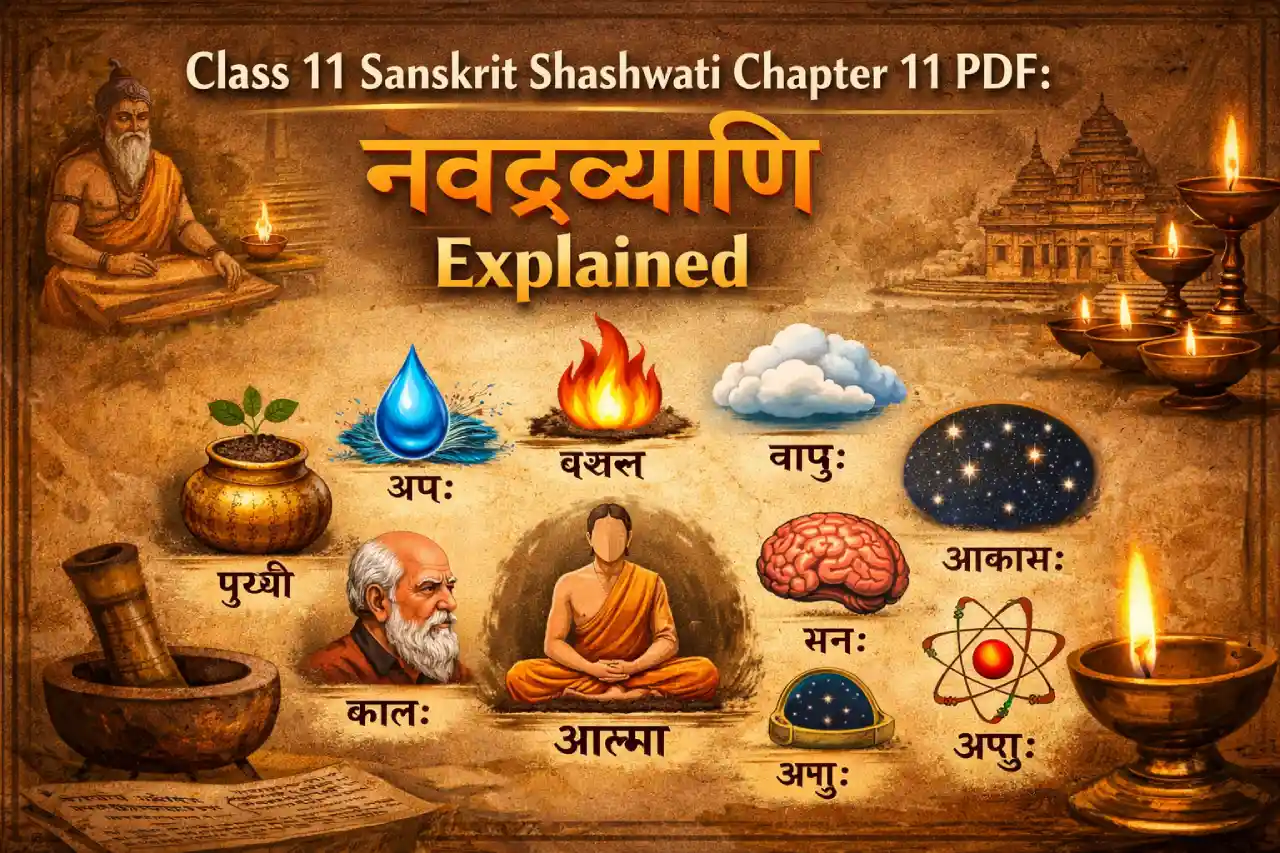
Class 11 Sanskrit Shashwati Chapter 11 PDF: नवद्रव्याणि Explained

Class 11 Sanskrit Shashwati Chapter 11 PDF: नवद्रव्याणि Explained

NCERT Class 11 Sanskrit Shashwati Chapter 11, titled “नवद्रव्याणि”, introduces students to an important concept from Indian philosophy—the nine fundamental substances that make up the universe. The chapter explains these elements in a simple and structured way, helping students understand how ancient thinkers tried to explain the nature of reality through observation and logic.

I am writing about this chapter because many students search for the official NCERT PDF along with a simple explanation before exams. In my experience, topics like “नवद्रव्याणि” may feel slightly abstract at first, but once you understand the list and their meanings, it becomes quite easy to remember and revise. This chapter is important not only for Sanskrit exams but also for gaining a basic idea of traditional Indian philosophy. It helps students connect language learning with deeper concepts. Studying from the official NCERT book and revising regularly can make this chapter scoring and easy to handle.

About the Chapter: नवद्रव्याणि

The term “नवद्रव्याणि” means “nine substances.” These are considered the basic elements that exist in the universe according to classical Indian thought.

The chapter explains each of these substances and their role in the functioning of the world.

The Nine Substances Explained

Here is a simple table to understand the nine dravyas:

Sanskrit TermMeaning (Simple English)
पृथ्वी (Prithvi)Earth
आपः (Apah)Water
तेजः (Tejas)Fire
वायु (Vayu)Air
आकाश (Akasha)Space
काल (Kala)Time
दिशा (Disha)Direction
आत्मा (Atma)Soul
मनः (Manas)Mind

These elements together explain the physical and non-physical aspects of existence.

Key Ideas in the Chapter

1. Understanding the Universe

The chapter explains how everything in the world is made up of basic substances.

2. Physical and Non-Physical Elements

Some substances like earth and water are physical, while others like time and soul are abstract.

3. Connection Between Mind and Body

The inclusion of “मनः” (mind) and “आत्मा” (soul) shows the importance of inner consciousness.

Why This Chapter Is Important for Students

  • Helps understand basic philosophical concepts
  • Improves Sanskrit reading and comprehension
  • Important for exam questions and explanations
  • Builds logical and conceptual thinking

Students who understand the list properly can easily score marks.

Study Tips for Chapter 11

  • Memorise the nine dravyas and their meanings
  • Understand the difference between physical and abstract elements
  • Practise writing short explanations
  • Revise regularly using a table format

This makes the chapter easier to revise before exams.

How to Download NCERT Class 11 Sanskrit Shashwati Chapter 11 PDF

Students can download the official chapter PDF from the National Council of Educational Research and Training website by following these steps:

Always use the official NCERT website to ensure you get the correct and updated version.

Leave a Comment

End of Article

Loading more posts...