JOIN WHATSAPP
STORIES

NCERT Class 11 Psychology Chapter 1: What is Psychology? PDF

NCERT Class 11 Psychology Chapter 1: What is Psychology?

Chapter 1 of NCERT Class 11 Psychology introduces students to the basic concept of psychology. It answers the fundamental question: What exactly is psychology? The chapter explains how psychology developed as a subject, the different areas it covers, and how it applies in real life. It also explores how psychology is both a science and a practical field that helps us understand behaviour, thoughts, and emotions.

I decided to write about this topic because psychology is often misunderstood as something limited to mental illness or counselling. In reality, it touches every part of our lives – from how we make decisions to how we form relationships. This chapter is the base of the entire subject, and having a clear understanding from the start can help students follow the rest of the syllabus easily. It’s also important for those who are curious about human behaviour or planning to take psychology further for career options. Whether you’re a student, a parent, or just someone curious about what psychology really means, this chapter sets the foundation. I’ll also be adding a direct link to download the chapter’s PDF for your easy access.

Key Concepts Explained in Chapter 1

The first chapter gives a broad overview of what psychology is and why it matters. Here’s a simple breakdown of the topics discussed

Definition of Psychology
The chapter begins by defining psychology as the scientific study of behaviour and mental processes. It points out that psychology is not just about disorders but also about understanding how people think, feel, learn, and interact

Understanding Behaviour
Behaviour can be external (like talking, walking, eating) or internal (like thinking and feeling). Psychology studies both types using observation, experiments, and interviews

Psychology as a Discipline
It discusses how psychology grew over time and how it became a recognised science. It also covers how psychology overlaps with other subjects like biology, sociology, and philosophy

Branches of Psychology
The chapter introduces different fields such as clinical psychology, educational psychology, organisational psychology, sports psychology, and more. Each of these areas applies psychology in a specific setting

Psychology in Everyday Life
Students learn how psychological knowledge helps in real-world situations like improving learning, managing stress, dealing with emotions, and even in marketing and advertisements

Myths about Psychology
There’s also a section clearing common myths like “psychologists can read minds” or “psychology is only for mentally ill people.” These misconceptions are explained and corrected

Download NCERT Class 11 Psychology Chapter 1 PDF

If you want to keep the chapter for offline revision or quick reference, here’s the direct official download link

Click here to download NCERT Class 11 Psychology Chapter 1 – What is Psychology? PDF
Leave a Comment

End of Article

Class 11 Sanskrit Shashwati Chapter 11 PDF: नवद्रव्याणि Explained

Class 11 Sanskrit Shashwati Chapter 11 PDF: नवद्रव्याणि Explained

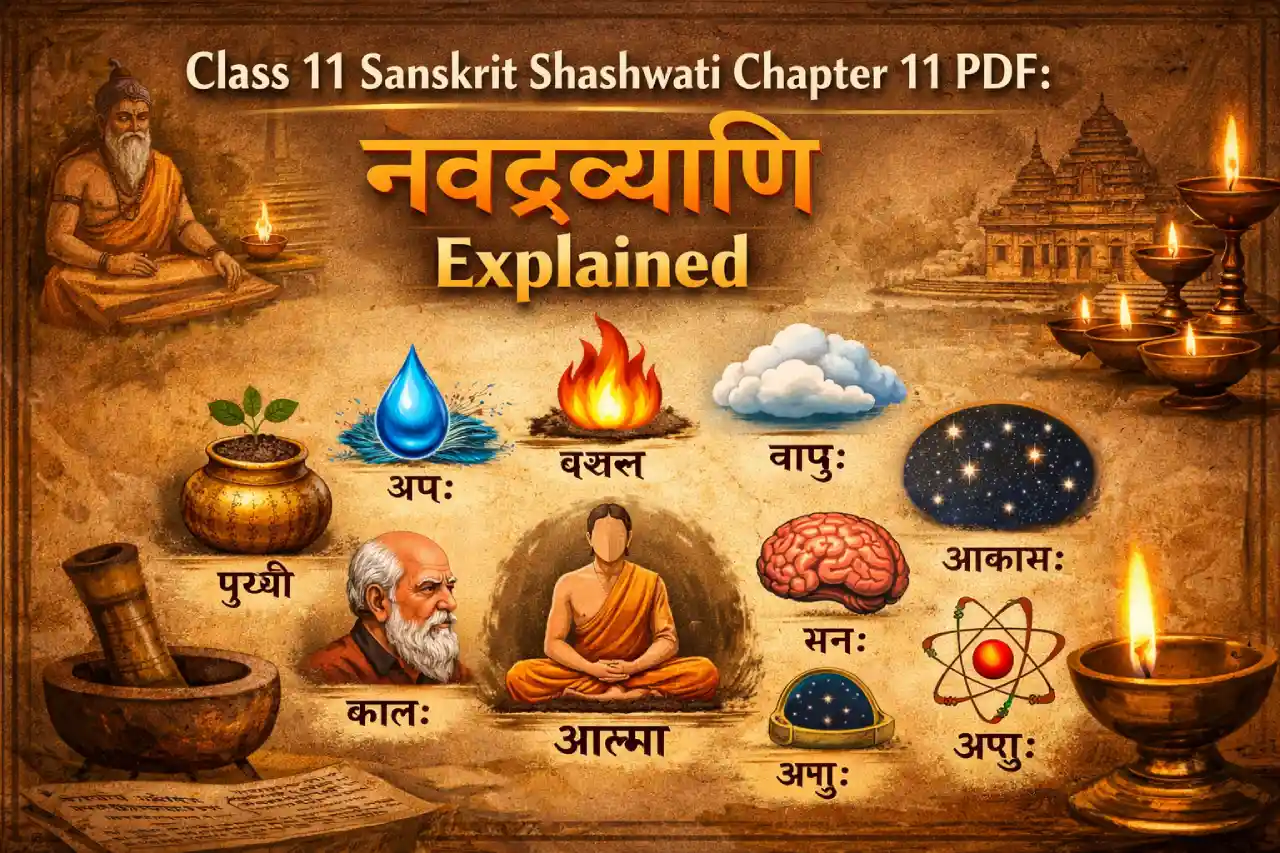
NCERT Class 11 Sanskrit Shashwati Chapter 11, titled “नवद्रव्याणि”, introduces students to an important concept from Indian philosophy—the nine fundamental substances that make up the universe. The chapter explains these elements in a simple and structured way, helping students understand how ancient thinkers tried to explain the nature of reality through observation and logic.

I am writing about this chapter because many students search for the official NCERT PDF along with a simple explanation before exams. In my experience, topics like “नवद्रव्याणि” may feel slightly abstract at first, but once you understand the list and their meanings, it becomes quite easy to remember and revise. This chapter is important not only for Sanskrit exams but also for gaining a basic idea of traditional Indian philosophy. It helps students connect language learning with deeper concepts. Studying from the official NCERT book and revising regularly can make this chapter scoring and easy to handle.

About the Chapter: नवद्रव्याणि

The term “नवद्रव्याणि” means “nine substances.” These are considered the basic elements that exist in the universe according to classical Indian thought.

The chapter explains each of these substances and their role in the functioning of the world.

The Nine Substances Explained

Here is a simple table to understand the nine dravyas:

Sanskrit TermMeaning (Simple English)
पृथ्वी (Prithvi)Earth
आपः (Apah)Water
तेजः (Tejas)Fire
वायु (Vayu)Air
आकाश (Akasha)Space
काल (Kala)Time
दिशा (Disha)Direction
आत्मा (Atma)Soul
मनः (Manas)Mind

These elements together explain the physical and non-physical aspects of existence.

Key Ideas in the Chapter

1. Understanding the Universe

The chapter explains how everything in the world is made up of basic substances.

2. Physical and Non-Physical Elements

Some substances like earth and water are physical, while others like time and soul are abstract.

3. Connection Between Mind and Body

The inclusion of “मनः” (mind) and “आत्मा” (soul) shows the importance of inner consciousness.

Why This Chapter Is Important for Students

  • Helps understand basic philosophical concepts
  • Improves Sanskrit reading and comprehension
  • Important for exam questions and explanations
  • Builds logical and conceptual thinking

Students who understand the list properly can easily score marks.

Study Tips for Chapter 11

  • Memorise the nine dravyas and their meanings
  • Understand the difference between physical and abstract elements
  • Practise writing short explanations
  • Revise regularly using a table format

This makes the chapter easier to revise before exams.

How to Download NCERT Class 11 Sanskrit Shashwati Chapter 11 PDF

Students can download the official chapter PDF from the National Council of Educational Research and Training website by following these steps:

Always use the official NCERT website to ensure you get the correct and updated version.

Leave a Comment

End of Article

Loading more posts...