JOIN WHATSAPP
STORIES

NCERT Class 11 Psychology Chapter 6: Human Memory PDF

NCERT Class 11 Psychology Chapter 6: Human Memory

Chapter 6 of Class 11 Psychology, titled Human Memory, dives into how we store, retain, and retrieve information. It explains why we remember some things clearly while we forget others. This chapter introduces you to the types of memory systems—like sensory memory, short-term memory, and long-term memory—and explains important concepts like encoding, storage, retrieval, forgetting, and techniques for improving memory. These ideas help us understand not just academic learning, but also how memory works in day-to-day life.

I chose to write about this chapter because memory plays such a big role in every student’s life. Whether it’s remembering answers in exams, important dates, or even where we kept our phone, memory is always working in the background. This chapter doesn’t just help you understand memory but also gives practical ways to improve it. It helped me personally when I realised that most forgetting happens not because we don’t learn, but because we don’t revise or recall things in time. This insight alone can boost your exam prep strategy. Also, understanding memory is a key topic for entrance exams and higher studies in psychology. That’s why having access to the NCERT PDF is helpful for both quick revisions and in-depth reading.

Key Concepts Covered in Chapter 6: Human Memory

Chapter 6 gives a scientific and practical view of how memory works. The chapter is divided into logical parts that make it easier to follow and apply.

1. Memory as a Process
Memory involves three key processes:

  • Encoding – The process of converting information into a form usable by memory
  • Storage – Retaining information over time
  • Retrieval – Bringing stored information into awareness

2. Types of Memory

  • Sensory Memory
    • Very short-term, retains information for a few seconds
    • Example: Brief memory of what you saw as you blink
  • Short-Term Memory (STM)
    • Holds information for 20–30 seconds unless rehearsed
    • Example: Remembering a phone number just long enough to dial it
  • Long-Term Memory (LTM)
    • Almost unlimited in capacity and duration
    • Information stored here can last from days to a lifetime

3. Types of Long-Term Memory

  • Explicit Memory (with conscious recall)
    • Episodic: Memory of personal experiences
    • Semantic: General knowledge and facts
  • Implicit Memory (without conscious recall)
    • Skills like riding a bicycle, typing, etc.

4. Forgetting

  • Ebbinghaus’s Forgetting Curve shows how quickly we forget without revision
  • Causes of Forgetting
    • Trace Decay
    • Interference (new info interfering with old or vice versa)
    • Retrieval Failure

5. Memory Improvement Techniques

  • Rehearsal (repeating information)
  • Chunking (grouping items to make them easier to remember)
  • Mnemonics (using patterns or phrases)
  • Spaced practice instead of last-minute cramming
  • Visualisation and association methods

6. Amnesia and Memory Disorders

  • Covers disorders like retrograde and anterograde amnesia
  • Useful for understanding psychological and medical cases

Download NCERT Class 11 Psychology Chapter 6 PDF

You can easily download the official NCERT PDF for Chapter 6 from the NCERT website using the link below

Click here to download NCERT Class 11 Psychology Chapter 6 – Human Memory PDF
Leave a Comment

End of Article

Class 11 Sanskrit Shashwati Chapter 11 PDF: नवद्रव्याणि Explained

Class 11 Sanskrit Shashwati Chapter 11 PDF: नवद्रव्याणि Explained

NCERT Class 11 Sanskrit Shashwati Chapter 11, titled “नवद्रव्याणि”, introduces students to an important concept from Indian philosophy—the nine fundamental substances that make up the universe. The chapter explains these elements in a simple and structured way, helping students understand how ancient thinkers tried to explain the nature of reality through observation and logic.

I am writing about this chapter because many students search for the official NCERT PDF along with a simple explanation before exams. In my experience, topics like “नवद्रव्याणि” may feel slightly abstract at first, but once you understand the list and their meanings, it becomes quite easy to remember and revise. This chapter is important not only for Sanskrit exams but also for gaining a basic idea of traditional Indian philosophy. It helps students connect language learning with deeper concepts. Studying from the official NCERT book and revising regularly can make this chapter scoring and easy to handle.

About the Chapter: नवद्रव्याणि

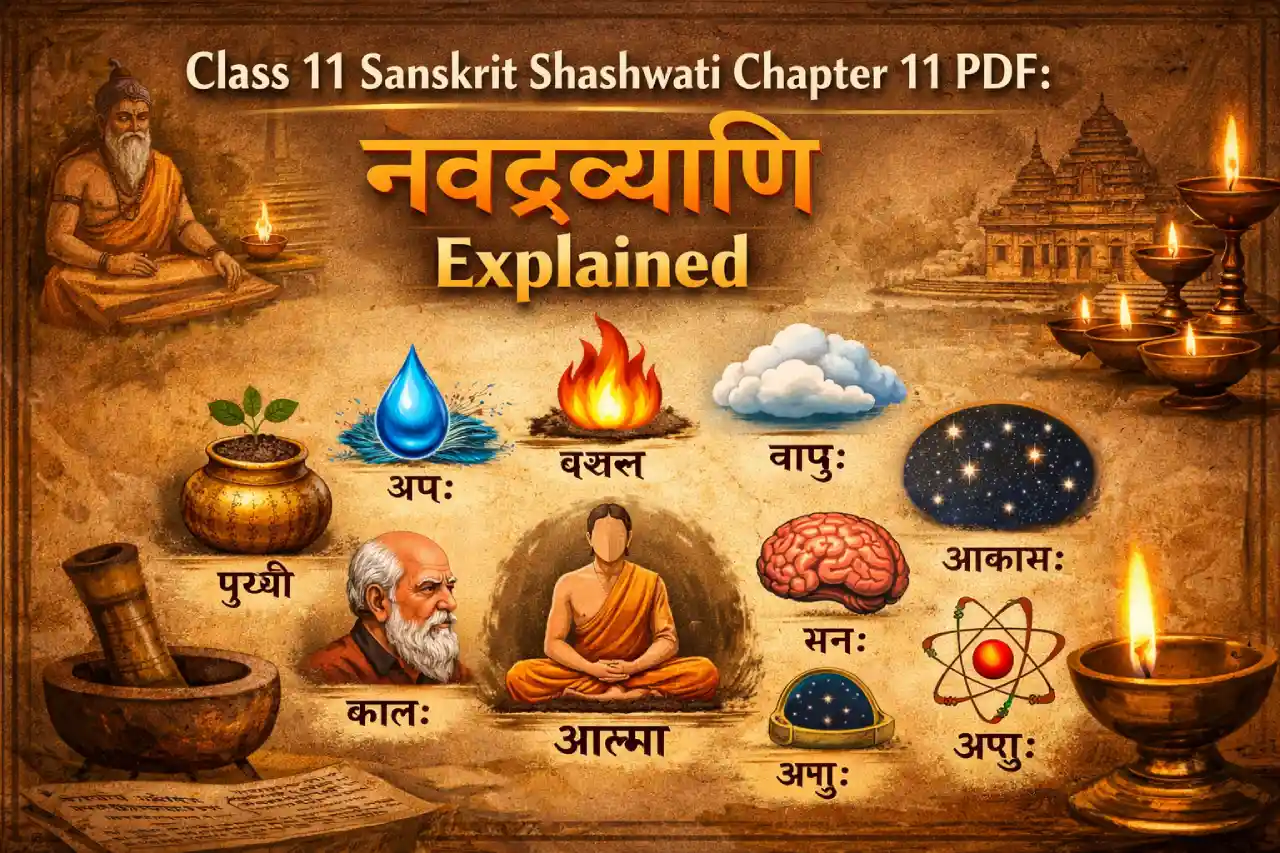
The term “नवद्रव्याणि” means “nine substances.” These are considered the basic elements that exist in the universe according to classical Indian thought.

The chapter explains each of these substances and their role in the functioning of the world.

The Nine Substances Explained

Here is a simple table to understand the nine dravyas:

Sanskrit TermMeaning (Simple English)
पृथ्वी (Prithvi)Earth
आपः (Apah)Water
तेजः (Tejas)Fire
वायु (Vayu)Air
आकाश (Akasha)Space
काल (Kala)Time
दिशा (Disha)Direction
आत्मा (Atma)Soul
मनः (Manas)Mind

These elements together explain the physical and non-physical aspects of existence.

Key Ideas in the Chapter

1. Understanding the Universe

The chapter explains how everything in the world is made up of basic substances.

2. Physical and Non-Physical Elements

Some substances like earth and water are physical, while others like time and soul are abstract.

3. Connection Between Mind and Body

The inclusion of “मनः” (mind) and “आत्मा” (soul) shows the importance of inner consciousness.

Why This Chapter Is Important for Students

  • Helps understand basic philosophical concepts
  • Improves Sanskrit reading and comprehension
  • Important for exam questions and explanations
  • Builds logical and conceptual thinking

Students who understand the list properly can easily score marks.

Study Tips for Chapter 11

  • Memorise the nine dravyas and their meanings
  • Understand the difference between physical and abstract elements
  • Practise writing short explanations
  • Revise regularly using a table format

This makes the chapter easier to revise before exams.

How to Download NCERT Class 11 Sanskrit Shashwati Chapter 11 PDF

Students can download the official chapter PDF from the National Council of Educational Research and Training website by following these steps:

Always use the official NCERT website to ensure you get the correct and updated version.

Leave a Comment

End of Article

Loading more posts...