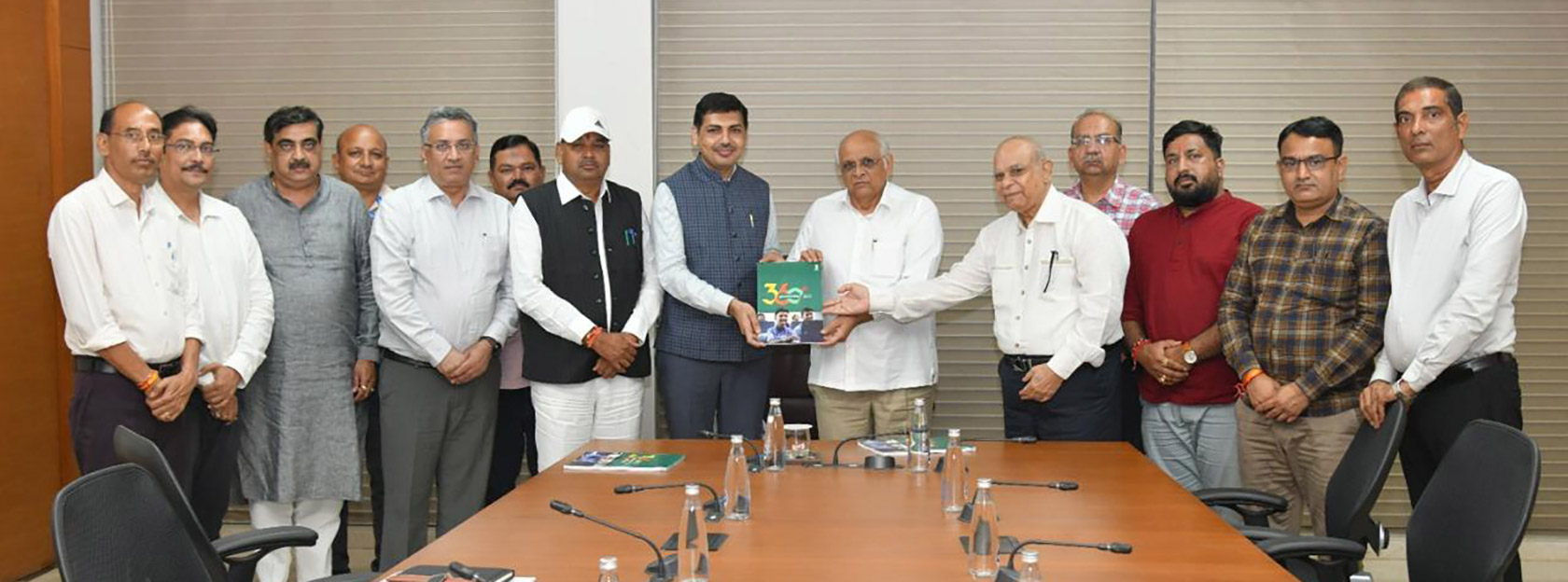
The Gujarat state government’s Task Force on Education has submitted a detailed report on Comprehensive Educational Assessment to Chief Minister Shri Bhupendra Patel. The report outlines key findings, suggestions, and a proposed roadmap for improving learning outcomes across schools in the state. It was prepared by a panel of experts in school education, assessment design, and pedagogy. The aim is to bring in more accurate, student-friendly ways to evaluate academic progress, aligned with the goals of the National Education Policy (NEP) 2020.
I chose to write about this because the way we assess students affects everything else in education—from classroom teaching to how confident students feel about learning. Gujarat taking steps towards a more meaningful and child-centric assessment model is a positive sign. It’s especially relevant for teachers, students, and parents who have often felt that exams don’t reflect actual learning. This task force report might just lead to a more balanced and fair approach in measuring student progress. As someone who follows education reforms closely, I think it’s important to break down what this report says and what it could mean for students across Gujarat.
What Is the Task Force Report About?
The Task Force on Comprehensive Educational Assessment was formed to study the current examination system in Gujarat schools and suggest reforms. The idea is to shift from a memory-based system to one that focuses on understanding, problem-solving, and skill development.
Some of the key areas covered in the report are:
- Designing assessment methods that match students’ age and cognitive level
- Reducing stress caused by excessive testing
- Introducing formative assessments that help teachers give feedback, not just marks
- Using technology to track student progress without overburdening them
The report also proposes the creation of a centralised body to monitor assessments and train teachers on new tools and techniques.
Presented to CM Bhupendra Patel
On July 24, 2025, the report was formally submitted to Chief Minister Bhupendra Patel. The CM appreciated the efforts and said that improving assessment practices is critical for making education more meaningful. He assured full support for implementing the recommendations in a phased manner.
According to officials, the next step will be to pilot these recommendations in selected districts. Based on the feedback, the new system could be gradually expanded across the state.
Why This Matters for Students and Teachers
Traditional assessments often focus too much on rote learning. Students are judged by how much they can memorise and write in a fixed time. But this method doesn’t test how well they understand a topic or how they apply it in real life.
Here’s how this report could change things:
- Students may be evaluated through activities, projects, and real-life problem-solving
- Teachers may get tools to assess students on daily classroom performance instead of only tests
- Parents may receive detailed feedback about their child’s learning style and areas of improvement
If implemented properly, this model could also reduce exam fear and improve overall confidence in students.
Gujarat’s Vision for School Education
This move is part of Gujarat’s larger goal of improving school education under the NEP 2020. The state has already taken steps like setting up ‘Schools of Excellence’, introducing vocational courses, and promoting mother-tongue-based education in early years. The assessment reform is expected to tie all these efforts together by measuring outcomes more fairly and scientifically.
The government has said that training for teachers will be prioritised, and no child will be burdened with sudden changes. The focus will be on learning rather than marks.